Vegan PDRN for Skincare: 3 Chemical Testing Standards Essential for Verifying the Purity of Active Ingredients

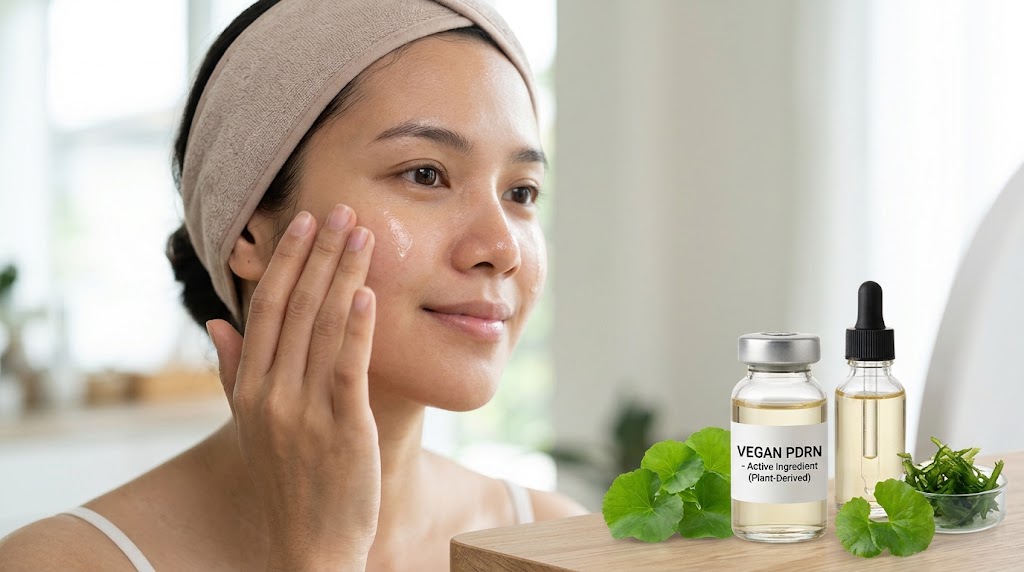
Cosmetic industry innovation is rapidly shifting away from animal-derived ingredients (like salmon DNA) toward more ethical and sustainable botanical alternatives. Today, vegan PDRN (Polydeoxyribonucleotide extracted from plants such as microalgae or Centella asiatica) has become the new gold standard in regenerative and anti-aging skincare formulations.
However, the high market value of this raw material triggers a significant risk of adulteration or quality degradation within the supply chain. Claiming the inclusion of vegan PDRN on your packaging without analytical proof is a risky business move.
Plant extracts are incredibly complex; without high-level purification processes, what you purchase from a supplier might merely be a basic botanical extract with negligible DNA concentration. Therefore, verifying purity through strict and ilmiah (scientific) chemical testing standards is an absolute prerequisite for brand owners prior to mass production.
Table of Content:
High-Performance Liquid Chromatography (HPLC) Analysis
This is the most critical method. HPLC is utilized to separate, identify, and specifically quantify nucleic acid fractions. This testing ensures that the molecules present in the raw material are genuinely short-chain DNA polymers (PDRN) of the appropriate molecular weight, rather than basic amino acids or peptides.
The resulting chromatogram profile serves as authentic proof of the ingredient’s identity. For cosmetic brand owners, possessing this definitive chromatographic data acts as a non-negotiable insurance policy against raw material fraud. Suppliers often charge premium prices for vegan PDRN; without HPLC validation, you risk paying top dollar for diluted or counterfeit botanical extracts.
This analytical proof not only secures your financial investment but also guarantees that your final formulation contains the exact molecular concentrations necessary to deliver the promised regenerative results to your consumers.
Read Also:
Skincare Products with PDRN and Exosomes: What Is the Difference and How Are They Tested?
UV-Vis Spectrophotometry for Quantification
To determine the exact purity of DNA concentration within the raw material, laboratories employ UV-Vis Spectrophotometry at specific wavelengths (260 nm and 280 nm). The absorbance ratio at these wavelengths scientifically dictates the purity of the nucleic acid from protein contamination.
If the ratio fails to meet pharmacopeial or cosmetic standards, the active ingredient is undoubtedly of low quality.
Heavy Metal Contamination Testing (ICP-MS/AAS)
Because vegan PDRN is extracted from plants or marine algae, the risk of heavy metal bioaccumulation (such as arsenic, mercury, lead, and cadmium) is substantially high. Testing utilizing advanced analytical instruments (like ICP-MS) is mandatory to guarantee the raw material is free from toxicity that could damage the consumer’s skin barrier and violate FDA/BPOM regulatory thresholds.
Do Not Let Counterfeit Raw Materials Ruin YourSkincare Vegan PDRN Formulations!
Extraordinary anti-aging claims require undeniable scientific proof. Utilizing a vegan PDRN active ingredient without validating its purity risks yielding an ineffective product, triggering mass consumer complaints, and facing registration rejection by regulatory bodies.
Protect your investment and brand reputation with IML Testing and Research. We provide high-precision analytical chemistry services (HPLC, UV-Vis, ICP-MS) to comprehensively validate the purity, concentration, and safety of your cosmetic raw materials. Obtain a credible Certificate of Analysis (CoA) to solidify your product’s market claims.
Author & Editor: Lina
References
Gandjar, I. G., & Rohman, A. (2012). Kimia Farmasi Analisis. Yogyakarta: Pustaka Pelajar. (Referensi utama yang mendasari penggunaan HPLC dan Spektrofotometri UV-Vis dalam memvalidasi kemurnian senyawa aktif tingkat molekuler, termasuk pemisahan protein dan asam nukleat).
Tranggono, R. I., & Latifah, F. (2007). Buku Pegangan Ilmu Pengetahuan Kosmetik. Jakarta: PT Gramedia Pustaka Utama. (Membahas secara mendalam standar keamanan bahan aktif kosmetik dan risiko kontaminasi dalam formulasi perawatan kulit).
Harmita. (2004). Petunjuk Pelaksanaan Validasi Metode dan Cara Perhitungannya. Majalah Ilmu Kefarmasian, Vol. 1, No. 3, 117-135. (Jurnal ilmiah ini menjadi acuan laboratorium dalam memastikan presisi, akurasi, dan limit deteksi pada pengujian cemaran logam berat dan identifikasi senyawa aktif).
Badan Pengawas Obat dan Makanan (BPOM) RI. (2019). Peraturan Badan Pengawas Obat dan Makanan Nomor 23 Tahun 2019 tentang Persyaratan Teknis Bahan Kosmetika. Jakarta: BPOM RI. (Dokumen regulasi wajib yang mengatur ambang batas cemaran kimia berat yang diperbolehkan dalam ekstrak nabati untuk sediaan topikal).