BPOM Cosmetic Testing: What Should Brands Prepare Before Launching Their Products?


Cosmetics have become an essential part of people’s daily lives. Their use is no longer limited to beauty and makeup products but also includes skincare, haircare, body care, and personal hygiene products, all of which require strict BPOM cosmetic testing before entering the market.
Various products, such as facial cleansers, sunscreens, moisturizers, serums, shampoos, and body lotions, are widely used by people across different age groups. The widespread use of cosmetics makes product safety an aspect that must not be overlooked.
Ensuring product safety involves various parties, including consumers who need to be careful when selecting products, regulators who establish and monitor safety standards, and manufacturers and brand owners who are responsible for ensuring product quality before products are distributed to the market. Cosmetic safety primarily serves to protect consumers’ health by preventing irritation, allergic reactions, infections, and adverse effects caused by exposure to harmful substances. In addition, testing aims to maintain product quality, stability, and consistency, while ensuring that the claimed benefits are supported by the product’s characteristics and relevant evidence.
Comprehensive BPOM cosmetic testing ensures that products are not only appealing from a marketing perspective but also safe and suitable for consumer use.
Table of Content:
- Cosmetic Testing as Part of BPOM Requirements
- Types of Cosmetic Testing to Consider
- Preparation by Manufacturers and Brand Owners Before Testing
Cosmetic Testing as Part of BPOM Requirements
In Indonesia, cosmetics are regulated and supervised by the National Agency of Drug and Food Control (BPOM). Before being distributed to the market, cosmetic products must pass rigorous BPOM cosmetic testing to comply with applicable technical requirements and obtain a BPOM notification number.
One of the important aspects of meeting these requirements is the availability of product safety and quality data through relevant testing. Regulations concerning cosmetic contaminants refer to BPOM Regulation No. 16 of 2024 concerning Contaminant Limits in Cosmetics.
Meanwhile, cosmetic ingredient requirements must also comply with BPOM Regulation No. 25 of 2025 concerning Technical Requirements for Cosmetic Ingredients. Comprehensive BPOM cosmetic testing and proper documentation serve as part of the evidence that cosmetics meet the established standards.
Types of Cosmetic Testing to Consider
Several types of testing that manufacturers and brand owners should consider include:
- Microbiological Testing, to identify microbial contamination, such as bacteria and fungi, which may cause infections or skin problems.
- Heavy Metal Testing, to detect contaminants such as mercury, lead, arsenic, and cadmium, which may pose health risks.
- Chemical Contaminant Testing, to ensure that products do not contain chemical contaminants exceeding the permitted limits.
- Stability Testing, to evaluate changes in color, fragrance, texture, pH, and other product characteristics during storage.
- pH and Organoleptic Testing, to ensure that the physical and chemical characteristics of the product meet the established specifications.
- Preservative Efficacy Testing, to evaluate the ability of the preservative system to control microbial growth.
It is important to understand that testing for microbial, heavy metal, and chemical contaminants is directly related to the limits established under BPOM Regulation No. 16 of 2024. Meanwhile, stability, pH, organoleptic, and preservative efficacy testing serve as supporting tests selected based on the product’s characteristics and potential risks. Not all of these tests are uniformly mandatory for every cosmetic product.
Preparation by Manufacturers and Brand Owners Before Testing
Before conducting BPOM cosmetic testing, manufacturers and brand owners need to prepare several important documents and materials. First, they must provide the complete product formulation, including the INCI (International Nomenclature of Cosmetic Ingredients) list, the concentration, and the function of each ingredient.
Second, they need to prepare raw material specifications and supporting documents from suppliers. Third, final product samples must be prepared to represent the actual formulation and manufacturing process. In addition, manufacturers need to determine the appropriate BPOM cosmetic testing parameters based on the product’s dosage form, composition, packaging, and potential risks.
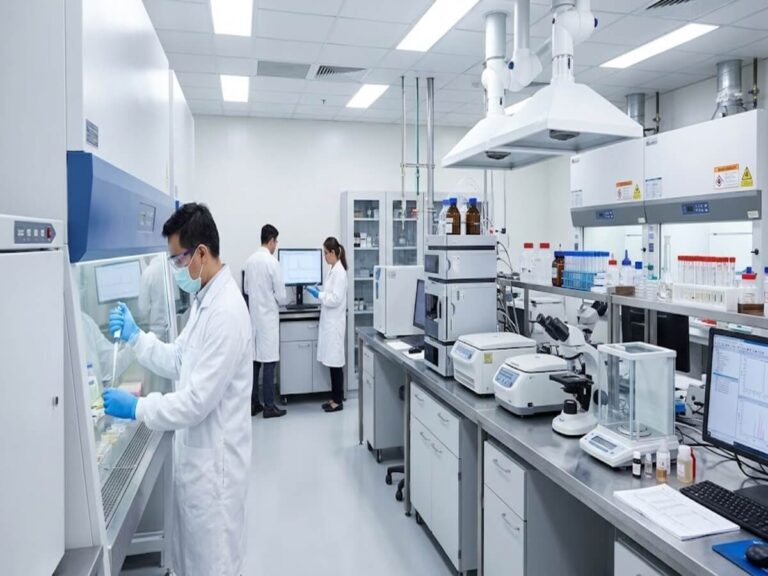
Testing should be conducted by accredited laboratories or internal industrial laboratories that meet Good Manufacturing Practices (GMP) requirements for cosmetics, using validated or verified methods. The test results must then be maintained as part of the Product Information File (PIF), as stipulated in BPOM Regulation No. 17 of 2023.
For brands that use contract manufacturing or private-label services, brand owners should coordinate with the manufacturing company to ensure the availability of formulation data, BPOM cosmetic testing results, product specifications, and other supporting documentation.
Consequences of Failing to Meet Testing and Regulatory Requirements
Neglecting cosmetic testing can pose risks to consumers as well as to business sustainability. Products that fail to meet safety standards may cause irritation, allergic reactions, infections, and other health problems due to exposure to harmful ingredients or contaminants.
From a regulatory perspective, cosmetic products distributed without meeting notification requirements and applicable safety standards may be subject to regulatory enforcement and administrative sanctions. These may include written warnings, product recalls, product destruction, and the revocation or cancellation of relevant approvals, depending on the nature of the violation.
Other consequences include declining consumer trust and damage to brand reputation.
Conclusion
Cosmetic testing is not merely a formality for obtaining a BPOM notification number. Rather, it is an essential part of manufacturers’ responsibility to protect consumers’ health and safety.
By preparing product formulations, raw material documentation, product samples, and conducting tests in accordance with applicable regulations, brands can ensure that their products meet accountable quality and safety standards before entering the market.
Schedule a BPOM Cosmetic Testing Consultation With the Experts at IML Testing and Research
Marketing cosmetics without proper laboratory validation is a massive risk to your business reputation. Failing to meet the strict standards for stability testing, microbiology, or heavy metal detection will lead to distribution license rejections, severe fines, and mandatory market recalls.
Secure your formulation’s legality and safety today. Schedule a BPOM Cosmetic Testing Consultation with the experts at IML Testing and Research. We provide comprehensive, precise, and regulatory-validated testing services to guarantee your product is 100% safe, fully compliant, and ready to dominate the market.
Author: Delfia
Editor: Lina
References
Badan Pengawas Obat dan Makanan Republik Indonesia. (2022). Peraturan Badan Pengawas Obat dan Makanan Nomor 21 Tahun 2022 tentang tata cara pengajuan notifikasi kosmetika. https://jdih.pom.go.id/view/slide/1413/21/2022/fd702fc685a2885f11ae23dae2705319
Badan Pengawas Obat dan Makanan Republik Indonesia. (2023). Peraturan Badan Pengawas Obat dan Makanan Nomor 17 Tahun 2023 tentang pedoman dokumen informasi produk kosmetik. https://jdih.pom.go.id/view/slide/1505/17/2023/a548cb52a36f195ccb1b351f223240f8
Badan Pengawas Obat dan Makanan Republik Indonesia. (2024). Peraturan Badan Pengawas Obat dan Makanan Nomor 16 Tahun 2024 tentang batas cemaran dalam kosmetik. https://jdih.pom.go.id/view/slide/1602/16/2024/07811dc6c422334ce36a09ff5cd6fe71
Badan Pengawas Obat dan Makanan Republik Indonesia. (2025). Peraturan Badan Pengawas Obat dan Makanan Nomor 25 Tahun 2025 tentang persyaratan teknis bahan kosmetik. https://jdih.pom.go.id/view/slide/1697/25/2025/34255374b24a0e72fb891358d3daa8d1