Behind the Skincare Routine: How Lab Testing Proves Product Performance from Cleanser to Sunscreen

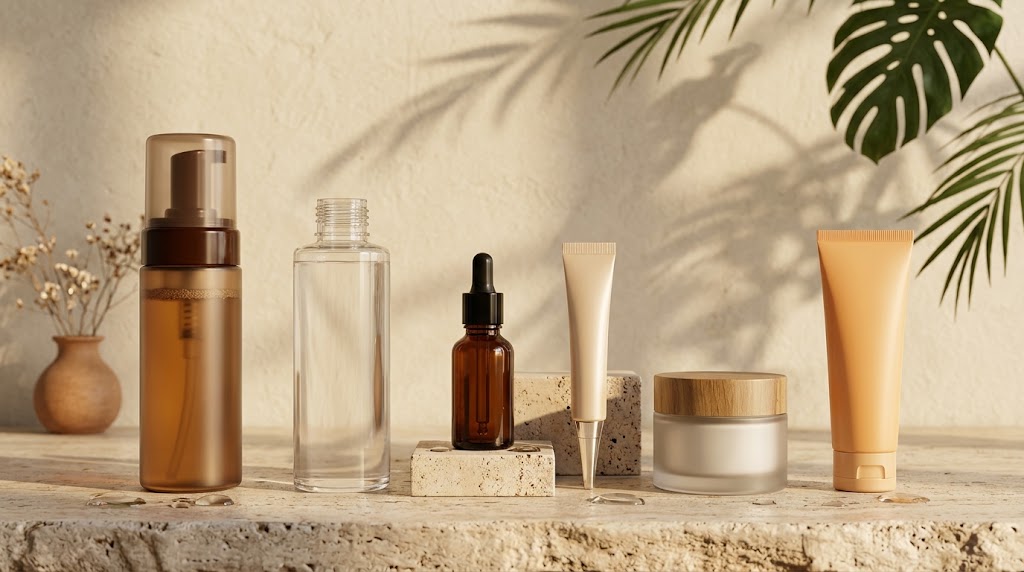
Modern cosmetic consumers no longer simply buy into marketing promises; they demand scientific proof. The immense popularity of the urutan skincare (skincare routine) trend which involves layering various products from cleansers and toners to serums, moisturizers, and sunscreens has introduced complex technical challenges for formulators.
Every chemical layer applied to the skin interacts with the others. Without precise analytical testing, these interactions can trigger active ingredient degradation, formula incompatibility, and severe skin irritation for the consumer.
Analytical laboratories play a crucial role in translating marketing claims into valid scientific data. To ensure that a complete skincare routine works synergistically and safely, every product category must pass a rigorous series of quality tests using high-level instrumentation.
Table of Content:
- Facial Cleansers: Surfactant Testing and pH Balance
- Toners and Essences: Viscosity and Penetration Preparation
- Serums: High-Level Active Ingredient Quantification
- Moisturizers: Emulsion Stability and Water Retention
- Sunscreens: Photostability and UV Protection Validation
Facial Cleansers: Surfactant Testing and pH Balance
The first step in any skincare routine is responsible for removing impurities without damaging the delicate skin barrier. Laboratories test facial cleansers through pH evaluation using precision potentiometry to ensure the product falls within the skin’s natural physiological pH range (4.5 – 5.5).
Furthermore, Liquid Chromatography (LC) instruments are utilized to validate surfactant concentrations. This testing ensures that the cleansing agents do not leave excessive residue that could denature skin proteins, while also verifying “SLS-Free” (Sodium Lauryl Sulfate) claims made by manufacturers.
Read Also:
Skincare Order: Which Product Should Be Applied First and How Is Its Efficacy Tested?
Toners and Essences: Viscosity and Penetration Preparation
“As products designed to restore initial hydration in a skincare routine, toners must possess a specific viscosity. Rheological testing is conducted to measure the thickness and spreadability of the liquid, ensuring these water-based products can evenly moisten the stratum corneum.
Laboratory testing also rigorously verifies the absence of pathogenic microbes, such as Pseudomonas aeruginosa, through standard microbiological assays. This is critical because water-based formulations used in a daily skincare routine are highly susceptible to bacterial contamination if the preservative system fails to operate optimally.
Serums: High-Level Active Ingredient Quantification
Serums are the efficacious core of the skincare routine. Because they contain high concentrations of active ingredients, quantitative testing is an absolute necessity.
Laboratories deploy High-Performance Liquid Chromatography (HPLC) instruments to dissect the serum’s composition. This analytical method accurately calculates the exact concentration of active ingredients like Niacinamide, Vitamin C, or Retinol down to parts per million (ppm).
Additionally, HPLC acts as the primary safety gatekeeper to guarantee the serum is completely free from prohibited chemicals like hydroquinone or undeclared steroids, which are frequently misused in skin-brightening formulations.
Moisturizers: Emulsion Stability and Water Retention
Moisturizers function to seal in all the active ingredients previously applied in a skincare routine. The greatest technical challenge for a moisturizer is emulsion stability (the precise blending of water and oil).
Laboratories conduct Accelerated Stability Testing through extreme freeze thaw cycles and high-speed centrifugation. If a formula is unstable, the product will suffer from phase separation. Laboratory tests also measure the product’s occlusive ability to prevent Trans-Epidermal Water Loss (TEWL), providing clinical proof that the formulation can successfully lock moisture deep within the skin.
Sunscreens: Photostability and UV Protection Validation
The final and most critical step in a morning skincare routine is sunscreen application. Analytical laboratory test results are the only legal avenue to validate UV protection claims. The concentration of active UV filters, such as Avobenzone and Octocrylene, is measured using UV-Vis spectrophotometry and HPLC.
Photostability testing is also performed by exposing samples to high-intensity UV radiation inside specialized chambers to ensure the active ingredients do not degrade into harmful free radicals upon sun exposure. Imprecise UV filter concentrations not only degrade SPF claims but risk violating strict BPOM and FDA regulatory limits.
Developing products for an entire facial care regimen requires far more than mere ingredient mixing. Analytical data validation ensures every product layer works effectively, does not neutralize another’s function, and strictly adheres to current cosmetic regulations.
Do Not Let Your Formulation Fail in the Market! Schedule Your Cosmetic Testing at IML Testing and Research
The efficacy and safety claims of your skincare routine will not be recognized by the market or regulatory bodies (BPOM/FDA) without precise scientific data. Pathogen contamination, emulsion instability, or active ingredient concentrations that deviate from specifications can trigger devastating product recalls and permanently destroy your brand’s reputation.
Secure the future of your cosmetic business today. Entrust your product’s analytical and microbiological testing to IML Testing and Research. We deliver rapid, highly accurate, and regulatory-recognized laboratory data to ensure your products are fully compliant and ready to dominate the market without legal hurdles. Free consultaion!
Author & Editor: Lina
References
Tranggono, R. I., & Latifah, F. (2007). Buku Pegangan Ilmu Pengetahuan Kosmetik [Handbook of Cosmetic Science]. Jakarta: PT Gramedia Pustaka Utama.
Wasitaatmadja, S. M. (1997). Penuntun Ilmu Kosmetik Medik [Guide to Medical Cosmetics]. Jakarta: Penerbit Universitas Indonesia (UI-Press).
Ditjen POM. (2020). Peraturan Badan Pengawas Obat dan Makanan Nomor 23 Tahun 2019 tentang Persyaratan Teknis Bahan Kosmetika [BPOM Regulation on Technical Requirements for Cosmetic Ingredients]. Jakarta: BPOM RI.
Muliyawan, D., & Suriana, N. (2013). A-Z Tentang Kosmetik [A-Z About Cosmetics]. Jakarta: PT Elex Media Komputindo.