Anti Acne Claims on Your Skincare Product Is Microbiological Testing Strategies Necessary?

Human skin is not a sterile surface, but rather a complex ecosystem inhabited by various microorganisms. Under healthy conditions, the skin microbiota is dominated by four main phyla Actinobacteria, Firmicutes, Proteobacteria, and Bacteroidetes which exist in balance and help maintain skin function. This composition can change due to factors such as age, gender, lifestyle, skin condition, and the skincare products used daily.
Amid growing awareness of skincare, more and more products with “anti acne” claims are appearing on the market. These claims are often associated with a product’s ability to inhibit or even kill acne causing bacteria. However, is such effectiveness sufficiently proven solely by the active ingredients used?
This question is important in the development and evaluation of skincare products. To ensure that an “anti acne” claim is valid, appropriate testing approaches are required one of which is microbiological testing. So, to what extent is this testing necessary to support such claims?
Table of content :
- Understanding Acne Causing Bacteria
- Antimicrobial Testing in Anti Acne Skincare Products
- Prove Your Anti Acne Claims with the Right Scientific Testing
Understanding Acne Causing Bacteria
The presence of bacteria is actually a normal part of the skin microbiota, but under certain conditions, they can contribute to the development of acne. Their role does not act alone, but rather interacts with other factors such as excess oil production influenced by androgen hormones, thickening of skin cells in the follicle, and inflammatory processes.
For example, Cutibacterium acnes is a commensal bacterium with a dual role. On one hand, it normally lives on healthy skin without causing harm, but on the other hand, it can contribute to acne formation.
Cutibacterium acnes is a Gram positive, rod shaped, non spore forming bacterium that thrives in low oxygen (anaerobic) conditions. It is mainly found deep within skin follicles, which are relatively low in oxygen, where it interacts directly with skin cells and sebaceous gland ducts.
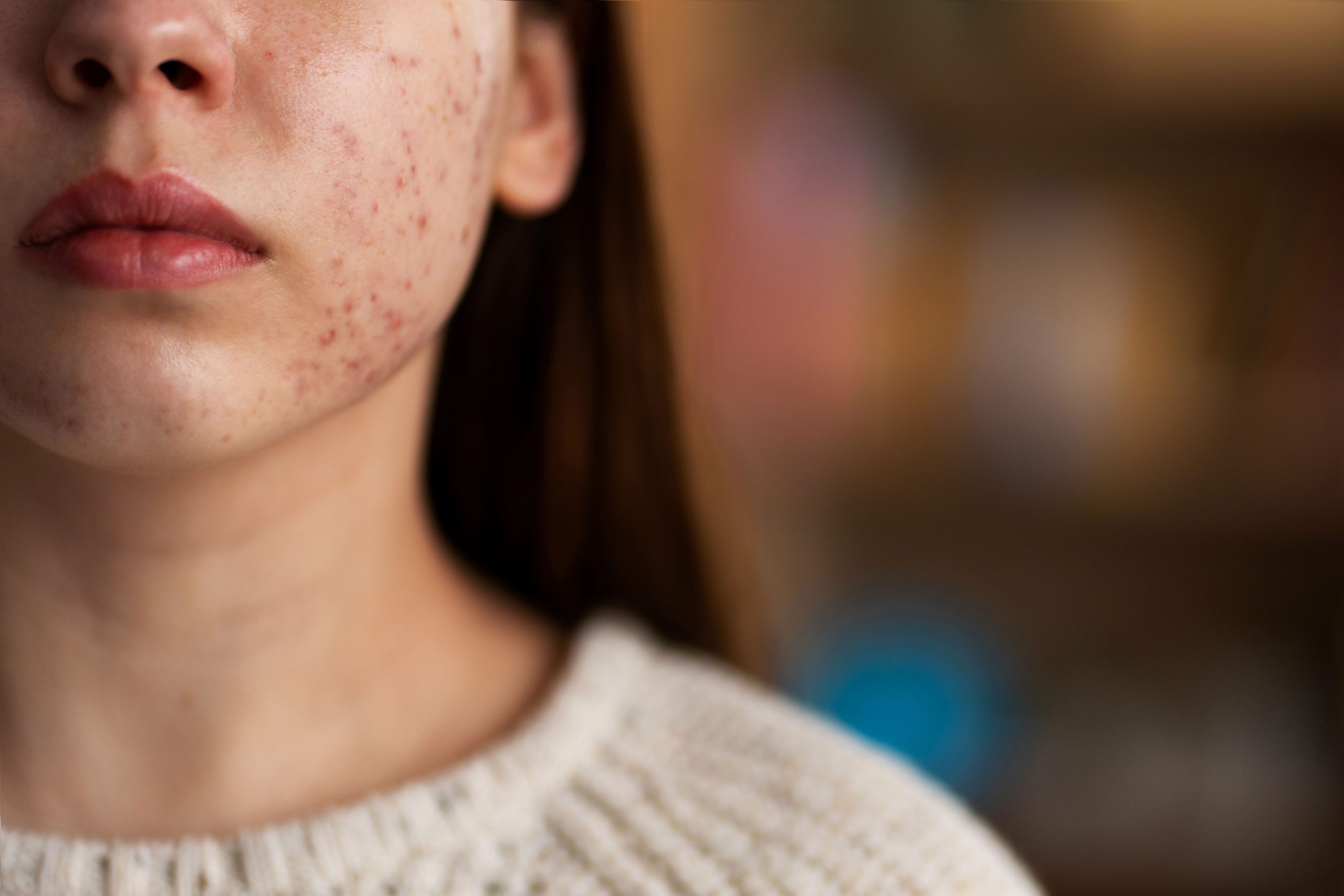
Negatively, Cutibacterium acnes can contribute to the development of acne (acne vulgaris). This occurs when the bacteria overgrow within clogged, sebum rich follicles, triggering an inflammatory response in the skin. As a result, lesions such as comedones, papules, pustules, and nodules may appear.
In addition, Staphylococcus epidermidis and the pathogenic bacterium Staphylococcus aureus also play roles in acne development. Staphylococcus epidermidis can stimulate the production of Interleukin 6 (IL-6), a pro inflammatory immune mediator, thereby increasing inflammation and making affected skin more red, swollen, and sensitive.
Read also:
Natural Glow the Korean Way: The Role of Skincare in Modern Beauty Trends
Antimicrobial Testing in Anti Acne Skincare Products
The agar disk diffusion method is one of the microbiological tests that can be used to evaluate the validity of “anti acne” claims in skincare products. By following standards from the Clinical and Laboratory Standards Institute, the test results can serve as an initial basis for assessing a product’s antimicrobial activity.
In practice, a sample of the skincare product or its active ingredient is applied to a paper disk. The disk is then placed on agar media that has been inoculated with test bacteria, in this case acne causing bacteria. After incubation, a clear inhibition zone will form around the disk if the product exhibits antibacterial activity.
The results of this method are qualitative, making it suitable as an initial screening step to assess the antibacterial potential of active ingredients in skincare products. Its advantages include simplicity, speed, and relatively low cost.
Another advanced method to complement screening tests is the dilution method. This is a quantitative technique used to determine the Minimum Inhibitory Concentration (MIC), which is the lowest concentration of an antimicrobial substance capable of inhibiting the growth of microorganisms. Two commonly used dilution methods are broth dilution and agar dilution.
The broth dilution method uses liquid media to determine the MIC of an antimicrobial substance. It can be performed on two scales: macrodilution (test tubes) and microdilution (microplates).
In this method, the test substance is prepared in a series of increasing concentrations, each of which is mixed with microorganisms in liquid media. After incubation, turbidity (bacterial growth) is observed, and the lowest concentration that shows no growth is determined as the MIC value.
Slightly different from broth dilution, the agar dilution method uses solid media that has been mixed with various concentrations of the test substance. Once the media is prepared, a bacterial suspension is inoculated onto the agar surface. The plates are then incubated, and colony growth is observed at each concentration level.
One advantage of the agar dilution method is its ability to test multiple strains simultaneously within the same concentration series. This makes it particularly useful for research or comparative testing between microorganisms. In addition, the results tend to be more stable, as the concentration of antimicrobial agents in agar is more consistent compared to diffusion methods.
Prove Your Anti Acne Claims with the Right Scientific Testing
Don't let your anti acne claim be just a promise without proof. Whether you're a skincare manufacturer looking to strengthen your product's credibility, or a consumer who cares about the safety of every formula you use microbiological testing is a step you simply can't overlook.
IML Testing & Research is ready to help you validate your claims through standardized testing methods recognized by BPOM RI. Consult with us today and make sure your product is truly worthy of trust.
Author: Dherika
Editor: Alphi
References
Balouiri, M., Sadiki, M., & Saad, K.I. (2016). Methods for In Vitro Evaluating Antimicrobial Activity: A Review. Journal of Pharmaceutical Analysis, 6, 71-79.
Dessinioti, C., & Katsambas, A. (2024). The Microbiome and Acne: Perspectives for Treatment. Dermatol Ther (Heidelb), 14, 31-44.