Dry Hair After Coloring? Understand the Causes and Solutions

Hair is one of the most iconic parts of the body and is often used as a means of self expression. Many people engage in various styling methods from haircuts and styling to coloring because hair plays a significant role in enhancing aesthetics and attractiveness, both for oneself and for others and can make dry hair.
Healthy and appealing hair often creates a strong first impression, which is why hair care has become an essential part of beauty routines and prevents dry hair.
Table of content :
- Natural Hair Color and the Role of Pigments
- Unnatural Hair Colors and Synthetic Dyes
- The Emergence of Hair Dye Products
- Understanding Bleaching and How It Works
- How Hair Dye Works in the Hair Shaft
- Why Hair Becomes Dry After Coloring
- Solutions for Treating Dry Hair After Coloring
- Conclusion
Natural Hair Color and the Role of Pigments
Basically, natural human hair color is not always jet black. Variations such as brown, blonde, and even natural red are determined by pigments called melanin. Melanin consists of two main types: eumelanin (which gives black or brown color) and pheomelanin (which gives reddish or yellowish tones).
The combination and amount of these pigments are influenced by genetic factors, which is why each individual can have different hair colors. As we age, melanin production can decrease, causing hair to turn gray or white.
Unnatural Hair Colors and Synthetic Dyes
Unlike natural colors, shades such as green, blue, purple, or pink do not occur naturally. These colors can only be achieved through synthetic substances found in hair dye products. The growing trend of diverse hair colors encourages many people to experiment, making hair coloring part of a modern lifestyle.
The Emergence of Hair Dye Products
Differences in natural hair color have inspired people to change their original hair color into something new. This led to the rapid development of hair dye products.
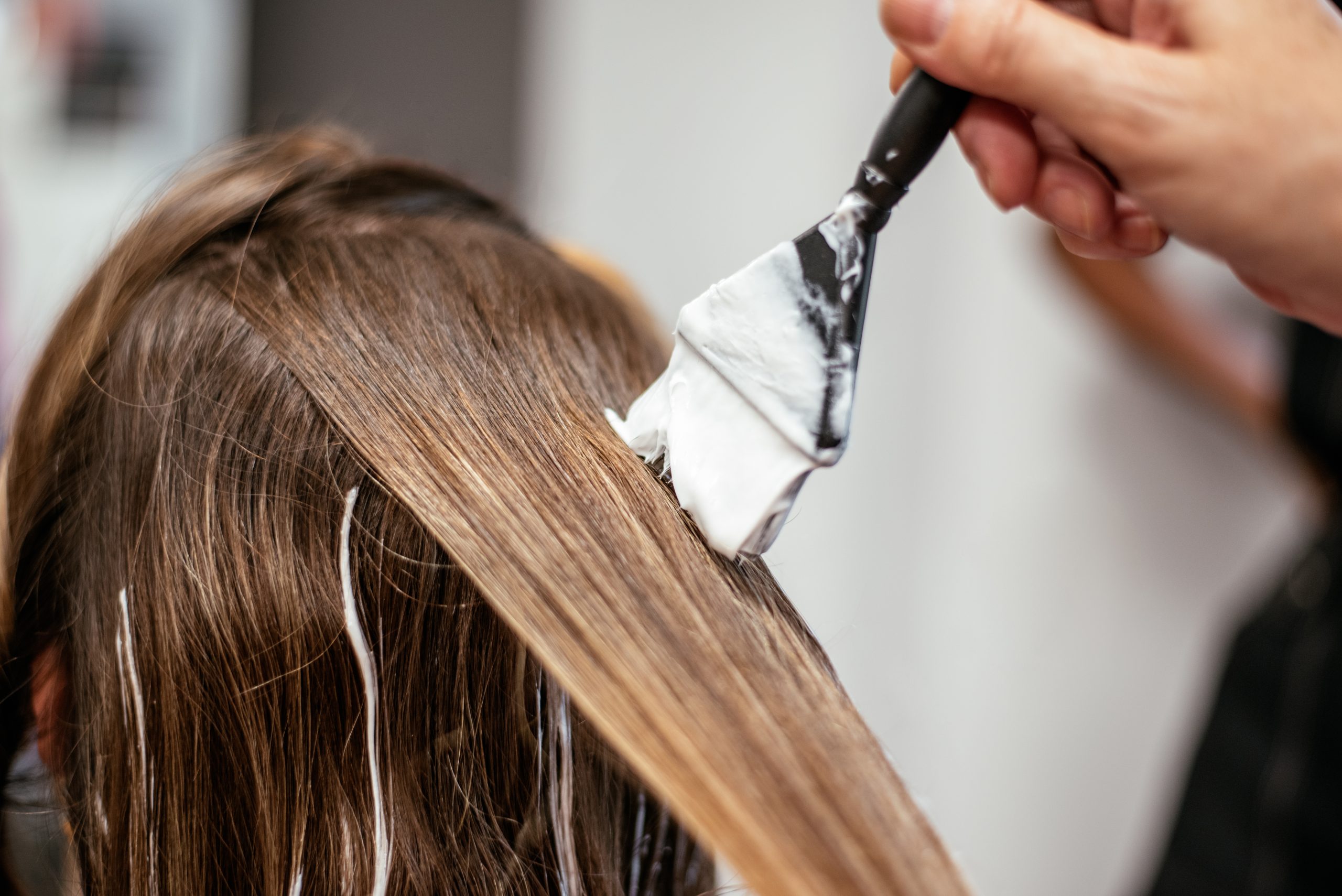
On natural or virgin hair (hair that has never been dyed or chemically treated), colors like light brown or red are relatively easy to apply. However, for bright or vivid colors such as yellow, orange, green, or blue, an additional process called bleaching is required.
Understanding Bleaching and How It Works
Bleaching is a chemical process aimed at removing or lightening the natural pigment of the hair. This process typically uses substances such as hydrogen peroxide and ammonia. The mechanism works by opening the hair cuticle (the outer layer) so that chemicals can penetrate the hair shaft and oxidize melanin.
As a result, the dark natural pigment is broken down into a lighter color or completely removed. This is what allows black hair to turn into pale blonde. However, this process also weakens the hair structure because it disrupts keratin, the main protein in hair.
How Hair Dye Works in the Hair Shaft
Hair dye works by penetrating the cuticle and entering the cortex (the inner part of the hair). Permanent dyes usually contain small molecules that enter the hair shaft and then chemically react to form larger color molecules, effectively becoming “locked” inside the hair.
This is what makes the color long lasting. However, over time and with frequent washing, the cuticle can reopen, causing the color to gradually fade. Semi permanent dyes, on the other hand, only coat the outer layer of the hair, making them easier to wash out.
Read also :
Stop Ignoring Hair Loss: Discover the Causes and Real Solutions
Why Hair Becomes Dry After Coloring
The coloring process, especially bleaching, causes the hair cuticle to open and become damaged. As a result, the hair loses its natural moisture and becomes more porous. Porous hair has difficulty retaining water, making it feel dry, rough, and prone to breakage. Additionally, the loss of natural lipids in the hair reduces its shine and elasticity.
Solutions for Treating Dry Hair After Coloring
To treat dry hair, proper care focused on hydration and structural repair is essential. Use shampoos with mild surfactants and ingredients like cocamidopropyl betaine to avoid stripping natural oils. Conditioner is also crucial, especially those containing behentrimonium chloride or cetrimonium chloride to help soften the hair and reduce tangling.
Hair masks are highly recommended, particularly those containing hydrolyzed keratin to repair hair structure, ceramides to strengthen the protective barrier, and argan oil or jojoba oil to lock in moisture. Ingredients like panthenol (pro vitamin B5) are also effective in attracting and retaining water in the hair shaft. Regular use of these treatments helps maintain healthy hair even after chemical processes.
Conclusion
Dyed hair does have a higher risk of becoming dry, especially when bleaching is involved. This occurs due to structural damage and the loss of natural moisture. Therefore, proper care is essential to maintain hair health.
By preserving moisture and providing adequate nutrients, hair color can last longer while remaining shiny, less prone to breakage, and still beautiful despite being dyed.
Is Your Haircare Product Tested? Make Sure the Formula is Safe and Effective!
Dry and damaged hair after coloring isn't just an aesthetic issue it's a signal that your product formula needs to be tested more seriously. Whether you're a consumer wanting to know what's truly safe for your hair, or a haircare manufacturer aiming to ensure your product doesn't damage hair structure the answer lies in proper testing.
IML Testing & Research is here to help you validate the safety and effectiveness of your haircare formula through scientific methods recognized by BPOM RI. Consult with us today and prove that your formula is truly worthy of trust.
Author: Delfia
Editor: Alphi
References
Bolduc, C., & Shapiro, J. (2001). Hair care products: Waving, straightening, conditioning, and coloring. Clinics in Dermatology, 19(4), 431–436.
Dias, M. F. R. G. (2015). Hair cosmetics: An overview. International Journal of Trichology, 7(1), 2–15.