Why Are Cosmetic Clinical Testing Important to Support Product Claims?

In today’s increasingly competitive beauty industry, consumers are no longer attracted solely by appealing packaging. They also want to know whether the products they use truly provide the benefits claimed on the packaging. Claims such as “moisturizing,” “reducing redness,” “helping minimize wrinkles,” and “improving skin elasticity” require reliable supporting evidence.
This is where cosmetic clinical testing plays a crucial role. Through data obtained from human testing, companies can demonstrate that product benefits are supported by scientific evidence.
Table of content:
- What Are Cosmetic Clinical Trials?
- Why Are Cosmetic Clinical Trials Important?
- Do Your Cosmetic Product Claims Have the Science to Back Them Up?
What Are Cosmetic Clinical Trials?
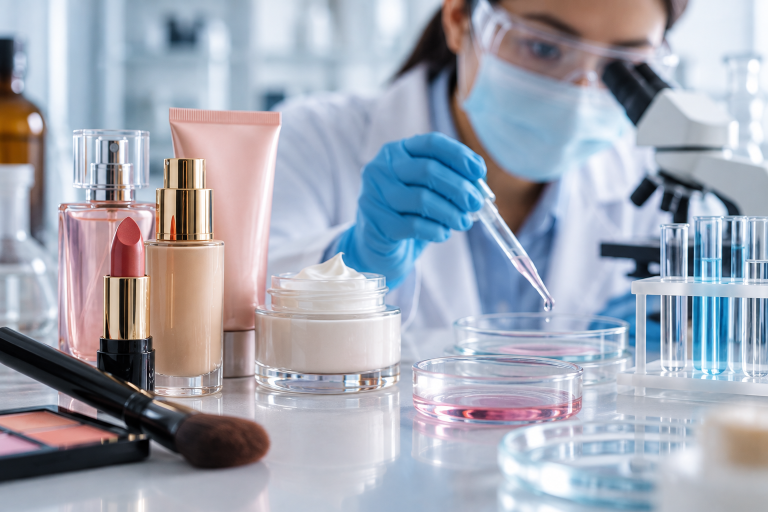
Cosmetic clinical trials are tests conducted on human volunteers to evaluate the safety and effectiveness of a product under actual conditions of use. Unlike laboratory testing performed on raw materials or formulations, clinical trials aim to observe the response of human skin to products used according to the recommended instructions.
During the process, various instruments may be used to objectively measure specific parameters, such as skin hydration levels, elasticity, sebum content, redness levels, and others. The collected data are then statistically analyzed to determine whether significant changes occur and whether they support the claims intended by the manufacturer.
Why Are Cosmetic Clinical Trials Important?
- Ensuring Product Safety for Consumers
One of the main reasons clinical trials are important is to ensure product safety for consumers. Although a cosmetic ingredient may theoretically be considered safe, the combination of ingredients in the final formulation can produce different effects when applied to human skin.
Therefore, tests such as patch tests or skin irritation tests are commonly conducted to evaluate the possibility of redness, itching, burning sensations, or allergic reactions.
- Demonstrating Cosmetic Effectiveness
Claims such as “reduces dark spots,” “improves skin hydration,” or “reduces fine lines” should not rely solely on subjective opinions. In clinical trials, product effectiveness is generally measured using specific instruments, dermatological observations, and panelist evaluations over a certain period of time.
For example, antioxidant skincare products need to be tested to ensure that their active ingredients truly work on the skin, rather than simply remaining stable inside the packaging.
- Increasing Consumer Trust
Clinical trials are also important for increasing consumer trust. Nowadays, consumers are becoming more critical when selecting cosmetic products and tend to seek products supported by scientific evidence. Claims backed by clinical trial data are considered more trustworthy than claims without research support.
This provides added value for manufacturers by improving brand credibility and product competitiveness in the market.
- Supporting Regulatory Compliance
From a regulatory perspective, many countries have regulations regarding the substantiation of cosmetic claims. In the European Union, for example, Cosmetic Regulation No. 1223/2009 and Regulation No. 655/2013 emphasize that cosmetic claims must be supported by adequate and scientifically verifiable evidence.
In Indonesia, BPOM also regulates that information and claims on cosmetic products must not mislead consumers and must be scientifically justifiable.
- Assisting Product Development
Data obtained from testing can be used to improve formulations, determine the optimal concentration of active ingredients, and identify the most suitable skin types for the product. As a result, companies can develop products that are safer, more effective, and better suited to consumer needs.
Cosmetic clinical trials are an essential step in ensuring that product claims are supported by valid scientific evidence. In addition to helping meet regulatory requirements, clinical testing also enhances product credibility, strengthens consumer confidence, and provides a competitive advantage in the market.
Amid growing consumer demand for transparency and product effectiveness, clinical trial data can serve as a strong foundation for the success of a cosmetic brand.
Read also:
Formula and Packaging Compatibility: The Importance of Compatibility Testing in Cosmetics
Do Your Cosmetic Product Claims Have the Science to Back Them Up?
Writing claims like “moisturizes in 7 days” or “proven to brighten” on your product packaging is easy but behind those few words lies a serious responsibility to prove them scientifically. Cosmetic clinical testing is not just about meeting BPOM RI regulatory requirements; it is about building lasting brand credibility in the eyes of both your consumers and business partners.
IML Testing & Research is ready to support brand owners of all sizes in designing and executing cosmetic clinical trials with standardized methodology, valid results, and data ready for both marketing and registration purposes. Consult with our expert team about your clinical testing needs free of charge, and tailored to the specific claims you want to substantiate.
Author: Jihan
Editor: Alphi
REFERENCES
FDA. (n.d.). Cosmetics Labeling Claims.
Newburger, A. E. (2009). Cosmeceuticals: Myths and misconceptions. Clinics in Dermatology, 27(5), 446–452.
Vendruscolo, C.W., Bagatin, E. and Leonardi, G.R. (2025), The Science Behind the Label: Evaluating Claims in Dermatologist-Recommended Cosmetics. Dermatological Reviews, 6: e70045.