Red K10 Dye Found in Cosmetics: How Is Its Safety Evaluated?

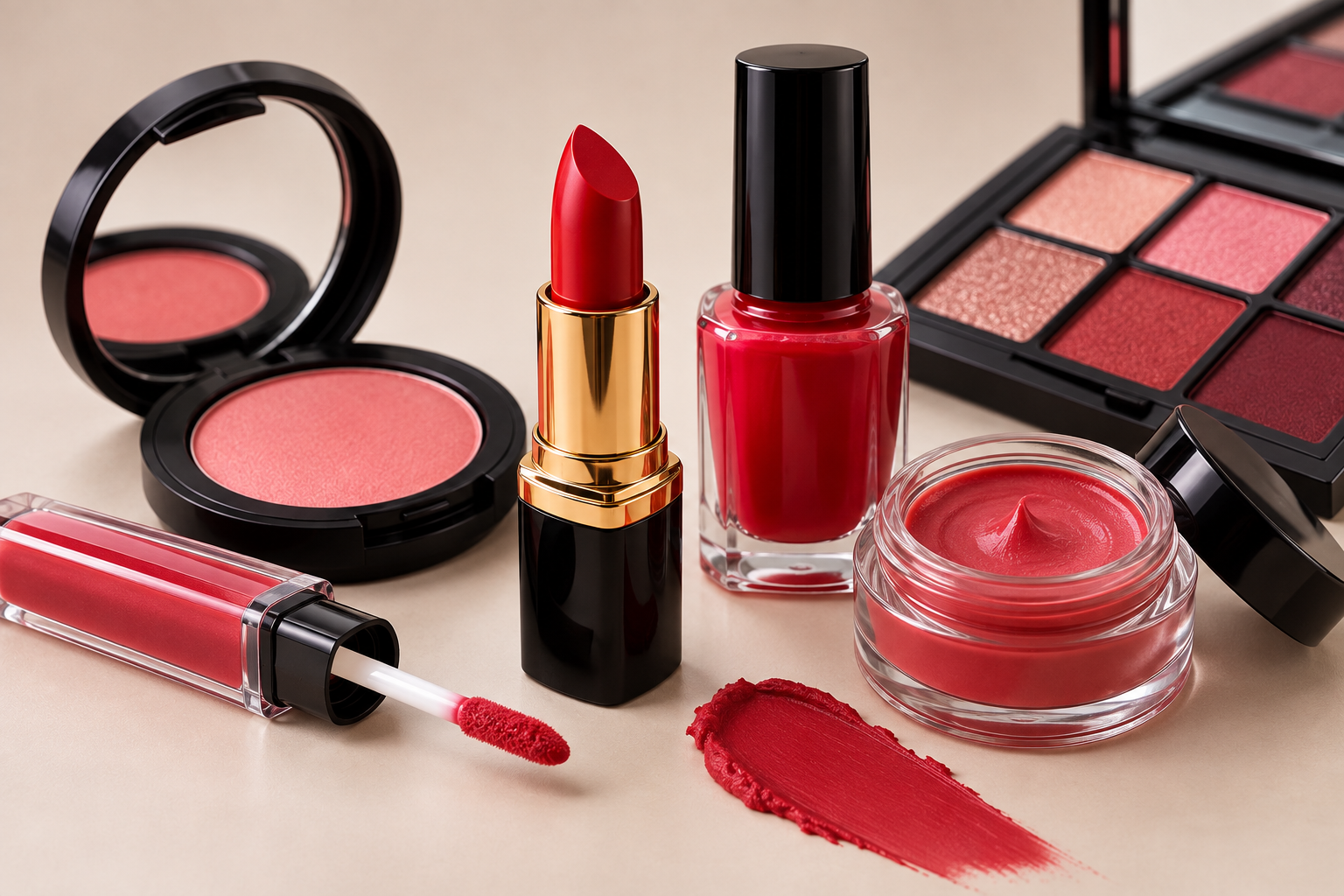
Color is an important characteristic of decorative cosmetics. Lipsticks, blushes, eyeshadows, hair-color products, and other cosmetics use coloring materials to create attractive and consistent appearances.
However, not every coloring substance is appropriate for cosmetic formulations. One substance that has repeatedly attracted regulatory attention in Indonesia is Red K10 dye.
In BPOM's database of cosmetics containing prohibited or hazardous substances, Red K10 is identified as Rhodamine B. The substance has also appeared again in BPOM cosmetic surveillance findings reported in 2026.
Its presence cannot be reliably determined simply by looking at how bright or intensely red a cosmetic appears. Laboratory analysis is required to identify the target compound and, when necessary, determine its concentration.
So, how can Red K10 dye be detected, and how can its safety be evaluated?
Table of Content:
- What Is Red K10 Dye?
- Why Is Red K10 Dye a Concern?
- Can Red K10 Be Identified by Cosmetic Color Alone?
- How Can Red K10 Dye Be Tested in the Laboratory?
- Why Is Method Validation Important?
- Testing Should Not Begin Only with the Finished Product
- Is a Certificate of Analysis Enough?
- Why Should the Finished Cosmetic Still Be Tested?
- Why Is Laboratory Testing Important for the Cosmetics Industry?
What Is Red K10 Dye?
Red K10 dye, as identified in BPOM findings, refers to Rhodamine B. Rhodamine B is a synthetic coloring substance capable of producing strong red or pink coloration and characteristic fluorescence.
Scientific literature frequently describes the substance in connection with industrial applications such as textile and paper coloring. Its presence in cosmetics is therefore an important product-safety and compliance issue.
BPOM has previously reported misuse of Red K10 in decorative cosmetics including lipstick, blush, and eye makeup. An attractive product color alone consequently cannot confirm that its coloring ingredients are appropriate for cosmetic use.
Why Is Red K10 Dye a Concern?
BPOM states that Red K10 dye may pose carcinogenic risks and interfere with liver function. From a toxicological perspective, inappropriate synthetic colorants need to be evaluated by considering chemical identity, exposure level, route of exposure, metabolism, and available toxicity information.
Certain decorative cosmetics also have distinctive exposure scenarios. Lipstick, for example, is repeatedly applied to the lips, and small quantities may be unintentionally ingested during use.
Therefore, control of cosmetic colorants is not merely a matter of product appearance. It is also an important component of formulation safety and quality control.
Can Red K10 Be Identified by Cosmetic Color Alone?
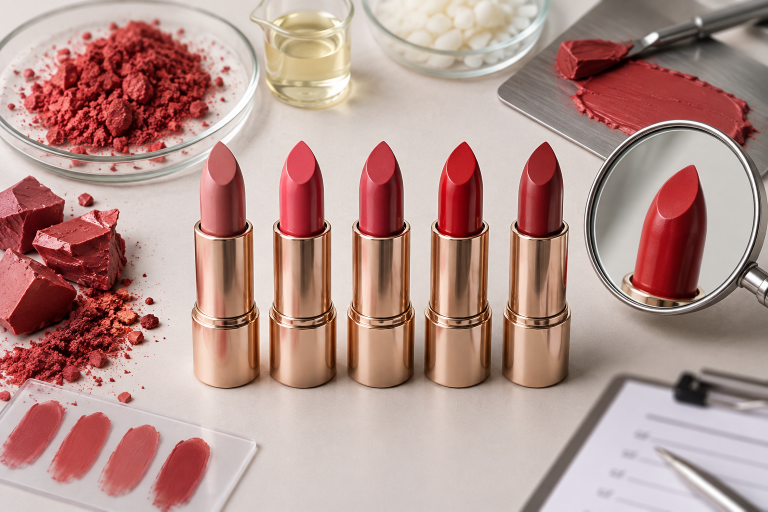
No, a bright-red lipstick does not automatically contain Red K10 dye, while the presence of the compound cannot be confirmed from visual examination alone. Cosmetic products may contain combinations of permitted pigments and colorants capable of producing similar shades.
The final appearance is also influenced by other formulation components such as oils, waxes, fillers, and emollients. For this reason, visual suspicion should be confirmed through appropriate laboratory analysis.
How Can Red K10 Dye Be Tested in the Laboratory?
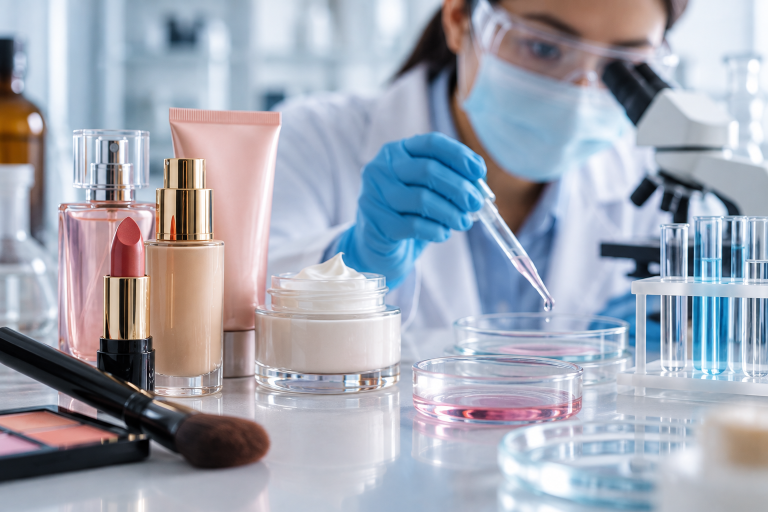
The analysis of Red K10 dye may involve several steps, beginning with sample preparation and followed by identification or quantitative determination. Method selection depends on the analytical objective, sample matrix, expected concentration, and required level of confidence.
Several approaches have been used in scientific studies to analyze Rhodamine B in cosmetics.
1. Sample Preparation
Before analysis, the target compound must generally be separated or extracted from the cosmetic matrix. This step is particularly important for products such as lipstick, which can contain waxes, oils, pigments, and other ingredients that may interfere with analysis.
Sample preparation may involve:
- extraction;
- dissolution;
- separation;
- filtration; or
- analyte concentration.
The extraction solvent and procedure should be selected according to the properties of the target compound and sample matrix. Shi and Chen demonstrated the extraction of Rhodamine B from lipstick before its determination using high-performance liquid chromatography.
Their method achieved approximately 95% recovery under the study conditions.
2. Thin-Layer Chromatography for Screening
Thin-Layer Chromatography (TLC) has been widely investigated as a technique for identifying Rhodamine B in cosmetic samples. In this approach, sample extracts and reference standards are applied to a chromatographic plate.
A mobile phase then moves through the stationary phase, allowing different sample components to separate according to their chemical interactions. Identification may involve comparing sample and standard characteristics such as Rf values and visual or fluorescent responses.
Several studies examining lipstick samples in Indonesia have used TLC for Rhodamine B identification. TLC can be useful as a screening technique, although analytical conclusions should always reflect the intended purpose and performance of the method.
3. UV-Visible Spectrophotometry for Quantitative Evaluation
Rhodamine B has structural characteristics that allow it to absorb radiation within the UV-visible region. This allows the compound to be analyzed using UV-Vis spectrophotometry.
The instrument measures the amount of light absorbed by a sample solution at a selected wavelength. The resulting absorbance can then be compared with a calibration curve to estimate analyte concentration.
A study of imported lipstick samples in Batam combined TLC identification with UV-Vis spectrophotometric quantification and measured Rhodamine B at a maximum wavelength of approximately 548.5 nm under the study conditions. Other analytical studies have also demonstrated UV-Vis-based approaches for determining Rhodamine B in cosmetic samples.
However, analytical conditions should be properly established for the specific method and matrix rather than directly transferring a wavelength or procedure from another study.
4. HPLC for Separation and Quantification
For analyses requiring greater chromatographic separation, High-Performance Liquid Chromatography (HPLC) can be used. HPLC separates components in a sample before the target compound is detected.
This is particularly relevant for cosmetics because they represent complex matrices containing many chemically different ingredients. Shi and Chen developed an HPLC method for determining Rhodamine B in lipstick after extraction.
Their method reported a detection limit of 0.01 µg/g and approximately 95% recovery. Chromatographic separation can therefore help distinguish the target analyte from other compounds that could interfere with measurement.
5. Confirming Compound Identity
Color similarity alone cannot establish chemical identity. An analytical method should be capable of distinguishing Red K10 dye from other colorants that may produce a similar visual appearance.
When greater confidence is required, initial screening may be followed by a more selective analytical approach.
Important considerations include:
- specificity or selectivity;
- sensitivity;
- analytical range;
- cosmetic matrix;
- potential interferences; and
- intended analytical purpose.
These considerations help ensure that the detected response actually corresponds to the target compound.
Why Is Method Validation Important?
Advanced instrumentation alone does not guarantee reliable analytical results. Methods used to detect or quantify Red K10 dye should demonstrate suitable analytical performance.
Depending on the type of method, relevant parameters may include:
- selectivity;
- linearity;
- accuracy;
- precision;
- limit of detection (LOD);
- limit of quantification (LOQ);
- analytical range; and
- robustness.
Method validation provides evidence that an analytical procedure is suitable for its intended purpose. This becomes particularly important when laboratory results are used for quality control, product investigations, or regulatory documentation.
Testing Should Not Begin Only with the Finished Product
Preventing inappropriate substances from entering a cosmetic formulation should ideally begin with raw material controls. Manufacturers can establish specifications covering areas such as:
- colorant identity;
- purity;
- concentration of selected compounds;
- impurity profiles;
- physicochemical characteristics; and
- supporting documentation.
Raw materials obtained from different suppliers may also vary. For this reason, incoming-material evaluation can form an important part of quality control to prevent unsuitable substances from entering the manufacturing process.
Is a Certificate of Analysis Enough?
A Certificate of Analysis or CoA is an important document that provides information about analytical results for a raw material or finished product. However, depending on risk level, supplier qualification, internal specifications, and regulatory requirements, manufacturers may require additional verification.
Independent testing of selected parameters can provide additional objective information about the characteristics of materials used in production.
Why Should the Finished Cosmetic Still Be Tested?
Appropriate raw materials are only the beginning of product control. During manufacturing, several factors may affect the finished formulation, including:
- weighing errors;
- cross-contamination;
- incorrect material handling;
- mixing variation;
- process deviations; and
- procedural non-compliance.
Finished-product testing can therefore become part of an effective quality-control system. For Red K10 dye, analysis of the final cosmetic can help verify that the inappropriate colorant is not present in products intended for distribution.
Why Is Laboratory Testing Important for the Cosmetics Industry?
BPOM surveillance demonstrates that inappropriate colorants can still be detected in cosmetics on the market. During its first-quarter 2026 surveillance, BPOM reported 11 cosmetic products containing hazardous and/or prohibited ingredients.
Red K10 dye was among the substances detected, and BPOM stated that all identified products had undergone laboratory testing and failed applicable safety requirements. The colorant appeared again among substances reported in subsequent 2026 surveillance findings.
These findings highlight the importance of consistent raw-material, manufacturing, and finished-product control. Laboratory testing provides objective analytical information rather than relying solely on product appearance or label information.
Verify Cosmetic Colorants Through Laboratory Testing
Don't rely solely on product color, supplier documentation, or visual appearance to evaluate cosmetic coloring ingredients.
Identify and evaluate Red K10 dye and other chemical compounds through Chemical Compound Testing to obtain objective analytical data about your cosmetic products.
Contact IML Testing & Research today and discuss your cosmetic colorant and product testing requirements with our team!
Author & Editor: Lina
References
Shi, J., & Chen, L. (2014). Determination of rhodamine B in lipsticks by high performance liquid chromatography after extraction with AOT reversed micelles. Analytical Methods, 6, 8627–8632.
Wahyuningsih, E., Sari, A. K., Samlan, K., & Hanistya, R. (2022). Identifikasi Rhodamin B pada lipstik di pasar tradisional sekitar Universitas Muhammadiyah Surabaya menggunakan metode KLT-densitometri. Camellia: Clinical, Pharmaceutical, Analytical and Pharmacy Community Journal, 1(1).
Elfasyari, T. Y., Putri, M. A., & Andayani, R. (2020). Analisis Rhodamin B pada lipstik impor yang beredar di Kota Batam secara kromatografi lapis tipis dan spektrofotometri UV-Vis. PHARMACY: Jurnal Farmasi Indonesia, 17(1).
Devi, N. N. A. S., et al. (2020). Penetapan Rhodamin B pada sampel lipstik dengan menggunakan KLT-spektrofotodensitometri. Jurnal Kimia, 14(1), 77–81.
Soylak, M., et al. (2018). A novel and simple deep eutectic solvent-based liquid phase microextraction method for rhodamine B in cosmetic products and water samples prior to its spectrophotometric determination. Spectrochimica Acta Part A: Molecular and Biomolecular Spectroscopy.
Barel, A. O., Paye, M., & Maibach, H. I. (Eds.). Handbook of Cosmetic Science and Technology. CRC Press.
Schlossman, M. L. (Ed.). The Chemistry and Manufacture of Cosmetics. Allured Publishing.