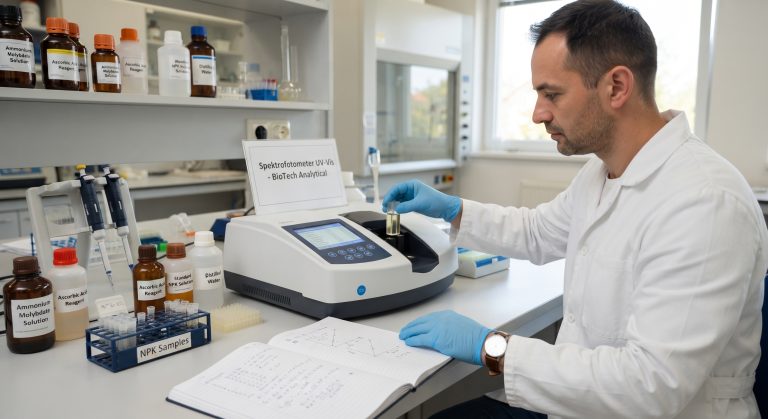
Nutrient Content Testing of Plant Fertilizers: An Important Step to Ensure Product Quality


Plant fertilizers play an important role in supplying nutrients required for plant growth and agricultural production. Nitrogen (N), phosphorus (P), and potassium (K) are among the primary nutrients commonly supplied through plant fertilizers, while some products also contain secondary and micronutrients.
Because plant fertilizer products are expected to provide nutrients according to their stated formulation, verifying their nutrient content is an essential part of quality assurance. Plant fertilizers quality testing provides objective data to determine whether the actual nutrient composition corresponds with the product label and applicable quality requirements.
Table of Content:
- Why Nutrient Content Testing Matters
- What Nutrients Should Be Tested?
- Comparing Laboratory Results with Product Claims
- Laboratory Testing Supports Product Credibility
Why Nutrient Content Testing Matters
A plant fertilizers label communicates the nutrient composition that users rely on when selecting and applying a product. International fertilizer specifications commonly express the major nutrient grade in the sequence N-P₂O₅-K₂O.
Therefore, inaccurate nutrient content can result in fertilizer applications that do not provide the expected nutrient supply. The Indonesian technical guideline for plant fertilizers quality testing states that determining plant fertilizers nutrient content requires a quality test involving analysis of the composition and nutrient levels in a chemical laboratory using established analytical methods.
This makes laboratory analysis an important tool for objectively assessing plant fertilizers quality rather than relying solely on product claims.
Read Also:
Plant Fertilizer Testing: Why It Strategies Matters Before Products Are Marketed?
What Nutrients Should Be Tested?
The parameters tested should correspond to the nutrients claimed on the product label. The technical guideline specifically states that the nutrients to be analyzed are those indicated on the packaging label.
For example, if a compound fertilizer claims to contain N, P, K, calcium (Ca), magnesium (Mg), and micronutrients, the quality test should include analysis of those nutrients. This approach is important because fertilizer formulations can contain more than the three primary nutrients.
Depending on the product, testing may therefore cover secondary nutrients and micronutrients in addition to N, P, and K. FAO also identifies sulfur, magnesium, calcium, iron, copper, zinc, manganese, boron, and molybdenum among nutrients commonly considered in fertilizer analysis.
Comparing Laboratory Results with Product Claims
Laboratory results become meaningful when they are compared with the fertilizer's declared specifications and applicable standards. The Indonesian guideline explains that laboratory nutrient analysis results should be matched with the label on the packaging and evaluated against SNI or applicable minimum technical requirements.
Periodic testing is also relevant for maintaining consistency. The guideline states that plant fertilizers in circulation should maintain stable quality corresponding to the specifications established during registration.
Periodic analysis should demonstrate that nutrient content is at least consistent with the registered quality specification.
Laboratory Testing Supports Product Credibility
Nutrient content testing is therefore more than a routine analytical activity. It provides measurable evidence that supports fertilizer quality control, product consistency, and confidence in the information presented to users.
A reliable testing process should be supported by appropriate laboratory facilities, testing equipment, qualified analysts, and established analytical methods.
Conclusion
For fertilizer manufacturers, distributors, and other stakeholders, nutrient content testing is an important step in ensuring that fertilizer products meet their declared specifications and applicable quality requirements. Laboratory data can help identify discrepancies between actual nutrient composition and product claims while supporting consistent quality throughout distribution.
With reliable testing, fertilizer quality can be demonstrated through objective analytical evidence rather than claims alone.
Need Reliable Plant Fertilizers Nutrient Testing?
IML Research & Testing provides laboratory testing services to help manufacturers and businesses verify fertilizer quality through analytical data. Contact IML Research & Testing to discuss your fertilizer testing requirements and obtain reliable laboratory results to support your product quality assurance.
Author: Fachry
Editor: Lina
References
FAO. Fertilizer Specifications. Food and Agriculture Organization of the United Nations.
FAO. Principles of Feed Ingredient and Fertilizer Analysis. Food and Agriculture Organization of the United Nations.
Maguire, R., Alley, M., & Flowers, W. (2019). Fertilizer Types and Calculating Application Rates. Virginia Cooperative Extension, Virginia Tech.
Purba, T., Situmeang, R., Rohman, H. F., et al. (2021). Pupuk dan Teknologi Pemupukan. Yayasan Kita Menulis.
Suriadikarta, D. A., Setyorini, D., & Hartatik, W. (2004). Petunjuk Teknis Uji Mutu dan Efektivitas Pupuk Alternatif Anorganik. Balai Penelitian Tanah, Pusat Penelitian dan Pengembangan Tanah dan Agroklimat, Badan Penelitian dan Pengembangan Pertanian, Departemen Pertanian.