Who Is Responsible for Product Microbial Contamination: Manufacturers or Consumers?

Cosmetic and pharmaceutical products undergo various control measures to prevent microbial contamination before reaching consumers. However, these efforts cannot always guarantee that products are completely free from contamination.
As a result, cases of microbial contamination can still occur and may even lead to product recalls. Interestingly, microbial contamination does not occur only during manufacturing.
Products that initially meet microbiological specifications may also become contaminated after they have been used by consumers. Therefore, when a product becomes contaminated with microorganisms, is the problem caused by the manufacturer or by the way the product is used?
Table of Content:
- When Contamination Occurs Before the Product Reaches the Market
- Why Can Contamination Occur During Manufacturing?
- When Products Are Already in the Hands of Consumers
When Contamination Occurs Before the Product Reaches the Market
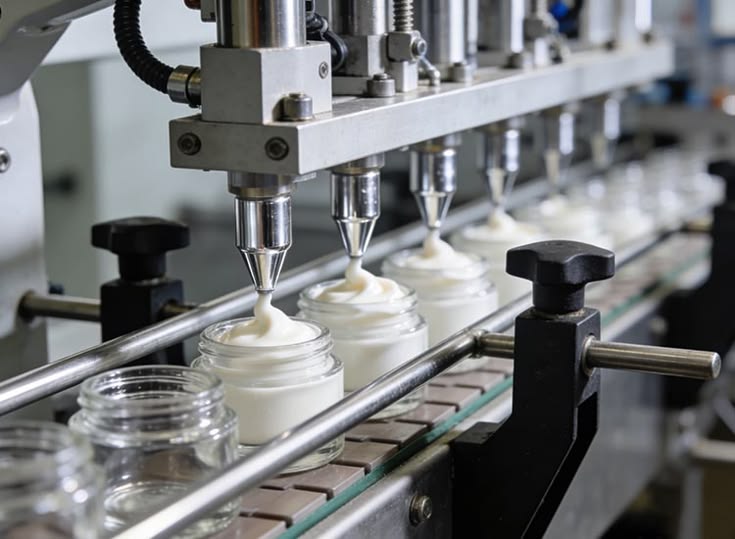
Contamination that occurs during manufacturing, storage, or distribution before a product reaches consumers is known as pre-market contamination. This condition may be associated with issues such as manufacturing failures, inadequate preservative systems, or weaknesses in quality control processes.
In the cosmetics industry, microbial contamination is one of the major causes of product recalls. Contamination is not always visible as mold growth; it can also cause changes in product characteristics, such as odor and texture, which may indicate underlying microbiological issues.
The most frequently reported contaminants are Gram-negative bacteria, particularly Pseudomonas spp. and Enterobacter spp., as well as Gram-positive bacteria such as Bacillus firmus, Enterococcus spp., and Staphylococcus aureus, in addition to various yeasts and molds.
Similar issues are also found in the pharmaceutical industry, particularly in sterile products, non-sterile products, and medical devices. Burkholderia cepacia is one of the contaminants of particular concern because it has been detected in both sterile and non-sterile pharmaceutical products.
Other reported contaminants include Salmonella spp., Klebsiella spp., Escherichia coli, Pseudomonas spp., Staphylococcus spp., Candida spp., Aspergillus spp., and Penicillium spp.
Read Also:
Don’t Let Microbial Contamination Affect Your Cosmetic Products
Why Can Contamination Occur During Manufacturing?
Contamination before a product reaches the market may indicate deficiencies in microbiological control during manufacturing. In sterile products, for example, the presence of Aspergillus spp. and Gram-negative bacteria may suggest problems with the water system used during production.
Meanwhile, the detection of Gram-positive bacteria such as Bacillus spp. and Staphylococcus spp. may indicate shortcomings in environmental control measures. This demonstrates that contamination can originate from multiple sources within the manufacturing environment and not solely from the raw materials used in production.
In the cosmetics industry, microorganisms capable of surviving preservative systems are a significant concern. Certain Gram-negative bacteria, including Pseudomonas spp. and Enterobacter spp., have been reported to exhibit resistance to preservatives used in cosmetic products. Consequently, the presence of a preservative system does not always guarantee complete protection against contamination.
In pharmaceutical products, one of the most fundamental issues is inadequate sterility assurance. Although regulatory oversight and enforcement have become increasingly stringent, failures in maintaining sterility remain one of the leading causes of product contamination.
When Products Are Already in the Hands of Consumers
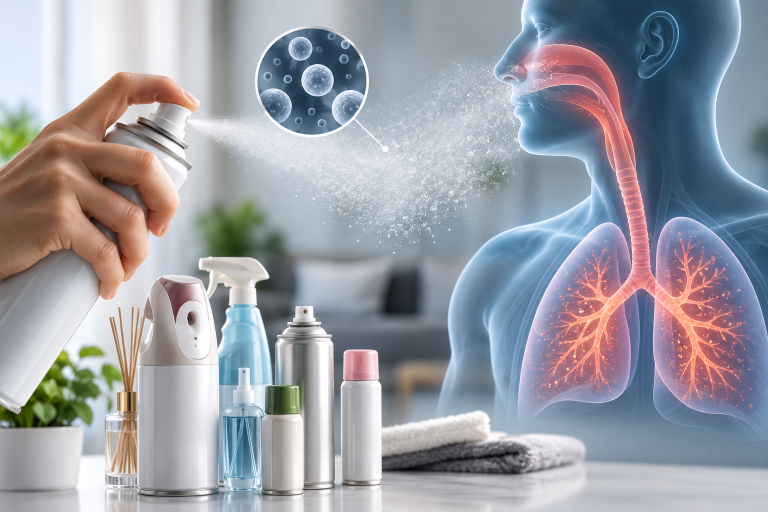
Unlike pre-market contamination, contamination may also occur after a product reaches the consumer. This condition is referred to as post-market contamination and can occur in products that fully complied with microbiological specifications when they left the manufacturing facility.
This distinction is important because compliance with microbiological requirements does not necessarily mean that a product will remain free from microorganisms throughout its entire period of use. Once a product is opened and used, storage conditions and consumer handling practices become factors that must be considered when evaluating contamination events.
Therefore, contamination occurring during household use does not automatically indicate a manufacturing failure. Such contamination may have different characteristics because it develops in a product that originally met microbiological quality requirements.
For this reason, addressing product contamination cannot focus solely on improving manufacturing processes. If contamination occurs after consumer use, storage practices, product handling, and user behavior must also be considered as part of contamination risk management.
So, is microbial contamination the fault of the manufacturer or the user? The answer depends on when and how the contamination occurred. Contamination before a product reaches the market may indicate failures in manufacturing, preservation systems, environmental control, or quality control processes.
In contrast, contamination occurring after product use is often associated with storage conditions and consumer handling practices. Therefore, ensuring the microbiological safety of a product requires control from both perspectives.
Manufacturers must ensure that products comply with microbiological specifications before they are marketed, while proper storage and handling after purchase are also essential to maintain product safety throughout its period of use.
Evaluate Product Protection Against Microbial Contamination
Microbial contamination can originate from raw materials, manufacturing processes, the environment, packaging, or consumer use. Don't simply guess the source—evaluate your product's preservative system through laboratory testing!
Through Efficacy Testing, including Challenge Testing or Preservative Efficacy Testing, manufacturers can obtain data to evaluate how effectively the preservative system controls microbial growth. Contact IML Testing & Research today and discuss your product testing requirements with our team!
Author: Dherika
Editor: Lina
References
Iskandar, K., Marchin, L., & Roques, C. (2026). Microbial contamination of medicines, medical devices, cosmetics, child and personal care products: a comprehensive review of secondary contamination risks in home-use settings. Front. Microbiol, 17:1836448, 1-36. doi: 10.3389/fmicb.2026.1836448.
Natof, T., & Pellegrini, M. V. (2021). Food and Drug Administration Recalls. Available online at: https://www.ncbi.nlm.nih.gov/books/NBK570589/. (Accessed September 12, 2026).