NPK Fertilizer Quality Testing: Ensuring Products Meet Standards Before Marketing

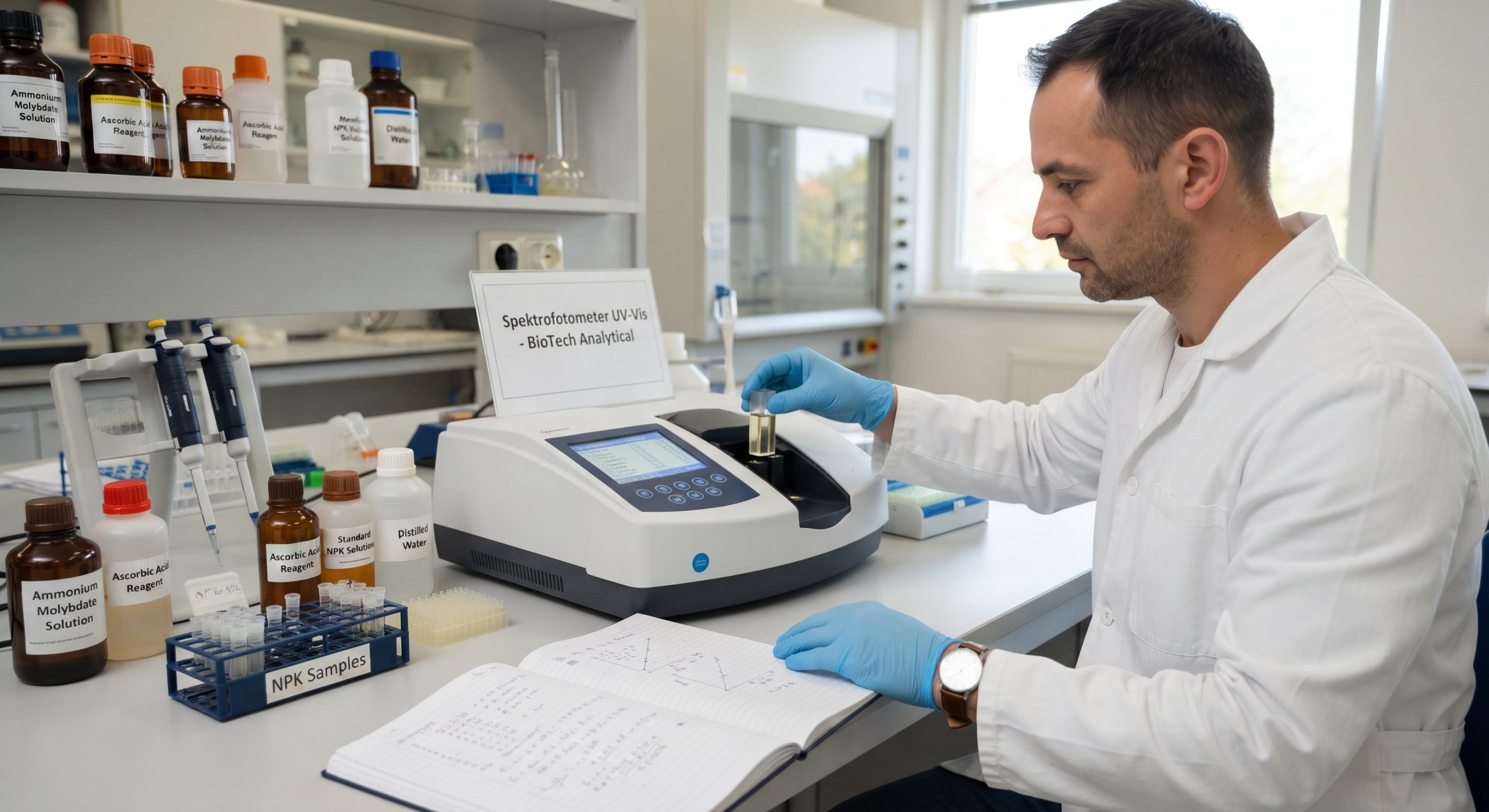
NPK fertilizer is widely used to supply plants with the three primary nutrients: nitrogen (N), phosphorus, and potassium. The nutrient grade is commonly expressed in the sequence N–P₂O₅–K₂O, such as 15-15-15 or 16-16-16. Because these values represent the nutrient composition claimed on the product label, NPK fertilizer quality testing is important to provide reliable evidence that the actual fertilizer composition corresponds to the declared specification.
FAO also describes fertilizer grade as the legally guaranteed percentage by weight of available plant nutrients.
Table of Content:
- Why NPK Fertilizer Quality Testing Matters
- Key Stages of NPK Quality Testing
- Comparing Results with Product Specifications
Why NPK Fertilizer Quality Testing Matters
Quality testing is an important part of ensuring that fertilizer products comply with applicable quality requirements before they are marketed. The technical guidance uploaded for this project defines fertilizer quality testing as laboratory analysis of the composition and nutrient content of inorganic fertilizers using established analytical methods.
The guidance also explains that fertilizer quality standards may be established through SNI or minimum technical requirements set by the relevant authority. Therefore, NPK fertilizer quality testing should focus on the nutrients claimed on the product label to verify their compliance with the applicable specifications.
If a fertilizer claims N, P, and K as its principal nutrients, these parameters need to be analyzed through NPK fertilizer quality testing so that the laboratory results can be compared with the product specification. If additional nutrients are claimed, those nutrients should also be included in the quality analysis.
Read Also:
7 Fertilizer Quality Testing Parameters for NPK Fertilizer Before Market Release
Key Stages of NPK Quality Testing
The NPK fertilizer quality testing process begins with representative sampling. Proper sampling is essential because laboratory results are only meaningful when the submitted sample adequately represents the fertilizer lot.
The technical guidance describes different sampling procedures depending on whether the fertilizer is packaged, bulk, solid, or liquid. For packaged granular or powdered fertilizer, samples are taken randomly from different containers, combined, mixed thoroughly, and stored in clean, dry, airtight packaging before analysis.
The next stage is laboratory analysis. Samples are submitted to a chemical laboratory capable of analyzing fertilizer nutrients. The analytical parameters should correspond to the nutrients stated on the label.
The laboratory results can then provide objective data for evaluating whether the product meets its declared specification.
Comparing Results with Product Specifications
Laboratory results should not be viewed in isolation. The technical guidance recommends comparing laboratory nutrient results and physical observations with the information stated on the product label and applicable quality standards or minimum technical requirements.
This comparison is important for identifying quality deviations before a product reaches the market. Quality monitoring should also be performed periodically because fertilizer products in circulation are expected to maintain stable quality consistent with their registered specifications.
Verify NPK Fertilizer Quality Through Laboratory Testing
Fertilizer quality cannot be evaluated solely from its physical appearance or packaging information. Verify Nitrogen (N), Phosphorus (P), Potassium (K), and other relevant chemical parameters through laboratory testing!
Through Chemical Compound Testing, manufacturers can obtain analytical data to support quality control, batch-to-batch consistency, and compliance with established product specifications.
Contact IML Testing & Research today and discuss your NPK fertilizer quality testing requirements with our team!
Author: Fachry
Editor: Lina
References
Food and Agriculture Organization of the United Nations (FAO). Fertilizer Specifications. FAO menjelaskan bahwa grade pupuk NPK dinyatakan dalam urutan N–P₂O₅–K₂O dan spesifikasi digunakan sebagai dasar penilaian kualitas produk komersial.
Maguire, R., Alley, M., & Flowers, W. (2019). Fertilizer Types and Calculating Application Rates. Virginia Cooperative Extension, Virginia Tech. Sumber ini menjelaskan bahwa konsentrasi N–P₂O₅–K₂O pada pupuk dinyatakan pada label dan pengujian produk digunakan untuk memverifikasi ketepatan pelabelan.
Purba, T., Situmeang, R., Rohman, H. F., et al. (2021). Pupuk dan Teknologi Pemupukan. Yayasan Kita Menulis. Buku ini secara khusus memuat pembahasan mengenai
Suriadikarta, D. A., Setyorini, D., & Hartatik, W. (2004). Petunjuk Teknis Uji Mutu dan Efektivitas Pupuk Alternatif Anorganik. Balai Penelitian Tanah, Pusat Penelitian dan Pengembangan Tanah dan Agroklimat, Badan Penelitian dan Pengembangan Pertanian, Departemen Pertanian.