3 Benefits of Panthenol for the Skin Barrier and the Importance of Laboratory Testing

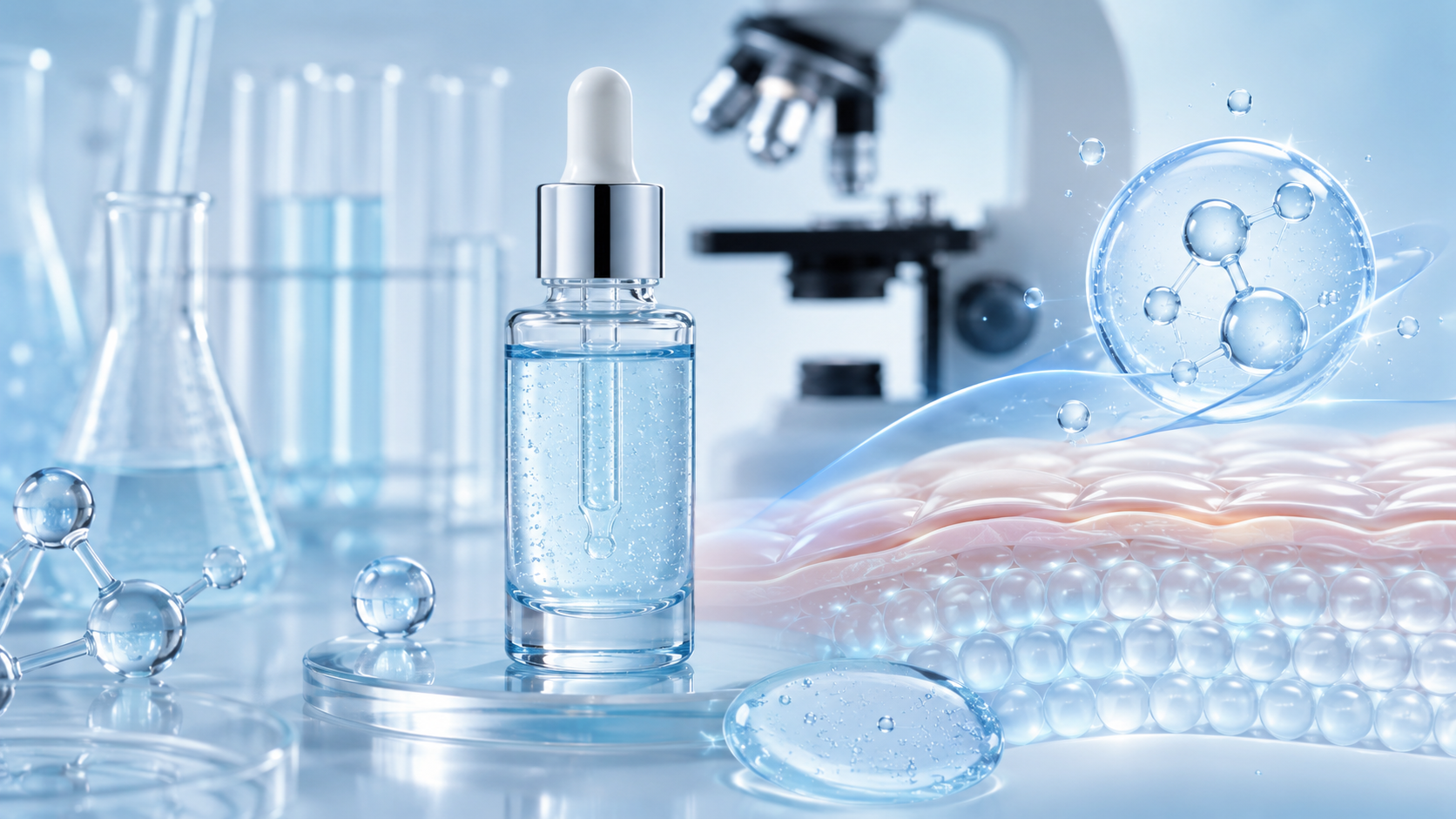
Panthenol is increasingly incorporated into serums, moisturizers, creams, lotions, and products intended for sensitive skin. Commonly known as provitamin B5, it functions as a humectant and skin-conditioning agent, making it a popular ingredient for products designed to support hydration and the skin’s protective barrier.
However, listing benefits of panthenol as an ingredient does not automatically verify its concentration, stability, or performance in a finished formulation. Laboratory data are needed to ensure that product claims are supported by measurable and reliable evidence.
Table of Content:
- What Is the Skin Barrier?
- Benefits of Panthenol for the Skin Barrier
- Bridging Scientific Benefits and Product Claims
- Relevant Laboratory Testing
- Supporting quality and safety tests
What Is the Skin Barrier?
The skin barrier is the outer protective structure of the skin, primarily located within the stratum corneum. It helps retain water while protecting the body from irritants and environmental exposure.
When barrier function is compromised, transepidermal water loss may increase, leaving the skin dry, rough, sensitive, or uncomfortable. Important parameters used to evaluate barrier condition include skin hydration, pH, and transepidermal water loss or TEWL.
Benefits of Panthenol for the Skin Barrier
1. Helps maintain skin hydration
Benefits of Panthenol acts as a humectant by helping attract and retain water within the skin. Its inclusion in topical products may help the skin feel softer, smoother, and less prone to dryness.
A randomized, double-blind, placebo-controlled study reported that seven days of topical dexpanthenol treatment improved stratum corneum hydration and reduced transepidermal water loss compared with the vehicle control.
2. Supports skin-barrier recovery
Benefits of Panthenol is also used to support the recovery of compromised barrier function. Research involving sodium lauryl sulphate-induced irritation found that a dexpanthenol-containing cream improved barrier repair and skin hydration.
Other controlled studies reported improvements in TEWL, stratum corneum hydration, and the organization of intercellular lipid structures following the use of a panthenol-containing emollient.
3. Helps soothe irritated skin
A weakened skin barrier is frequently associated with redness, discomfort, inflammation, and a rougher texture. Dexpanthenol has been reported to help reduce skin roughness and inflammation after experimentally induced irritation, supporting its use in products formulated for dry and sensitive skin.
Bridging Scientific Benefits and Product Claims
Evidence supporting an ingredient does not guarantee that every finished product containing that ingredient will provide the same benefits of panthenol. Product performance can also be influenced by active concentration, formulation type, ingredient interactions, delivery system, packaging, and storage stability.
Cosmetic manufacturers therefore need to verify that the actual panthenol content corresponds with the formulation and label claims. Testing is also necessary to determine whether the ingredient remains stable and functional throughout the intended shelf life.
Relevant Laboratory Testing
Panthenol identification and content testing
Laboratory analysis can identify and quantify benefits of panthenol in finished cosmetic formulations. Chromatographic techniques such as HPLC or UHPLC-MS may be developed and validated to provide accurate, precise, and reliable measurements in complex product matrices.
When required, specialized chromatographic methods can also separate and quantify panthenol enantiomers, including biologically active D-panthenol.
Product stability testing
Stability testing evaluates whether panthenol content and product characteristics—including color, odor, pH, viscosity, homogeneity, and physical appearance—remain within specification during storage.
Claim-substantiation testing
Products claiming to moisturize the skin or support barrier function may be evaluated using skin-hydration measurements and TEWL assessments. The study design should reflect the product type, intended use, target population, and proposed claims.
Supporting quality and safety tests
Depending on the formulation and product category, testing may also include irritation assessment, microbiological analysis, pH measurement, and other relevant quality or safety parameters. The final testing strategy should be tailored to the product and applicable regulatory requirements.
Test Your Panthenol Products at IML Testing & Research
Do not rely solely on ingredient lists and marketing claims. Conduct panthenol content, stability, quality, and efficacy testing with IML Testing & Research.
Reliable laboratory data can help your company confirm formulation accuracy, substantiate product claims, maintain consistent quality, and strengthen product credibility before market release.
Author & Editor: Lina
References
Gehring, W., & Gloor, M. (2000). Effect of topically applied dexpanthenol on epidermal barrier function and stratum corneum hydration: Results of a human in vivo study. Arzneimittelforschung, 50(7), 659–663. DOI: 10.1055/s-0031-1300268.
Proksch, E., & Nissen, H. P. (2002). Dexpanthenol enhances skin barrier repair and reduces inflammation after sodium lauryl sulphate-induced irritation. Journal of Dermatological Treatment, 13(4), 173–178. DOI: 10.1080/09546630212345674.
Stettler, H., Kurka, P., Lunau, N., et al. (2017). A new topical panthenol-containing emollient: Results from two randomized controlled studies assessing its skin moisturization and barrier restoration potential, and the effect on skin microflora. Journal of Dermatological Treatment, 28(2), 173–180. DOI: 10.1080/09546634.2016.1214235.
Proksch, E., de Bony, R., Trapp, S., & Boudon, S. (2017). Topical use of dexpanthenol: A 70th anniversary article. Journal of Dermatological Treatment, 28(8), 766–773. DOI: 10.1080/09546634.2017.1325310.
Scott, L. N., Fiume, M., Bergfeld, W. F., et al. (2022). Safety assessment of panthenol, pantothenic acid, and derivatives as used in cosmetics. International Journal of Toxicology, 41(Supplement 3). DOI: 10.1177/10915818221124809.
Weiss, C. L., Fairchild, M. R., Stanton, B., Nshime, B. S., & Parkanzky, P. D. (2019). Innovative method for the analysis of dexpanthenol in hair care products. Journal of AOAC International, 102(2), 633–637. DOI: 10.5740/jaoacint.18-0053.
Hroboňová, K., & Lomenová, A. (2020). Determination of panthenol enantiomers in cosmetic preparations using an achiral-chiral-coupled column HPLC system. Chirality, 32(2), 191–199. DOI: 10.1002/chir.23152.