Inhalation Testing: Why Is It Important for Aerosol Products and Chemicals?

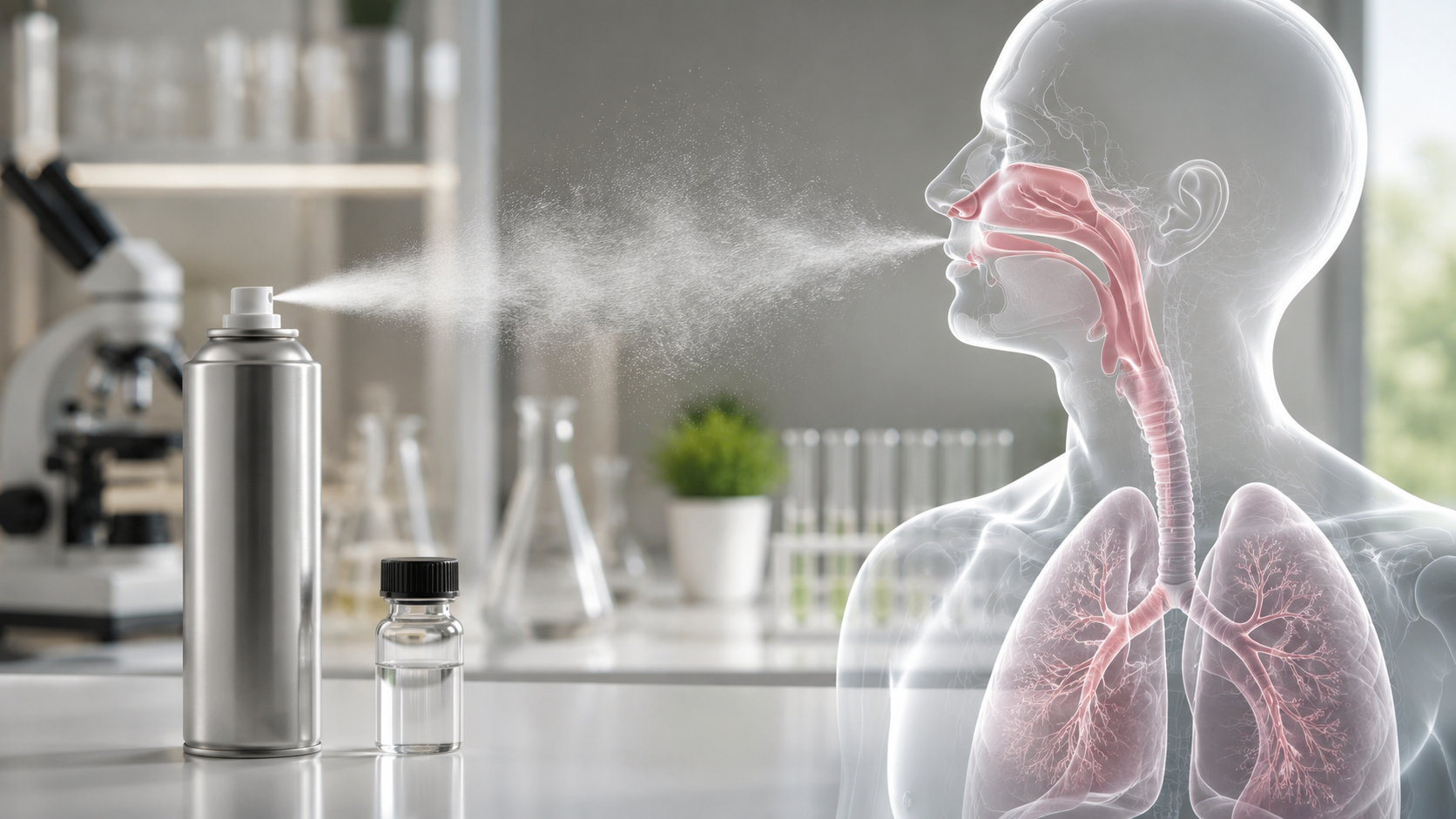
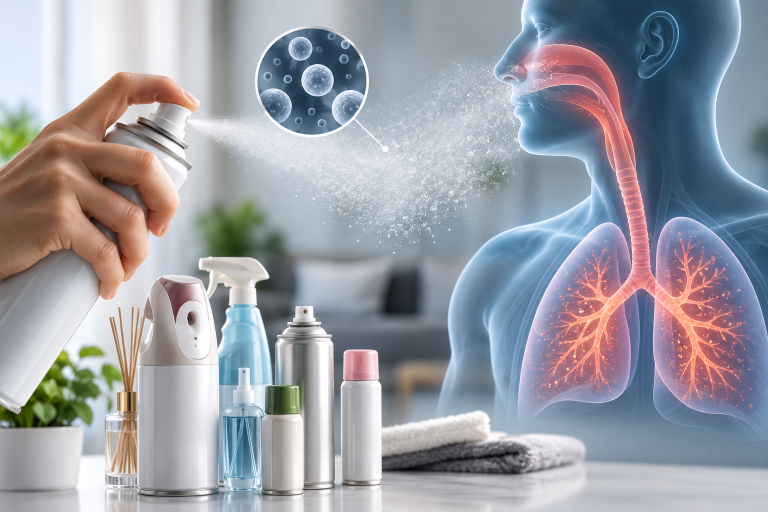
Aerosol products and chemicals may generate gases, vapors, dusts, mists, or fine particles during use. These materials can enter the body through the nose or mouth and reach different regions of the respiratory tract.
Therefore, oral or dermal testing alone may not fully address product safety when inhalation exposure is reasonably expected.
Table of Content:
- What Is Inhalation Testing?
- Why Should Aerosol Products Be Considered for Inhalation Testing?
- Which Products May Require Inhalation Testing?
- Potential Study Parameters
- Bridging Exposure Potential and Safety Data
What Is Inhalation Testing?
Inhalation testing is a form of toxicity assessment used to evaluate adverse effects that may occur after a substance is breathed into the respiratory system. Test materials may be presented as gases, vapors, liquid aerosols, or solid particles, depending on the form likely to occur during actual product use.
The resulting data may support hazard characterization, inhalation-risk assessment, substance classification, and the development of appropriate exposure-control measures.
Read Also:
Understanding Pyrethroids: Effective and Relatively Safe Active Ingredients in Pesticides
Why Should Aerosol Products Be Considered for Inhalation Testing?
1. They create a relevant route of exposure
Spray products may release droplets or particles into the air. When used close to the face or in a poorly ventilated area, part of the airborne material may be inhaled.
Potential exposure depends on airborne concentration, frequency and duration of use, spraying distance, ventilation, and the physical properties of the formulation. Product safety should therefore be assessed in relation to its intended and reasonably foreseeable use.
2. Testing can identify effects after short-term exposure
Acute inhalation studies evaluate effects following a single, short exposure. OECD Test Guideline 436 is intended to provide information for short-term inhalation-hazard assessment and GHS classification.
The procedure uses predefined exposure concentrations, generally for four hours, followed by an observation period of at least 14 days. When more quantitative concentration-response information is needed, OECD Test Guideline 403 may be considered.
This guideline can provide data such as lethal concentration estimates and other information relevant to quantitative risk assessment.
3. Repeated exposure may require further evaluation
Some products are used daily or handled repeatedly in occupational environments. In these situations, a single-exposure study may not sufficiently represent the expected exposure pattern.
OECD Test Guideline 412 addresses repeated inhalation exposure over 28 days, while OECD Test Guideline 413 covers a 90-day exposure period. These studies may include clinical observations, hematology, clinical chemistry, organ weights, gross pathology, and histopathological examination.
4. Particle size influences respiratory deposition
Aerodynamic particle size is an important characteristic of aerosol products. Particles of different sizes may deposit in different regions of the respiratory system, from the nose and throat to the deeper airways and alveolar region.
Deposition is also influenced by breathing patterns, airway geometry, hygroscopic behavior, and the physicochemical properties of the aerosol. Appropriate exposure-atmosphere generation and particle-size characterization are therefore essential components of inhalation-study design.
Which Products May Require Inhalation Testing?
Inhalation testing may be considered for products that realistically generate inhalable materials, including:
- spray pesticides and disinfectants;
- household or industrial cleaning sprays;
- spray paints, coatings, and volatile chemicals;
- aerosol cosmetic products;
- powders and industrial materials that generate dust;
- other products that form mists, vapors, gases, or particles during use.
However, not every aerosol product requires the same testing protocol. Testing needs should be determined according to regulatory objectives, product use, exposure likelihood, physicochemical properties, formulation type, and existing toxicological information. OECD guidance also emphasizes reviewing available in vitro, in chemico, in silico, and existing in vivo information before conducting additional animal studies.
Potential Study Parameters
Depending on the test design and exposure duration, evaluated parameters may include:
- clinical signs during and after exposure;
- changes in respiratory patterns;
- body-weight changes and general condition;
- respiratory-tract irritation;
- hematology and clinical chemistry;
- gross pathology and organ evaluation;
- tissue changes and effect reversibility.
Repeated-exposure studies may also include bronchoalveolar lavage, lung-burden measurements, and additional histopathological assessments.
Bridging Exposure Potential and Safety Data
An aerosol or volatile format does not automatically mean that a product is unsafe. It does, however, identify a potential exposure route that should be appropriately evaluated.
Manufacturers need to understand how the product is used, which materials become airborne, the potential exposure concentration, and who may be exposed. Based on this information, an appropriate strategy may include acute inhalation testing, repeated-exposure studies, aerosol characterization, or another scientifically justified approach.
Evaluate Your Inhalation-Testing Needs with IML Testing & Research
Do not wait until safety or documentation issues arise late in product development. Consult IML Testing & Research regarding the inhalation-testing requirements for your aerosol products and chemicals.
An appropriate testing strategy can help strengthen your safety assessment, technical documentation, and product credibility before market release.
Author & Editor: Lina
References
OECD. (2024). Test Guideline No. 403: Acute Inhalation Toxicity. OECD Guidelines for the Testing of Chemicals, Section 4.
OECD. (2009). Test No. 436: Acute Inhalation Toxicity—Acute Toxic Class Method. OECD Publishing.
OECD. (2018). Test No. 412: Subacute Inhalation Toxicity—28-Day Study. OECD Publishing.
OECD. (2018). Test No. 413: Subchronic Inhalation Toxicity—90-Day Study. OECD Publishing.
OECD. (2018). Guidance Document on Inhalation Toxicity Studies: Second Edition. OECD Series on Testing and Assessment.
Darquenne, C. (2012). Aerosol deposition in health and disease. Journal of Aerosol Medicine and Pulmonary Drug Delivery, 25(3), 140–147. DOI: 10.1089/jamp.2011.0916.
Carvalho, T. C., Peters, J. I., & Williams, R. O. III. (2011). Influence of particle size on regional lung deposition: What evidence is there? International Journal of Pharmaceutics, 406(1–2), 1–10. DOI: 10.1016/j.ijpharm.2010.12.040.