Ethanol Concentration Testing for Hand Sanitizer Spray: Strategies to Ensure Your Product is Truly Effective at Killing Germs

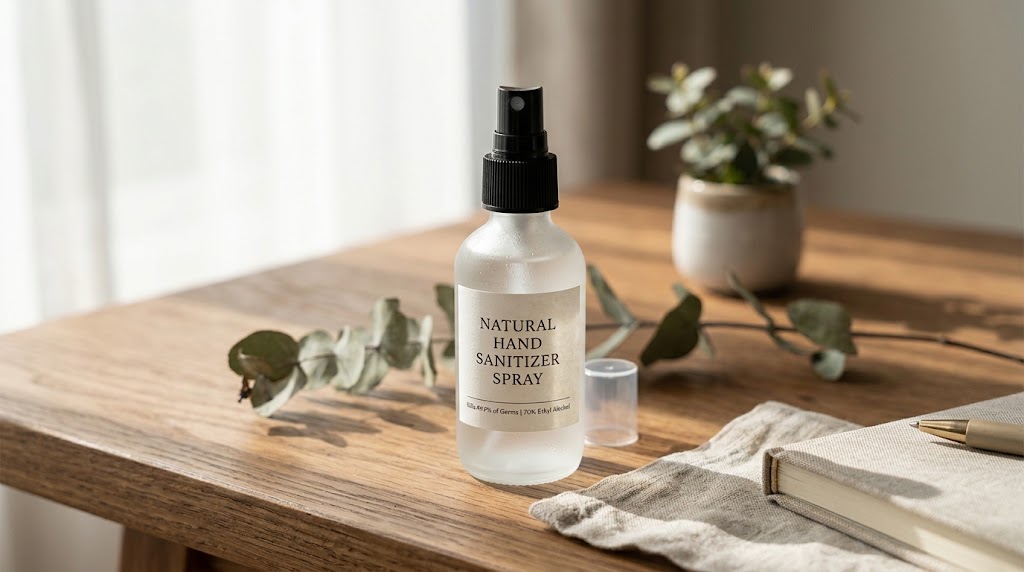
As global awareness of hand hygiene continues to rise, hand sanitizer spray has become a mandatory staple in consumers' pockets, bags, and workspaces. The spray format is highly favored for its practicality—it effectively reaches between the fingers, dries quickly, and leaves no sticky residue compared to traditional gel formats.
However, for cosmetic manufacturers and brand owners, a crucial question lies beneath this convenience: Is your product formulation truly effective at killing germs as claimed on the packaging?
The ultimate efficacy of a liquid hand sanitizer spray relies heavily on its primary active ingredient, with ethanol (ethyl alcohol) being the most widely utilized.
Table of Content:
- Why is Ethanol Concentration the Ultimate Determining Factor?
- Mass Production Challenges and the Necessity of Laboratory Testing
Why is Ethanol Concentration the Ultimate Determining Factor?
Ethanol in hand sanitizer spray functions as a potent antimicrobial agent by denaturing proteins and dissolving the lipid layers of bacterial and viral cell membranes, effectively destroying the pathogens. However, this cellular destruction process hinges on one absolute condition: the precise concentration.
According to official guidelines from the World Health Organization (WHO) and the Indonesian Ministry of Health (Kemenkes), the effective percentage of ethanol for hand antisepsis falls strictly within the 60% to 80% range. Many novice formulators operate under the misconception that a higher alcohol percentage (e.g., 90% or 95%) yields a stronger product.
In reality, a hand sanitizer spray with an alcohol content above 80% evaporates far too quickly before it can penetrate bacterial cell walls. Furthermore, the protein denaturation process requires the presence of water.
Without a sufficient water ratio (typically found in the 60-70% alcohol range), bacteria are merely temporarily paralyzed, not eradicated. Conversely, if the compounding process fails and the ethanol concentration drops below 60%, the product entirely loses its antibacterial properties, rendering any “Kills 99.9% of Germs” label claims dangerously misleading.
Read Also:
Rarely known, This is How to Test The Effectiveness of Handsanitizer
Mass Production Challenges and the Necessity of Laboratory Testing
In contract manufacturing (maklon) or large-scale factory production, maintaining a consistent ethanol concentration is a significant technical hurdle. Ethanol is highly volatile.
During the mixing phase (blending active ingredients and fragrances) through to the final filling process into spray bottles, a portion of the ethanol inevitably evaporates into the air, causing the final percentage within the bottle to drop drastically. This is exactly why Ethanol Concentration Testing (Quantitative Analysis) at a third-party laboratory is a non-negotiable quality control step.
This testing typically utilizes advanced instrumentation such as Gas Chromatography (GC). Through GC testing, laboratories not only precisely measure whether the ethanol level in your hand sanitizer spray remains stable at the required 70%, but the instrument also detects impurities.
This ensures the solvent used is pure Ethanol and not Methanol—a highly toxic compound strictly prohibited in antiseptic products. For a brand owner, holding a Certificate of Analysis (CoA) from an independent laboratory is not merely a formality to secure a distribution permit (NIE PKRT); it is authentic, data-driven proof that elevates consumer trust and shields your business from devastating product recalls in the future.
Don't Let Your Hand Sanitizer Spray Face Distribution Permit Rejections and Ruin Your Brand's Reputation!
Stop guessing about your formulation's quality! Guarantee that the ethanol percentage in your hand sanitizer spray is 100% accurate, stable, and completely free from dangerous methanol contamination with international-standard Gas Chromatography testing services at IML Testing and Research.
Our priority testing slots are strictly limited. Do not wait until your product is rejected by regulators or pulled from the market! Contact our expert team RIGHT NOW to secure your sample testing schedule and prove your product's premium quality today.
Author & Editor: Lina
References
Block, S. S. (2001). Disinfection, Sterilization, and Preservation (5th ed.). Philadelphia: Lippincott Williams & Wilkins.
Ministry of Health of the Republic of Indonesia. (2020). Pedoman Formulasi dan Pembuatan Hand Sanitizer Mandiri (Guidelines for the Formulation and Production of Independent Hand Sanitizers). Jakarta: Directorate General of Pharmaceuticals and Medical Devices.
Radji, M. (2011). Buku Ajar Mikrobiologi: Panduan Mahasiswa Farmasi dan Kedokteran (Textbook of Microbiology: A Guide for Pharmacy and Medical Students). Jakarta: EGC.
Rowe, R. C., Sheskey, P. J., & Quinn, M. E. (2009). Handbook of Pharmaceutical Excipients (6th ed.). London: Pharmaceutical Press.