Measurement Strategies: How Does a UV Vis Spectrophotometer Determine the Concentration of a Compound?

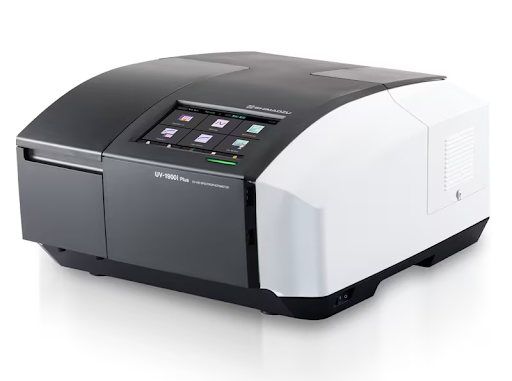
A UV Vis spectrophotometer is an analytical instrument used to measure the interaction between ultraviolet and visible light radiation and a sample. In quantitative testing, this instrument can produce an absorbance value that is then used to determine the concentration or content of a compound in a sample.
UV Vis spectrophotometer is widely used in chemical analysis because the measurement process is relatively fast and can be applied to various types of samples when the target compound has characteristics that are suitable for the analytical method.
So, how can light actually be converted into a concentration value? What is the relationship between absorbance and concentration? And what factors can affect the test results?
Table of Content:
- Understanding the Working Principle of a UV Vis Spectrophotometer in Chemical Analysis
- From Absorbance Value to Compound Concentration: How Does the Process Work?
- What Compounds Can Be Analyzed Using spectrophotometer UV Vis?
- Factors Affecting the Accuracy of UV Vis Assay Testing
Understanding the Working Principle of a UV Vis Spectrophotometer in Chemical Analysis
When a compound absorbs radiation at a specific wavelength, the instrument measures the change in light intensity. The measurement result is then displayed as an absorbance or transmittance value.
In modern spectrophotometer UV Vis instruments, the main components include a radiation source, a wavelength selection system such as a monochromator, a sample holder, and a detector. The detector captures the radiation passing through the sample and converts it into a signal that can be processed by the instrument.
Because each compound has different light absorption characteristics, wavelength selection is an important part of the analytical method. In certain tests, the maximum wavelength or λmax may be selected because it provides a higher response to the target compound.
Read Also:
Strategies Classical Testing vs. Instrumental Testing: What Is the Difference?
From Absorbance Value to Compound Concentration: How Does the Process Work?
When a compound absorbs radiation at a specific wavelength, the instrument measures the change in light intensity. The measurement result is then displayed as an absorbance or transmittance value.
In modern spectrophotometer UV Vis instruments, the main components include a radiation source, a wavelength selection system such as a monochromator, a sample holder, and a detector. The detector captures the radiation passing through the sample and converts it into a signal that can be processed by the instrument.
Because each compound has different light absorption characteristics, wavelength selection is an important part of the analytical method. In certain tests, the maximum wavelength or λmax may be selected because it provides a higher response to the target compound.
What Compounds Can Be Analyzed Using Spectrophotometer UV Vis?
In active ingredient testing, a UV Vis spectrophotometer can be used to determine the concentration of a compound when the compound provides an appropriate absorbance response and the analytical method has been established. In the pharmaceutical field, UV Vis spectrophotometer can also be used as one analytical approach for quantitative testing or additional identification, depending on the characteristics of the compound and the method used.
The USP includes UV Vis spectroscopy as one of the analytical techniques that can be used for various pharmacopoeial testing requirements. In addition, some compounds that do not provide a sufficiently strong or selective response through direct measurement can be analyzed through a color forming reaction.
In this approach, the analyte is reacted with a specific reagent to produce a colored compound that can then be measured using a UV Vis spectrophotometer. Methods such as this are known as colorimetric methods and can be used to improve the measurement capability for certain analytes.
Factors Affecting the Accuracy of UV Vis Assay Testing
Sample preparation also plays an important role. Errors in weighing, dissolution, extraction, homogenization, or dilution can cause the concentration of the measured solution to differ from the calculated value.
These errors can carry through to the calculation stage and ultimately affect the reported assay result. In addition to sample preparation, cuvette condition can also affect the measurement results.
Dirty or scratched cuvettes, the presence of air bubbles, or inconsistent positioning can cause changes in light transmission and produce variations in absorbance. Therefore, the cleanliness and condition of the cuvette need to be considered throughout the analysis process.
The use of a blank is also important in spectrophotometer UV Vis testing. A blank is used to account for absorbance originating from the solvent, reagents, or other components that are not derived from the target analyte.
Selecting an appropriate blank helps ensure that the obtained response more accurately represents the analyte being measured. ICH Q2(R2) explains that the performance characteristics of an analytical method need to be evaluated according to its intended purpose.
Relevant parameters may include selectivity or specificity, accuracy, precision, range, and response. This shows that the reliability of test results is determined not only by the instrument used, but also by the analytical method as a whole.
Don't Gamble Your Product's Quality on Substandard Testing!
Even the slightest error in determining compound or active ingredient concentrations can ruin formulation stability, destroy your brand's reputation, and lead to distribution permit rejections. Guarantee the absolute accuracy of your raw materials and finished products with cutting-edge UV Vis Spectrophotometer services at IML Testing and Research.
Your production timeline is too valuable to be delayed by invalid test results. Secure your product's quality standards right now! Contact our expert team today to get priority testing for your samples.
Author: Elmira
Editor: Lina
References
International Council for Harmonisation of Technical Requirements for Pharmaceuticals for Human Use. (2023). ICH Q2(R2): Validation of analytical procedures. ICH Q2(R2) Guideline
National Institute of Standards and Technology. (2023). UV Vis spectroscopy protocol. NIST UV Vis Spectroscopy Protocol
National Institute of Standards and Technology. (n.d.). Spectrophotometry. NIST Spectrophotometry
United States Pharmacopeia. (2022). General chapter <857>: Ultraviolet-visible spectroscopy. USP-NF. USP General Chapter <857>
United States Pharmacopeia. (2022). General chapter <1857>: Ultraviolet-visible spectroscopy—Theory and practice. USP-NF. USP General Chapter <1857>