What Does HPLC Actually Measure? Understanding Compound Assay Testing in Products

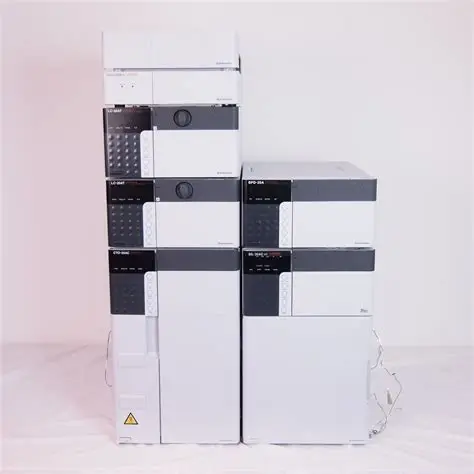
HPLC is an analytical technique that can be used to separate components in a mixture, and then help identify and determine the amount or concentration of those components. Because of its strong separation capability and its ability to be combined with various types of detectors, used in many fields, including pharmaceutical analysis, food analysis, research, and product quality testing.
So, what does HPLC actually measure? Does the instrument directly read the concentration of a substance? Or is there another process involved before the concentration value is obtained? Let us understand the process.
Table of Content:
- Understanding the HPLC Method for Assay Testing
- What Compounds Can Be Analyzed Using HPLC?
- Why Is HPLC Assay Testing Important for Ensuring Product Quality?
Understanding the HPLC Method for Assay Testing
In simple terms, works by separating compounds present in a sample based on their interactions with the stationary phase and mobile phase. The prepared sample is carried by the mobile phase through the chromatography column.
Each compound may interact differently with the stationary phase and therefore leave the column at a different time. The time at which a compound leaves the column is called the retention time.
The signal from the detected compound is then displayed as a chromatogram in the form of a peak. The basic principle of chromatography is the distribution of sample components between the stationary phase and mobile phase, with separation mechanisms that may involve adsorption, partition, ion exchange, or other physicochemical properties.
However, HPLC does not simply produce a chromatogram. For assay testing, the detector response obtained from the target compound is used to determine its concentration through an appropriate quantification method, such as using a calibration curve or comparison with a standard.
Read Also:
Can Polymers Be Tested Using HPLC? Understanding the Possibilities and Limitations
What Compounds Can Be Analyzed Using HPLC?
In product testing, HPLC can be used to analyze various groups of compounds, including:
1. Pharmaceutical Active Ingredients
HPLC is widely used to determine the concentration of active ingredients in pharmaceutical products while also helping to evaluate impurities and degradation products.
2. Cosmetic Active Ingredients
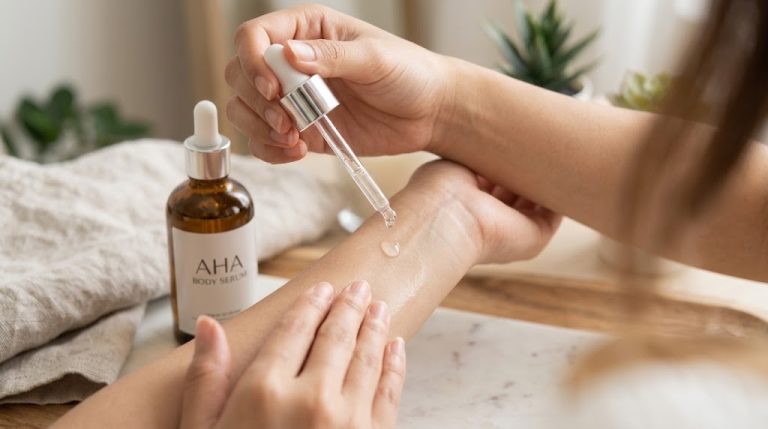
Various compounds used in cosmetic products can be analyzed using HPLC when the characteristics of the compounds and the analytical method are appropriate. Testing can be performed to determine whether the active ingredient concentration is within the targeted level.
3. Compounds in Food Products
HPLC is also used in food analysis for various components, including bioactive compounds and certain components that require separation before quantification. The literature shows that HPLC is widely used in food analysis and in the determination of compounds at low concentrations.
4. Impurities and Degradation Products
In addition to determining how much of the main compound is present in a sample, HPLC can be used to observe other components that appear in the chromatogram. In the development and quality control of pharmaceutical products, chromatographic analysis can be used to monitor impurities and degradation products.
Detector selection is also important. Not all compounds provide the same response to a particular detector.
The type of detector used needs to be adjusted to the characteristics of the compound, sample matrix, sensitivity requirements, and testing objectives.
Why Is HPLC Assay Testing Important for Ensuring Product Quality?
Imagine that a product contains an active ingredient listed on its label. Without analytical testing, the presence of such a claim does not automatically provide information about the actual concentration of the compound in the product.
Assay testing can provide quantitative data that can be used to compare the content of a compound with established specifications or requirements. In the context of quality control, analytical data can help laboratories and manufacturers evaluate the consistency of raw materials as well as finished products.
HPLC also offers the advantage of separating compounds before they are detected. This is particularly important when a sample has a complex matrix and contains several components that could potentially interfere with the measurement.
Analytical literature shows that HPLC is widely used for the separation, identification, and quantification of various compounds in complex matrices.
Don't Gamble with Your Product's Formulation!
Inaccurate active ingredient claims can instantly lead to disastrous product recalls and rejected BPOM distribution permits. Guarantee the absolute precision and compliance of your product's chemical compounds with international-standard HPLC testing services at IML Testing and Research.
Your product launch timeline is critical. Secure its quality right now! Contact our expert team today to claim your exclusive quote and schedule your sample testing without any further delay.
Author: Elmira
Editor: Lina
Daftar Pustaka
International Council for Harmonisation of Technical Requirements for Pharmaceuticals for Human Use. (2023). ICH Q2(R2): Validation of analytical procedures. ICH Official Document
United States Pharmacopeia. (n.d.). <621> Chromatography. In USP–NF. USP <621> Chromatography
Bober-Majnusz, K., et al. (2026). Chromatography and spectrometry in food safety and pharmaceutical analysis. [Nama jurnal].
Mahdi, A., et al. (2025). Biopharmaceutical analysis by HPLC: Practices and challenges. [Nama jurnal].
Zacharis, C. K. (2009). High performance liquid chromatography in pharmaceutical analysis. Journal of Chromatographic Science, 47(8), 694–699.