Beware of Powder Mercury in Cosmetics! Here Is How It Is Tested in the Laboratory

Mercury is a heavy metal that requires attention in cosmetic products because exposure to certain mercury compounds can pose health risks. Its presence cannot always be detected through a product's color, aroma, texture, or appearance.
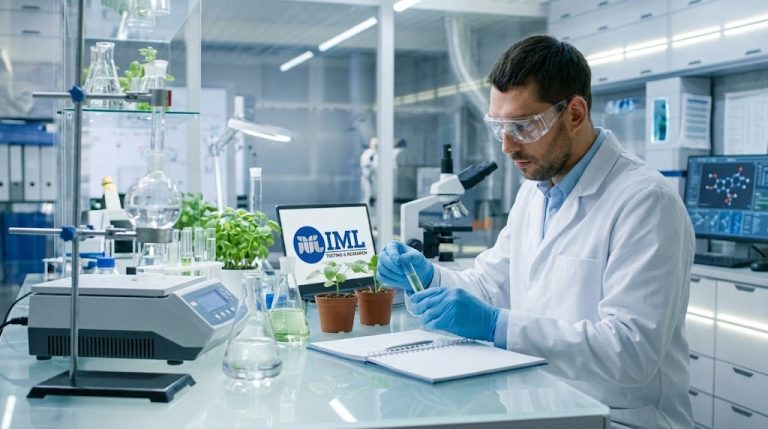
Therefore, laboratory chemical testing is necessary to determine whether mercury is present in a sample and at what concentration. Powder mercury testing in cosmetics is performed using analytical methods suitable for the sample characteristics and testing requirements.
Through sample preparation, instrumental measurement, and result evaluation, laboratories can obtain quantitative data on mercury content. So, how is this testing performed, and what factors determine the accuracy of the results?
Table of Content:
- Understanding Powder Mercury and Its Risks in Cosmetic Products
- Why Does Mercury Content in Cosmetics Need to Be Tested in a Laboratory?
- The Importance of Mercury Testing in Determining Cosmetic Content
Understanding Powder Mercury and Its Risks in Cosmetic Products
Powder mercury exposure can affect various body systems, including the kidneys and nervous system, depending on the chemical form, dose, route of exposure, and duration of exposure. The use of products containing mercury may also lead to repeated exposure.
In addition, powder mercury can enter the environment through the improper disposal of products and waste. One challenge in identifying mercury is that its presence does not always cause easily observable physical changes.
A product that looks normal is not necessarily free from chemical contaminants. Therefore, laboratory testing is an important step in obtaining information about mercury content through analytical measurements rather than visual assessment alone.
Read Also:
Mercury in Cosmetics: The Hidden Danger Behind the Promise of Brighter Skin
Why Does Mercury Content in Cosmetics Need to Be Tested in a Laboratory?
In chemical testing, the method used must be suitable for the sample type and the mercury concentration to be measured. Techniques such as Atomic Absorption Spectroscopy (AAS) and Inductively Coupled Plasma Mass Spectrometry (ICP-MS) can be used for mercury analysis, with different capabilities and operational requirements.
Method selection depends on the product matrix, concentration range, required limit of quantification, and the availability of validated or verified methods. Before analysis, samples typically undergo preparation to help release mercury from the cosmetic matrix.
This stage may involve dissolution or sample digestion, depending on the method used. The prepared solution is then measured using an appropriate instrument, and the analytical response is processed to determine the powder mercury concentration.
Test results can help manufacturers, brand owners, and relevant parties understand the chemical content of a product. However, determining whether a product meets the applicable requirements does not depend solely on the measured value.
Interpretation must consider the product type, reporting units, measurement uncertainty where relevant, and the applicable regulatory limits or requirements.
The Importance of Mercury Testing in Determining Cosmetic Content
Powder mercury testing is an important part of chemical analysis for identifying potentially harmful elements in cosmetic products. Since the presence of mercury cannot be confirmed through physical inspection alone, laboratory testing provides a more objective measurement basis for assessing sample content.
Using appropriate analytical methods, laboratories can obtain mercury concentration data to support quality control and evaluation against applicable requirements. Reliable test results require proper sample preparation, suitable instrumentation, calibration that meets the required criteria, and adequate quality control.
A Mercury Scandal Could Destroy Your Cosmetic Brand Forever!
IML Research and Testing supports chemical testing needs through an analytical approach that prioritizes method accuracy and systematic result evaluation. Appropriate testing helps provide information about mercury content in samples as part of product quality control and safety evaluation.
Consult your product safety needs today and guarantee your cosmetics are 100% mercury-free through high-precision heavy metal testing at IML Testing and Research.
Author: Elmira
Editor: Lina
References
International Organization for Standardization. (2022). Cosmetics Analytical methods Determination of traces of mercury in cosmetics by atomic absorption spectrometry (AAS) cold vapour technology after pressure digestion (ISO Standard No. 23821:2022). https://www.iso.org/standard/77054.html
Liu, R., et al. (2014). Direct determination of mercury in cosmetic samples by isotope dilution inductively coupled plasma mass spectrometry after dissolution with formic acid. Analytica Chimica Acta, 812, 6–11. https://doi.org/10.1016/j.aca.2014.01.002
World Health Organization. (2019, November 3). Mercury in skin lightening products. https://www.who.int/publications/i/item/WHO-CED-PHE-EPE-19.13
World Health Organization. (2024, October 24). Mercury. https://www.who.int/news-room/fact-sheets/detail/mercury-and-health