Lanolin-Containing Products: Benefits, Functions, and Important Considerations

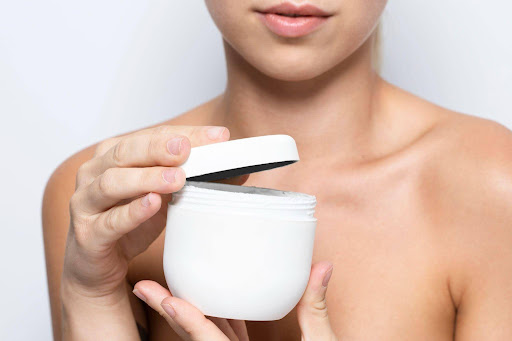
Lanolin is a waxy substance produced by the sebaceous glands of sheep. Naturally, it helps protect sheep’s wool from moisture and harsh environmental conditions.
In the cosmetics industry, this ingredient is obtained from washed sheep’s wool and then purified, bleached, and deodorized to produce a refined ingredient suitable for use in skincare and personal care products.
Table of Content:
- What Is the Function of Lanolin in Skincare and Cosmetic Products?
- What Products Contain Lanolin?
- Should You Avoid Products Containing Lanolin?
What Is the Function of Lanolin in Skincare and Cosmetic Products?
This ingredient serves several important functions in skincare and cosmetic formulations. First, it acts as an effective moisturizing agent with both humectant and occlusive properties.
Lanolin can help retain water, while its semi-occlusive and semi-permeable characteristics allow the skin to maintain hydration while forming a protective layer. This can help reduce transepidermal water loss (TEWL). Second, lanolin functions as an emollient that helps soften and smooth the skin.
It can fill spaces between dead skin cells, making the skin feel softer and more supple. This ingredient may also support skin barrier restoration, particularly in dry, cracked, or compromised skin, because its lipid-like properties can help improve the skin’s ability to retain moisture.
Read Also:
Are Natural Cosmetic Preservatives Safe? Cosmetic Laboratory Testing Has the Answer!
What Products Contain Lanolin?
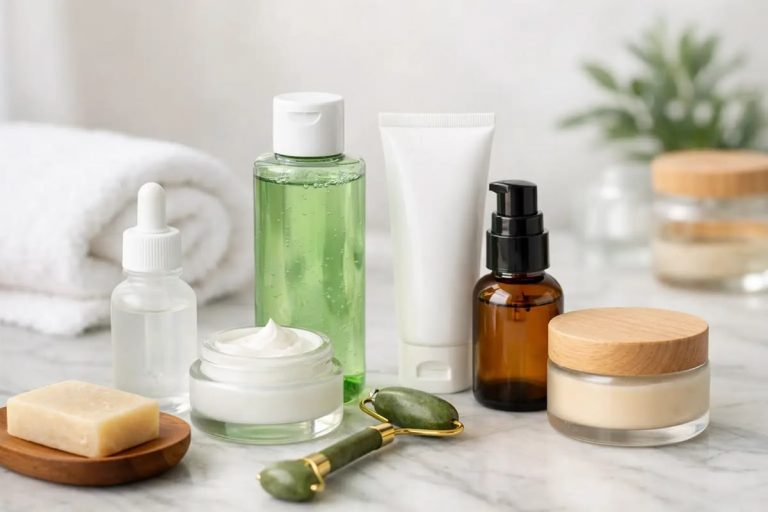
This ingredient is widely used in various cosmetic and personal care products because of its emollient and moisturizing properties. It can be found in skincare, lip care, hair care, baby care, and decorative cosmetic products.
Examples of products containing this ingredient include moisturizers, protective creams, and formulations for dry or irritated skin. In lip care, it may also be found in lip balms and lip glosses.
Hair care products, such as conditioners, may also contain this ingredient to improve softness and conditioning properties. It is also used in some baby care products, particularly diaper creams and baby lotions.
In products intended for breastfeeding mothers, this ingredient may be used in nipple creams. In decorative cosmetics, it can also be found in products such as lipsticks, eyebrow pencils, mascaras, and eye makeup.
In soap formulations, this ingredient may also function as a superfatting agent, providing an emollient effect.
Should You Avoid Products Containing Lanolin?
In general, products containing this ingredient are considered suitable for most people. However, individuals with a known sensitivity or allergy to it should exercise caution.
Those with sensitive skin may consider performing a patch test before applying the product more extensively. This can help identify potential skin reactions to formulations containing this ingredient.
Conclusion
Although lanolin is generally considered safe for cosmetic use, its quality, purity, and concentration should still be carefully considered. For cosmetic manufacturers, lanolin testing can be an important quality control step to verify whether raw materials or finished products meet established specifications.
Want to determine whether a raw material or cosmetic product contains lanolin and evaluate its characteristics? Consider performing lanolin analysis using an appropriate analytical method to obtain accurate and reliable results. Testing can support quality control of both raw materials and finished products while providing clearer information about the presence and characteristics of lanolin in cosmetic formulations.
Ensure Your Lanolin-Containing Product Meets Quality Standards
Evaluate cosmetic ingredients and formulations to support product quality, safety, and consistency.
Consult IML Research for your cosmetic testing needs.
Author: Elmira
Editor: Lina
References
Cork, M. J., Danby, S., Vasilopoulos, Y., Hadgraft, J., Lane, M. E., Moustafa, M., Guy, R. H., Macdonald, C., & Miele, E. (2023). Optimizing emollient therapy for skin barrier repair in atopic dermatitis. Journal of Clinical Medicine, 12(4), 1410. https://doi.org/10.3390/jcm12041410
Draelos, Z. D. (2018). Cosmetic dermatology: Products and procedures. Wiley-Blackwell.
Lodén, M. (2003). Role of topical emollients and moisturizers in the treatment of dry skin barrier disorders. American Journal of Clinical Dermatology, 4(11), 771–788. https://doi.org/10.2165/00128071-200304110-00005
Mier, P. D. (1988). Lanolin and the lanolin paradox. Contact Dermatitis, 18(2), 113–114.
Raj, N., & White, J. (2024). Applied research on atopic dermatitis with special emphasis on the role of emollients in this disorder: A review. Applied Sciences, 14(18), 8315. https://doi.org/10.3390/app14188315
Ryczaj, K., Leung, D. Y. M., Venter, C., Sozańska, B., & Brough, H. A. (2026). Emollient formulations and skin barrier practices in the context of eczema and food allergy prevention. Allergy. Advance online publication. https://doi.org/10.1111/all.70404