6 Strategies of Environmentally Friendly Botanical Pesticide Testing

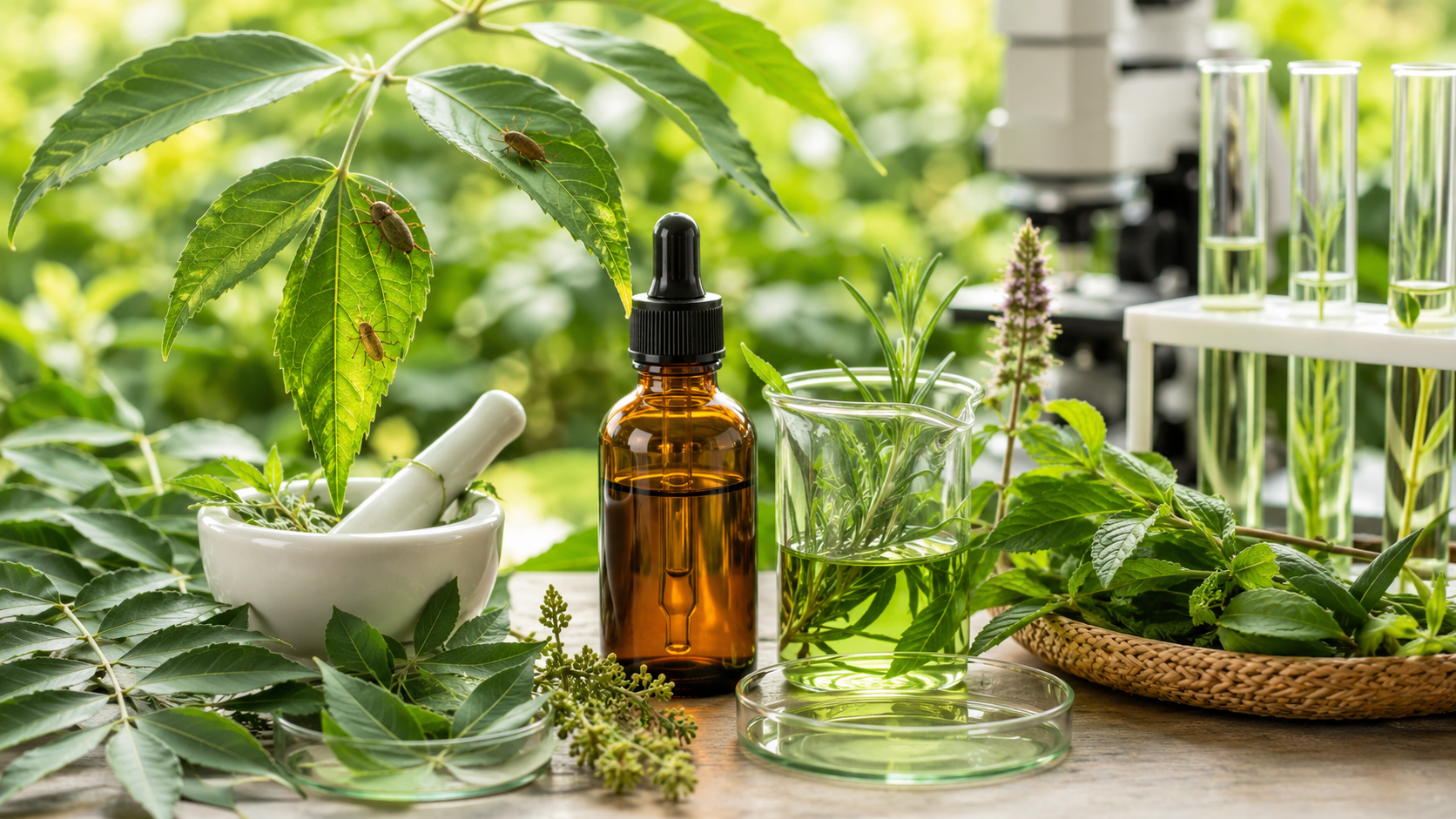
Botanical pesticides are increasingly developed as more sustainable alternatives for pest management. These products use active materials obtained from plants, including leaves, seeds, roots, bark, and essential oils.
Plant-derived compounds may act as contact toxicants, stomach poisons, repellents, feeding deterrents, growth regulators, or oviposition inhibitors. Their diverse biological activities make them promising components of integrated pest-management programs.
However, the natural origin of an ingredient does not automatically prove that the finished product is effective, safe, or consistent. Environmental claims and pest-control claims must still be supported by appropriate laboratory and field data.
Table of Content:
- What Are Botanical Pesticides?
- Why Are They Considered Environmentally Friendly?
- What Determines Product Effectiveness?
- Relevant Laboratory and Field Tests
What Are Botanical Pesticides?
Botanical pesticides are pest-control products containing active substances derived from plants. Frequently studied sources include neem, pyrethrum, citronella, clove, cinnamon, tobacco, garlic, and essential-oil-producing plants.
Alkaloids, terpenoids, phenolic compounds, flavonoids, and volatile constituents may affect pests through different mechanisms. Some compounds cause mortality, while others interfere with feeding, development, reproduction, or host-finding behavior.
Read Also:
Common Mistakes When Mixing Botanical Pesticides That Can Reduce Product Effectiveness
Why Are They Considered Environmentally Friendly?
Many botanical compounds have relatively short environmental persistence and can degrade more rapidly than certain conventional active ingredients. These properties may reduce long-term residues and support their use within integrated pest management.
Some botanical materials also act through several biological mechanisms, which may be useful in resistance-management strategies when the product is used appropriately. Nevertheless, plant-derived does not always mean harmless.
Certain extracts and essential oils may affect beneficial insects, pollinators, soil organisms, crops, or product users. Safety and non-target effects must therefore be evaluated rather than assumed.
What Determines Product Effectiveness?
The performance of a botanical pesticide can be influenced by:
- the plant species and plant part used;
- cultivation and harvesting conditions;
- extraction and processing methods;
- active-compound concentration;
- formulation and carrier materials;
- target pest species and developmental stage;
- application method and frequency;
- light, temperature, humidity, rainfall, and wind.
Plant chemistry may vary according to genetics, growing conditions, harvest timing, and processing. In addition, volatile or light-sensitive compounds can degrade rapidly, reducing residual activity under field conditions.
Promising laboratory activity therefore does not guarantee equivalent field performance. Chemical characterization, appropriate controls, formulation development, and field validation are needed to produce reliable and commercially useful evidence.
Relevant Laboratory and Field Tests
Active-compound analysis
GC-MS, HPLC, or LC-MS may be used to identify and quantify relevant phytochemicals. These data support raw-material specifications, batch consistency, and formulation development.
Laboratory efficacy testing
Laboratory bioassays can measure mortality, speed of action, repellency, feeding inhibition, developmental disruption, reduced oviposition, and dose-response relationships.
Testing should include suitable negative controls, reference products, and several treatment concentrations. This makes it possible to distinguish actual product activity from natural mortality or experimental variation.
Formulation-stability testing
Stability studies evaluate whether active content and physical characteristics remain within specification during storage. Parameters may include pH, viscosity, homogeneity, appearance, odor, and biological activity.
This step is particularly important for volatile or oxidation-sensitive plant compounds. Appropriate formulation and encapsulation systems may improve stability and extend product performance.
Phytotoxicity testing
The formulation should be evaluated for potential crop damage, including discoloration, leaf burn, growth inhibition, and tissue injury.
Non-target safety evaluation
Depending on the intended use, testing may assess potential effects on pollinators, predators, parasitoids, soil organisms, and other exposed species.
Although essential-oil-based products are often considered lower-risk options, lethal and sublethal effects on beneficial organisms have been reported. Safety assessment should therefore reflect the intended dose and application scenario.
Field efficacy testing
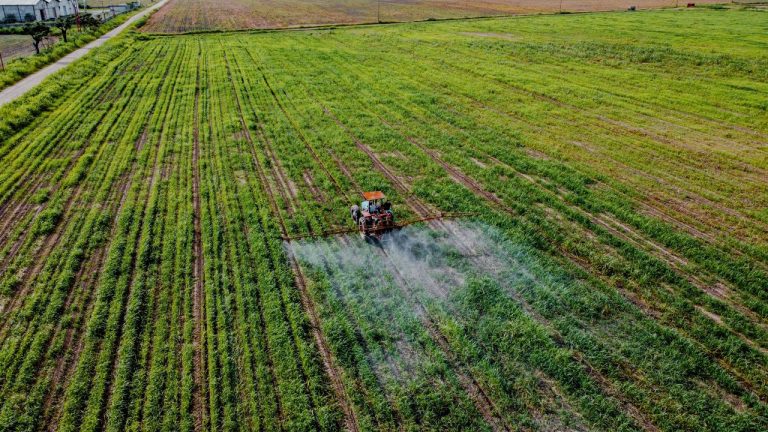
Field studies determine whether the formulation remains effective under realistic environmental conditions. They can also establish practical application rates, intervals, spray methods, and the need for repeat treatment.
This stage is essential for bridging controlled laboratory results with actual farm performance.
Test Your Botanical Pesticide at IML Testing & Research
Do not rely solely on natural or eco-friendly positioning. Consult and conduct botanical pesticide efficacy testing at IML Testing & Research to determine effective concentrations, speed of action, target-organism activity, and product-performance consistency.
The testing strategy may also include active-compound analysis, stability assessment, phytotoxicity testing, and relevant safety evaluations. Reliable data can strengthen formulation development, technical documentation, product claims, and market credibility.
Author & Editor: Lina
References
Isman, M. B. (2006). Botanical insecticides, deterrents, and repellents in modern agriculture and an increasingly regulated world. Annual Review of Entomology, 51, 45–66. DOI: 10.1146/annurev.ento.51.110104.151146.
Isman, M. B. (2020). Botanical insecticides in the twenty-first century—Fulfilling their promise? Annual Review of Entomology, 65, 233–249. DOI: 10.1146/annurev-ento-011019-025010.
Isman, M. B., & Grieneisen, M. L. (2014). Botanical insecticide research: Many publications, limited useful data. Trends in Plant Science, 19(3), 140–145. DOI: 10.1016/j.tplants.2013.11.005.
Miresmailli, S., & Isman, M. B. (2014). Botanical insecticides inspired by plant–herbivore chemical interactions. Trends in Plant Science, 19(1), 29–35. DOI: 10.1016/j.tplants.2013.10.002.
Pavela, R., & Benelli, G. (2016). Essential oils as ecofriendly biopesticides? Challenges and constraints. Trends in Plant Science, 21(12), 1000–1007. DOI: 10.1016/j.tplants.2016.10.005.
Isman, M. B. (2017). Bridging the gap: Moving botanical insecticides from the laboratory to the farm. Industrial Crops and Products, 110, 10–14. DOI: 10.1016/j.indcrop.2017.07.012.
Lengai, G. M. W., Muthomi, J. W., & Mbega, E. R. (2020). Phytochemical activity and role of botanical pesticides in pest management for sustainable agricultural crop production. Scientific African, 7, e00239. DOI: 10.1016/j.sciaf.2019.e00239.
Giunti, G., Benelli, G., Palmeri, V., et al. (2022). Non-target effects of essential oil-based biopesticides for crop protection: Impact on natural enemies, pollinators, and soil invertebrates. Biological Control, 176, 105071. DOI: 10.1016/j.biocontrol.2022.105071.