Fruit Fertilizer Claims Are Not Enough: Prove It with Laboratory Testing

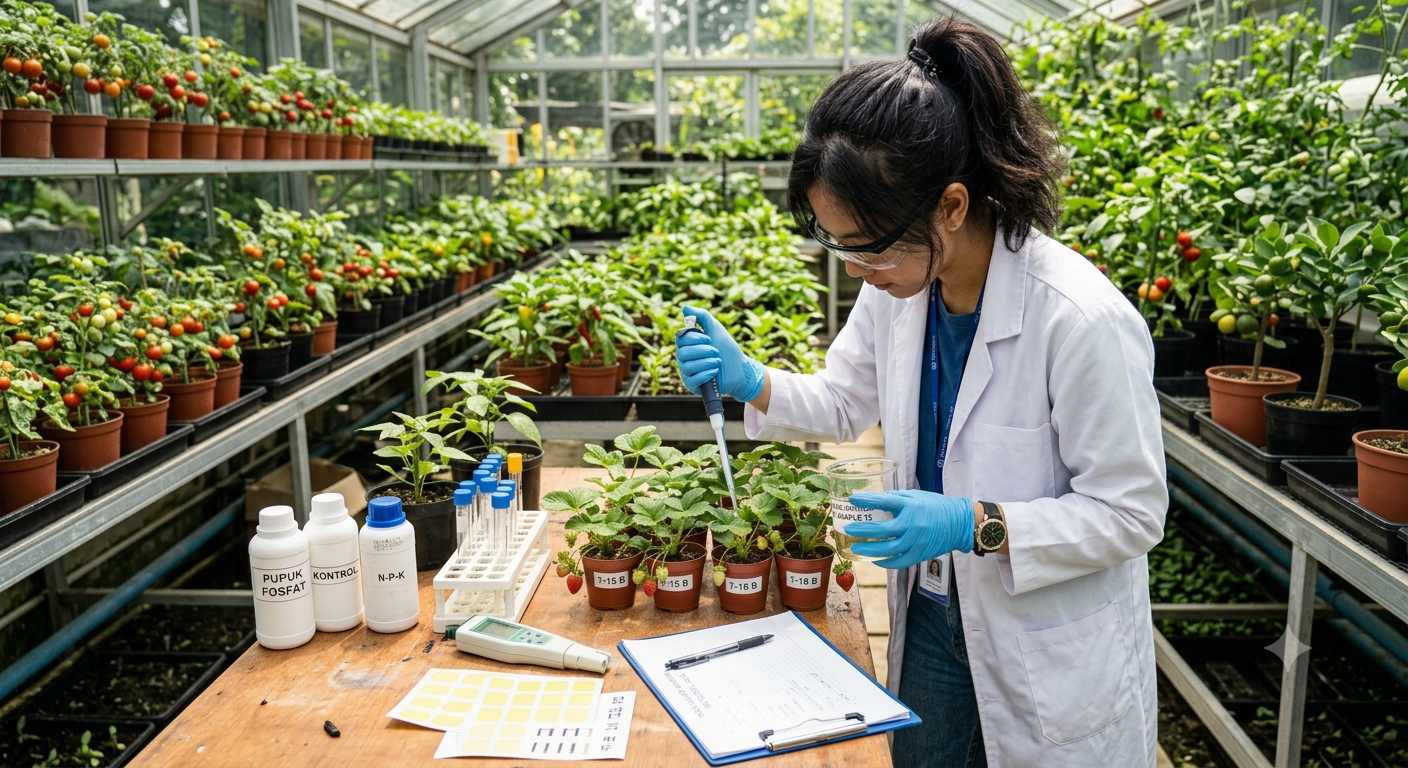
Fruit growers increasingly look for fertilizers that promise healthier trees, more flowers, and better yields. Yet a bold claim on a label is not the same as proven performance in the field.
Fruit Fertilizer is supposed to supply nutrients in a controlled, measurable way, and that means quality, composition, and effectiveness must be verified. For that reason, laboratory testing is not a luxury; it is a necessary step before any product is trusted in commercial horticulture.
Table of Content:
Why Claims Need Proof
Fruit fertilizer products are used to support plant nutrition, but their results depend on whether the nutrients listed on the label are actually present and whether the product works as claimed. In agricultural practice, the risk is not only underperformance, but also false labeling, poor storage quality, and inconsistent nutrient content.
Official guidance on fruit fertilizer oversight stresses the importance of monitoring production, distribution, labeling, and use so that quality and effectiveness are guaranteed. It also defines testing as a set of laboratory and field activities used to examine fertilizer products and confirm their compliance.
This is especially important for fruit crops, where growers invest time and money expecting reliable responses in flowering, fruit set, and fruit quality. If a fruit fertilizer is marketed as improving fertility or boosting yield, that claim should be supported by measurable data, not promotional language alone.
A product may look convincing in packaging, but without laboratory analysis it remains impossible to know whether its nutrient content matches the declaration.
Read Also:
Urea Fertilizer and Nitrogen Content: Why It Must Be Verified with Laboratory Test Data
What Laboratory Testing Can Confirm
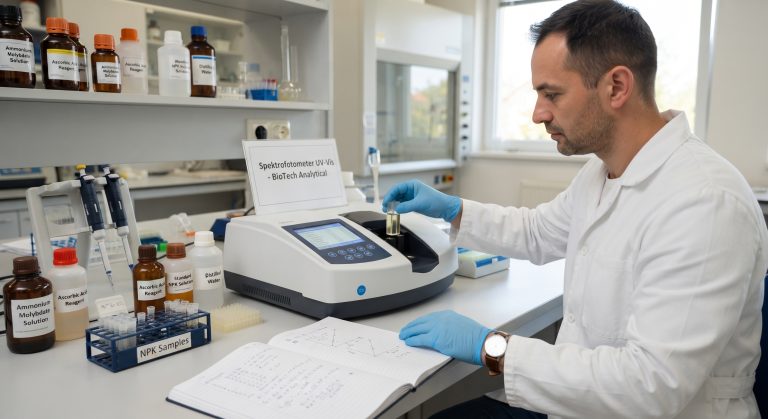
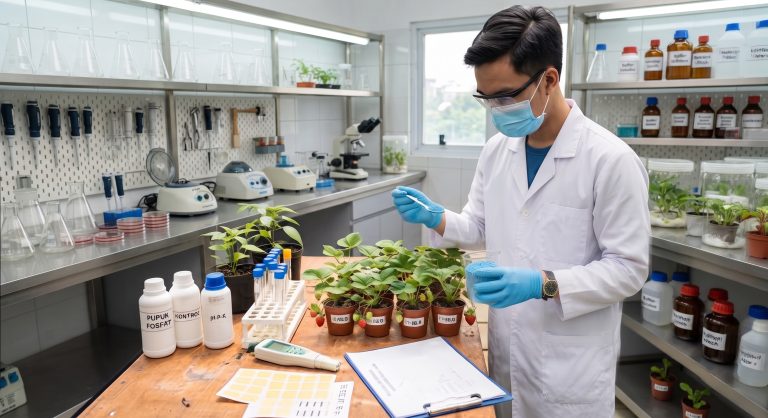
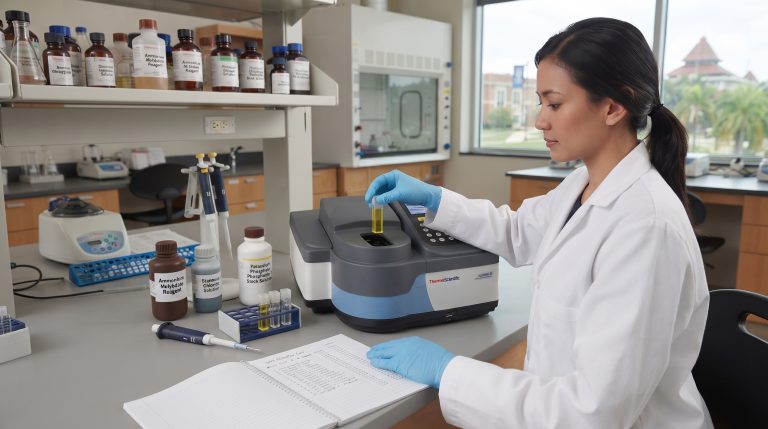
Laboratory testing can verify several critical points: nutrient composition, contaminant limits, product consistency, and conformity with standards. For inorganic fertilizers, technical guidelines emphasize that products must meet minimum requirements for nutrient content and that quality assessment is essential before distribution.
The same principle applies to organic and other alternative fertilizers, which also need proper evaluation of their composition and effectiveness. In practice, testing helps determine whether a fertilizer is suitable for fruit production, whether it contains the promised macro- or micro-nutrients, and whether it can support the intended agronomic outcome.
Testing is also useful for protecting growers from illegal, expired, counterfeit, or substandard products. Oversight documents clearly define fake fertilizer as a product whose content or quality does not match its label, or whose brand, packaging, or labeling imitates another legal product. That is exactly why laboratory verification matters: it creates evidence.
Why This Matters for Fruit Growers
Fruit cultivation is long-term and capital-intensive. A bad fruit fertilizer decision can affect vegetative growth, flowering balance, nutrient uptake, and final marketable yield. Because nutrient needs vary by crop stage, soil condition, and climate, a one-size-fits-all claim is rarely sufficient.
Reliable fertilization depends on matching nutrient supply with crop demand, and that requires data from analysis and testing. In this context, laboratory testing is the practical bridge between marketing promises and agronomic reality.
Verify Your Fruit Fertilizer Quality with IML Testing and Research
If your fruit fertilizer product is meant to support fruit crops, let the data speak for it. IML Research & Testing helps you validate fertilizer quality through laboratory testing, nutrient analysis, and effectiveness evaluation. We support growers, distributors, and producers who want credible proof that their products are safe, consistent, and performance-ready. Do not rely on claims alone—prove your fertilizer works with laboratory evidence.
Author: Fachry
Editor: Lina
References
Ministry of Agriculture of the Republic of Indonesia. (2020). Pedoman Pengawasan Pupuk dan Pestisida. Directorate General of Agricultural Infrastructure and Facilities.
Purba, T., Situmeang, R., Rohman, H. F., Mahyati, A., Firgiyanto, R., Junaedi, A. S. Suhastyo, A. A. (2021). Pupuk dan teknologi pemupukan. Medan: Yayasan Kita Menulis.
Pusat Penelitian dan Pengembangan Tanah dan Agroklimat. (2004). Petunjuk Teknis Uji Mutu dan Efektivitas Pupuk Alternatif Anorganik. Bogor: Balai Penelitian Tanah