3 Rapid Methods in Challenge Testing: Can They Replace Plate Count?

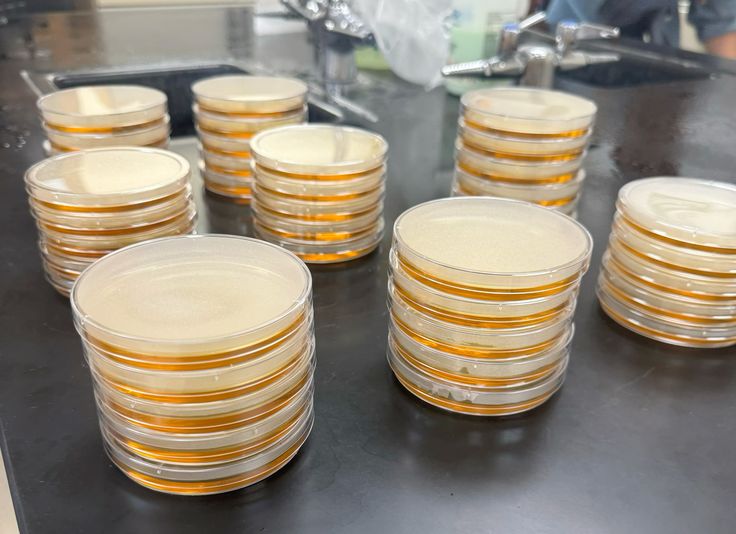
In preservative efficacy testing, or Challenge Testing, the ability to quantify the number of viable microorganisms remaining in a sample is one of the factors that determines the accuracy of the results. For many years, the plate count method has been widely used to evaluate whether a preservative system can effectively control microbial growth in cosmetic products.
However, this method has one obvious limitation in Challenge Testing: it can take several days for microbial colonies to grow and become countable. Amid the industry's growing need for faster Challenge Testing results, various alternative methods, such as impedance, direct epifluorescence (DEF), and ATP bioluminescence, have been developed as more efficient solutions.
Table of Content:
- Impedance Method: Indirecly Measuring Microbial Activity
- Direct Epifluorescence (DEF): Results Within Hours
- ATP Bioluminescence: Measuring Viability Through Light
- Can Rapid Methods Replace Plate Count?
Impedance Method: Indirecly Measuring Microbial Activity
In Challenge Testing, the impedance method does not count colonies growing on agar media. Instead, it measures changes in the electrical properties of the medium resulting from microbial metabolic activity.
In Challenge Testing, as microorganisms grow and utilize nutrients in the medium, its chemical composition changes. These changes lead to alterations in impedance values, which can be detected using specialized instruments.
In Challenge Testing, the number of microorganisms in a sample is related to the detection time (DT). The higher the number of microorganisms present, the faster the change in impedance can be detected.
Several studies have shown that the sensitivity of the impedance method in Challenge Testing can approach that of the plate count method for various types of bacteria and fungi. Because results can be obtained more rapidly, this method is considered a promising alternative for evaluating preservative efficacy in Challenge Testing.
Read Also:
Challenge Test: Why Might a Good Cosmetic Preservative System Still Fail?
Direct Epifluorescence (DEF): Results Within Hours
The direct epifluorescence (DEF) method uses fluorescent dyes to differentiate between viable and non-viable cells. Living cells exhibit a different fluorescence pattern compared with cells that have lost their viability.
The main advantage of DEF is its speed. In many cases, results can be obtained within just 1 to 4 hours, which is considerably faster than the plate count method, which requires several days of incubation.
In addition, this method offers relatively high sensitivity because microorganisms can first be concentrated through a filtration process. This makes it possible to detect relatively low numbers of microorganisms in a sample.
Nevertheless, DEF has several limitations. The presence of cellular debris, cell aggregation caused by certain preservatives, and difficulties in filtering complex formulations can affect the accuracy of the results.
ATP Bioluminescence: Measuring Viability Through Light
The ATP bioluminescence method is based on the measurement of ATP (adenosine triphosphate), a molecule found in living cells. In this method, ATP reacts with the enzyme luciferase, producing light that can be measured by an instrument.
The more ATP that is detected, the greater the intensity of the emitted light. Because ATP is an indicator of biological activity, this method can provide an indication of the amount of viable microorganisms present in a sample.
The main advantage of this method is its very high analytical speed. Results can be obtained within a short period without waiting for microbial colonies to grow on culture media.
However, ATP bioluminescence is not necessarily suitable for all types of samples. Certain formulations, such as creams and suspensions, may interfere with light detection and potentially affect measurement accuracy.
Can Rapid Methods Replace Plate Count?
Rapid methods offer several advantages, particularly in terms of time efficiency and ease of analysis. Under certain conditions, these methods can help laboratories obtain preliminary information about the microbiological condition of a product.
However, each rapid method has its own limitations that need to be considered. Factors such as the type of microorganism, formulation characteristics, and the detection mechanism used can influence the test results.
On the other hand, plate count directly measures viable microorganisms that are capable of reproducing. This characteristic means that the method continues to be regarded as an important reference for evaluating the effectiveness of a preservative system.
Therefore, to date, rapid methods are more commonly viewed as complementary approaches rather than replacements for plate count. Although the technology continues to evolve, plate count still plays an important role as a standard method in cosmetic Challenge Testing.
Don't Rely on Assumptions When it Comes to your Product's Preservative Effectiveness. Prove it With a Challenge Test!
IML Testing & Research is ready to help you obtain the microbiological data needed to evaluate your product's safety and quality. Need a Challenge Test for your product? Contact IML Testing & Research today and discuss your testing requirements with our team!
Author: Dherika
Editor: Lina
References
Connolly, P.; Bloomfield, S.F.; Denyer, S.P. A study of the use of rapid methods for preservative efficacy testing of pharmaceuticals and cosmetics. J. Appl. Bacteriol. 1993, 75, 456–462.
Halla, N., Fernandes, I.P., Sandrina, A.H., Patricia, C., Zahia, B., Kebir, B., Alirio, E.R., Isabel, C.F.R.F., & Maria, F.B. (2018). Cosmetics Preservation: A Review on Present Strategies. Molecules, 23(1571), 1-41. Doi:10.3390/molecules23071571.