The Insecticide Active Ingredient Is Right, but Is the Product Definitely Effective? The Role of Efficacy Testing

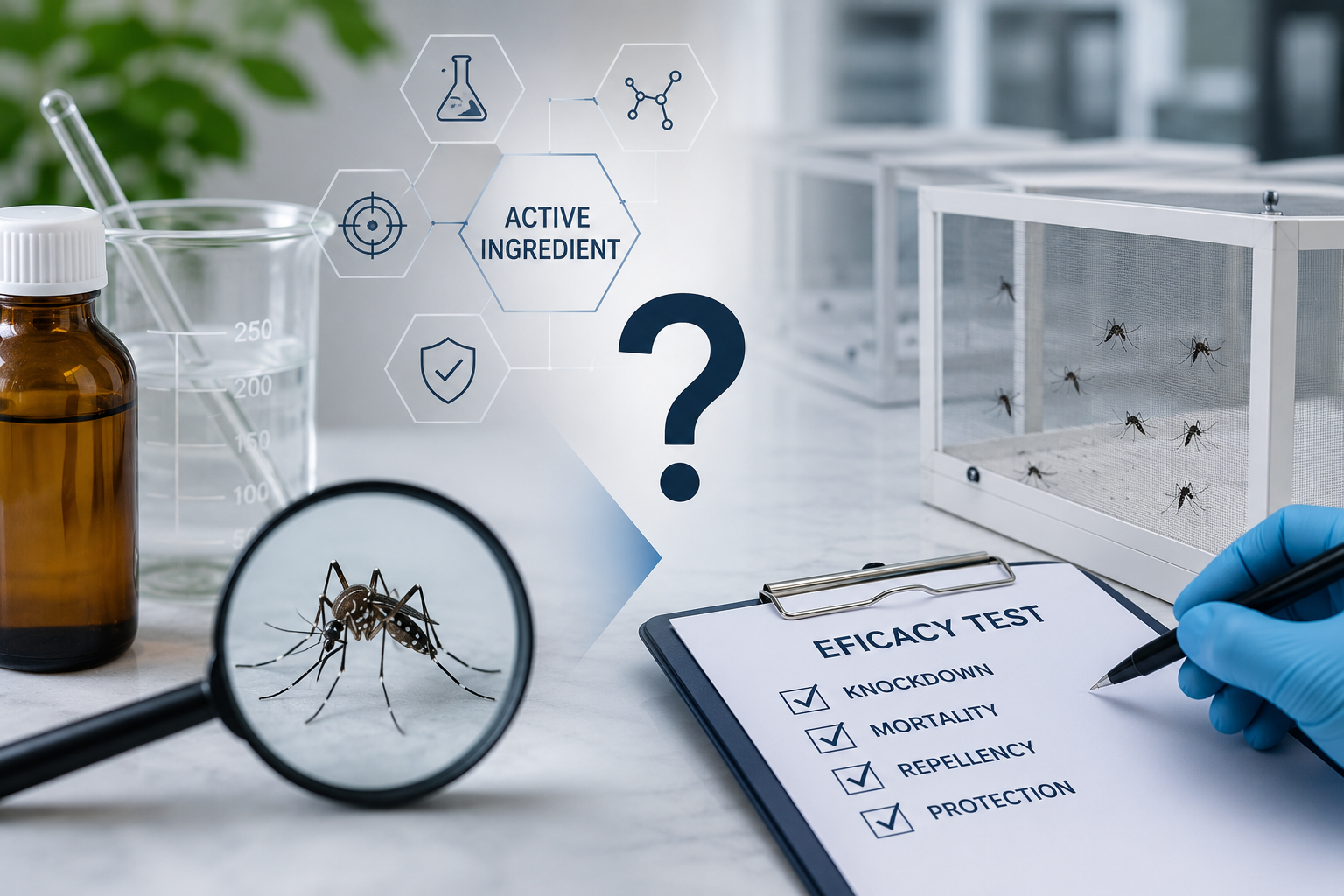
Selecting the right insecticide active ingredient is an important step in developing an insect-control product. Each active ingredient has different characteristics, modes of action, and target organisms.
Manufacturers therefore need to select an Insecticide active ingredient according to the intended purpose of their product. However, an important question remains: if the insecticide active ingredient is appropriate, does this automatically mean that the final product will be effective?
The answer is more complex. The active ingredient is an essential part of the formulation, but final product performance can also be influenced by its concentration, formulation, application method, target organism, environmental conditions, and insect susceptibility.
This is where insecticide efficacy testing plays an important role in generating data on product performance against the intended target.
Table of Content:
- The Active Ingredient Determines the Insecticide’s Mode of Action
- Active Ingredient Concentration Is Not the Only Factor
- The Target Organism Influences the Result
- Insecticide Resistance Can Reduce Effectiveness
- Application Conditions Affect Product Performance
- Efficacy Testing Evaluates Final Formulation Performance
- From Active Ingredient Insecticide to Measurable Effectiveness
The Active Ingredient Determines the Insecticide’s Mode of Action
The Insecticide active ingredient is the component responsible for the primary biological activity of an insecticidal product. Different classes of insecticides act on different biological targets.
For example, pyrethroids primarily affect voltage-gated sodium channels in the insect nervous system. Other insecticide classes may act on receptors, enzymes, ion channels, growth processes, or other physiological targets.
These differences mean that Insecticide active ingredient selection should consider both the target organism and the intended control objective. However, knowing how an active ingredient works theoretically does not automatically demonstrate how the final formulation will perform under actual exposure conditions.
Read Also:
Skin Irritation from Insecticides: Why Is Safety Testing Important?
Active Ingredient Concentration Is Not the Only Factor
Products containing an appropriate Insecticide active ingredient at a certain concentration do not necessarily produce identical efficacy. One reason is product formulation.
Solvents, carriers, surfactants, other formulation components, product stability, and the ability to deliver the Insecticide active ingredient to the target organism can influence overall performance. Product format also matters. Aerosols, baits, repellent lotions, mosquito coils, electric vaporizers, and other formulations deliver their Insecticide active ingredients in different ways.
Therefore, the same Insecticide active ingredient may perform differently depending on how it is formulated and applied.
The Target Organism Influences the Result
Insecticide efficacy is not determined solely by the product. Biological characteristics of the target organism also matter.
Different insect species may show different levels of susceptibility to a particular Insecticide active ingredient. Even within the same species, populations with different geographical origins or histories of insecticide exposure may not respond identically.
The developmental stage of the insect, such as egg, larva, nymph, or adult, can also affect its response to treatment. For this reason, efficacy studies should use target organisms and biological endpoints that are relevant to the product’s intended use.
Insecticide Resistance Can Reduce Effectiveness
Repeated insecticide exposure can create selection pressure within insect populations. Individuals with characteristics that allow them to survive treatment may reproduce and pass those characteristics to subsequent generations.
Over time, this process can contribute to the development of insecticide resistance. Resistance mechanisms may involve modifications to the insecticide target site, increased detoxification enzyme activity, reduced penetration of the active ingredient, or behavioral changes.
Consequently, an active ingredient known to be effective against a species may not produce the same response in a population with reduced susceptibility. This further demonstrates why active ingredient identity and concentration alone cannot establish final product efficacy.
Application Conditions Affect Product Performance
The conditions under which an insecticide is applied can also influence its performance. For household insecticides, factors such as room size, ventilation, application distance, exposure duration, temperature, humidity, surface characteristics, and application dose may influence contact between the active ingredient and the target organism.
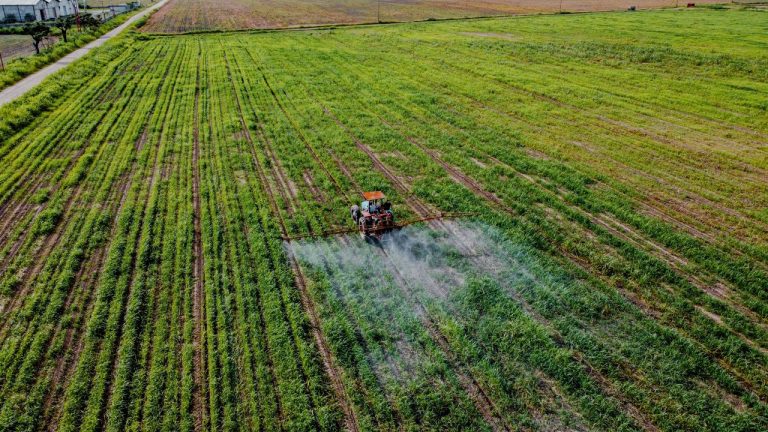
For agricultural insecticides, additional factors may include crop characteristics, weather conditions, application techniques, spray volume, and plant-surface properties. Therefore, efficacy results need to be interpreted according to the specific test method and exposure conditions used.
Efficacy Testing Evaluates Final Formulation Performance
If the active ingredient, its concentration, and its known mode of action cannot independently establish product effectiveness, how can manufacturers evaluate final performance? This is where efficacy testing becomes essential.
Efficacy studies evaluate the response of target organisms following exposure to a product under defined testing conditions. The endpoints selected depend on the product type, intended purpose, and target organism.
For insecticidal products, relevant endpoints may include knockdown, mortality, repellency, time to response, reduction in activity or infestation, and other biological parameters appropriate to the study objective. Efficacy testing therefore provides experimental evidence about the performance of the formulated product, rather than relying solely on predictions based on the active ingredient.
From Active Ingredient Insecticide to Measurable Effectiveness
Selecting the appropriate insecticide active ingredient provides an important foundation for product development, but it represents only one part of the process. Formulation, concentration, application method, target organism, environmental conditions, and insect susceptibility can collectively influence product performance.
Therefore, the key question is not only “Have we selected the right active ingredient?” but also “Has the final formulation demonstrated the expected efficacy when tested?” Efficacy testing provides an important bridge between formulation design and measurable evidence of product performance.
Has Your Insecticide Product’s Efficacy Been Evaluated?
IML Testing & Research provides efficacy testing services to help companies evaluate insect-control product performance against target organisms using relevant testing approaches. For manufacturers, brand owners, and R&D teams developing or evaluating insecticidal formulations, efficacy data can provide useful information for comparing formulations and assessing product performance.
Consult with IML Testing & Research to discuss an efficacy testing approach appropriate for your product type and target organism.
Author & Editor: Lina
References
Casida, J. E., & Durkin, K. A. (2013). Neuroactive insecticides: Targets, selectivity, resistance, and secondary effects. Annual Review of Entomology, 58, 99–117.
Sparks, T. C., & Nauen, R. (2015). IRAC: Mode of action classification and insecticide resistance management. Pesticide Biochemistry and Physiology, 121, 122–128.
Soderlund, D. M. (2012). Molecular mechanisms of pyrethroid insecticide neurotoxicity: Recent advances. Archives of Toxicology, 86, 165–181.
Davies, T. G. E., Field, L. M., Usherwood, P. N. R., & Williamson, M. S. (2007). DDT, pyrethrins, pyrethroids and insect sodium channels. IUBMB Life, 59(3), 151–162.
Hemingway, J., & Ranson, H. (2000). Insecticide resistance in insect vectors of human disease. Annual Review of Entomology, 45, 371–391.
Yu, S. J. (2015). The Toxicology and Biochemistry of Insecticides (2nd ed.). CRC Press.
Ware, G. W., & Whitacre, D. M. (2004). The Pesticide Book (6th ed.). MeisterPro Information Resources.