Body Serum: Benefits, Ingredients, and the Importance of Product Testing

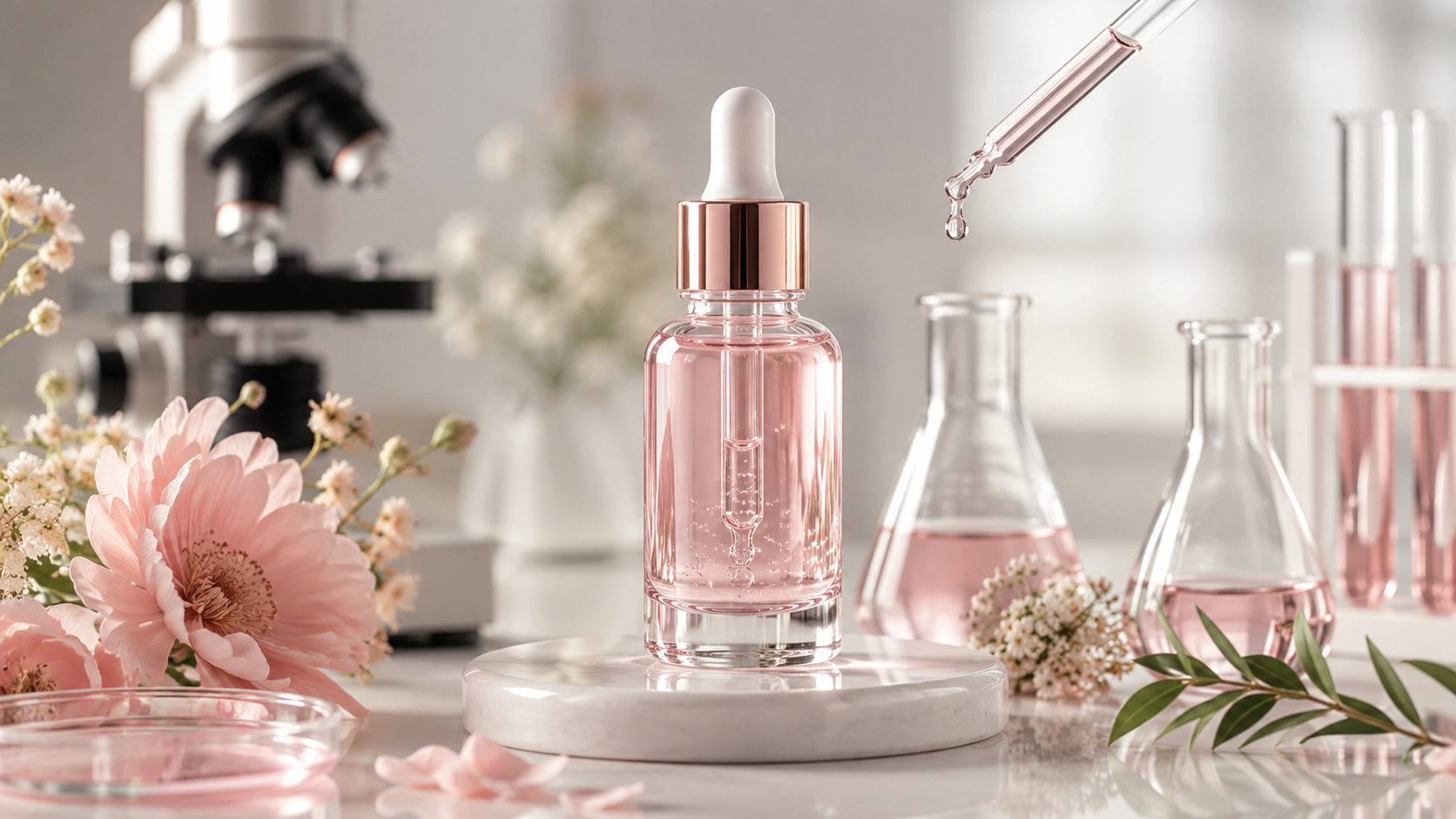
Body serums are increasingly used as body-care products because they are generally formulated with a lightweight and easily spreadable texture. They may contain moisturizing agents and active ingredients intended to address dryness, roughness, dullness, or an uneven-looking skin tone.
However, the presence of an active ingredient does not automatically guarantee that a finished product will deliver the claimed benefits. Ingredient concentration, formulation stability, component interactions, packaging, and usage conditions can all influence product quality and performance.
For this reason, body serum products should undergo appropriate laboratory testing to verify their content, stability, microbiological quality, safety, and efficacy before market release.
Table of Content:
Potential Benefits of Body Serum
Improving skin hydration
Body serums may contain humectants such as glycerin, hyaluronic acid, panthenol, and urea. These ingredients help attract or retain water in the outer layers of the skin.
Research on glycerin-containing products has demonstrated benefits for stratum corneum hydration. Clinical studies of niacinamide-and-glycerin body moisturizers have also reported improvements in cosmetic xerosis and stratum corneum integrity.
Topical hyaluronic acid formulations have also been associated with improved skin hydration. Nevertheless, the results obtained from one tested formulation cannot automatically be applied to every product containing the same ingredient.
Read Also:
Eyelash Serum : The Secret to Curled and Thick Eyelashes, Stop Wasting Time
Supporting the skin barrier
A healthy skin barrier helps retain water and protect the body from environmental irritants. Ingredients such as niacinamide, ceramides, panthenol, and physiological lipids may be incorporated into body serums intended to support barrier function.
Controlled studies have reported benefits from niacinamide-and-glycerin body moisturizers and ceramide-containing products on skin hydration, dryness, and transepidermal water loss.
Improving texture and appearance
Depending on its formulation, a body serum may help improve the appearance of rough, dry, or dull skin. Humectants, emollients, exfoliating acids, antioxidants, and skin-conditioning agents may be selected according to the intended benefit.
Products developed for brightening, smoothing, firming, or soothing claims require different active ingredients and testing parameters. The more specific the claim, the more important it becomes to substantiate it with data generated from the finished product.
Common Body Serum Ingredients
Body serum formulations may contain:
- humectants, including glycerin, hyaluronic acid, panthenol, sodium PCA, and urea;
- emollients and barrier-supporting ingredients, such as ceramides, squalane, fatty acids, botanical oils, and dimethicone;
- brightening ingredients, such as niacinamide, vitamin C derivatives, and alpha arbutin;
- exfoliating ingredients, including lactic acid, glycolic acid, or polyhydroxy acids;
- antioxidants and soothing agents, such as vitamin E, allantoin, bisabolol, and selected botanical extracts;
- formulation-supporting materials, including preservatives, pH adjusters, chelating agents, thickeners, and antioxidants.
The effectiveness and safety of these components depend on their concentration, purity, compatibility, stability, and interaction within the complete formulation.
Important Laboratory Tests
Stability testing
Stability testing evaluates whether the product maintains its intended physical, chemical, and sensory characteristics during storage.
Relevant parameters may include appearance, odor, pH, viscosity, homogeneity, phase separation, active-content retention, and packaging compatibility.
ISO/TR 18811:2018 provides a technical and scientific framework for cosmetic stability testing. It also states that manufacturers should design and justify protocols based on the product type, intended storage and use conditions, and established specifications.
Active-ingredient testing
Analytical testing can verify whether the actual concentration of an active ingredient corresponds with the formulation and label claim.
Depending on the substance, laboratories may use HPLC, GC, spectrophotometry, or other suitable analytical methods. Active-content analysis may also be repeated during stability studies to detect degradation.
Microbiological testing
Water-containing body serums may be susceptible to microbial contamination if manufacturing controls, packaging, or the preservative system are inadequate.
ISO 17516 supports the assessment of the microbiological quality of cosmetic products. The required parameters should be selected according to the nature and microbiological risk of the product.
Preservative efficacy testing
A preservative efficacy test evaluates whether the formulation’s antimicrobial protection can control introduced microorganisms.
ISO 11930:2019 specifies procedures for evaluating the antimicrobial protection of cosmetic products, including preservation efficacy testing for products that are not considered microbiologically low risk.
Safety and irritation testing
Because body serum is generally a leave-on product, its safety assessment should consider the ingredients, concentrations, exposed body area, intended users, and expected frequency of application.
Depending on the product, the evaluation may include toxicological review, irritation assessment, patch testing, or in-use compatibility studies. The test design should reflect realistic use because patch tests and normal-use evaluations may provide different information.
Claim-substantiation testing
Moisturizing claims may be supported through corneometry, while skin-barrier claims may be evaluated through transepidermal water loss measurements.
TEWL is widely used in cosmetic science to assess barrier-related effects, but standardized environmental and measurement conditions are essential for reliable and reproducible results.
Other claims may require measurements of skin color, elasticity, roughness, standardized photography, expert grading, or consumer self-assessment.
Test Your Body Serum at IML Testing & Research
Do not rely solely on popular ingredients and marketing claims. Consult and test your body serum at IML Testing & Research to evaluate stability, active content, microbiological quality, preservative efficacy, safety, and product performance.
The testing strategy can be tailored to your formulation, packaging, target users, and intended claims. Reliable laboratory data can strengthen product development, quality consistency, technical documentation, and market credibility.
Author & Editor: Lina
References
Draelos, Z. D. (2018). The science behind skin care: Moisturizers. Journal of Cosmetic Dermatology, 17(2), 138–144.
Fluhr, J. W., Darlenski, R., & Surber, C. (2008). Glycerol and the skin: Holistic approach to its origin and functions. British Journal of Dermatology, 159(1), 23–34.
Christman, J. C., Fix, D. K., Lucus, S. C., et al. (2012). Two randomized, controlled, comparative studies of the stratum corneum integrity benefits of two cosmetic niacinamide/glycerin body moisturizers versus conventional body moisturizers. Journal of Drugs in Dermatology, 11(1), 22–29.
Draelos, Z. D., Diaz, I., Namkoong, J., et al. (2021). Efficacy evaluation of a topical hyaluronic acid serum in facial photoaging. Dermatology and Therapy, 11, 1385–1394.
Zirwas, M. J., et al. (2019). The 24-hour, 28-day, and post-moisturizing efficacy of a ceramide-containing moisturizing cream on skin dryness and barrier disruption. International Journal of Cosmetic Science.
Rogiers, V., & EEMCO Group. (2001). EEMCO guidance for the assessment of transepidermal water loss in cosmetic sciences. Skin Pharmacology and Applied Skin Physiology, 14(2), 117–128. DOI: 10.1159/000056341.
International Organization for Standardization. (2018). ISO/TR 18811:2018—Cosmetics: Guidelines on the Stability Testing of Cosmetic Products.
International Organization for Standardization. (2014). ISO 17516:2014—Cosmetics: Microbiology—Microbiological Limits.
International Organization for Standardization. (2019). ISO 11930:2019—Cosmetics: Microbiology—Evaluation of the Antimicrobial Protection of a Cosmetic Product.