The Effect & Strategies of Skincare and Cosmetic Storage Conditions on Product Quality and Safety

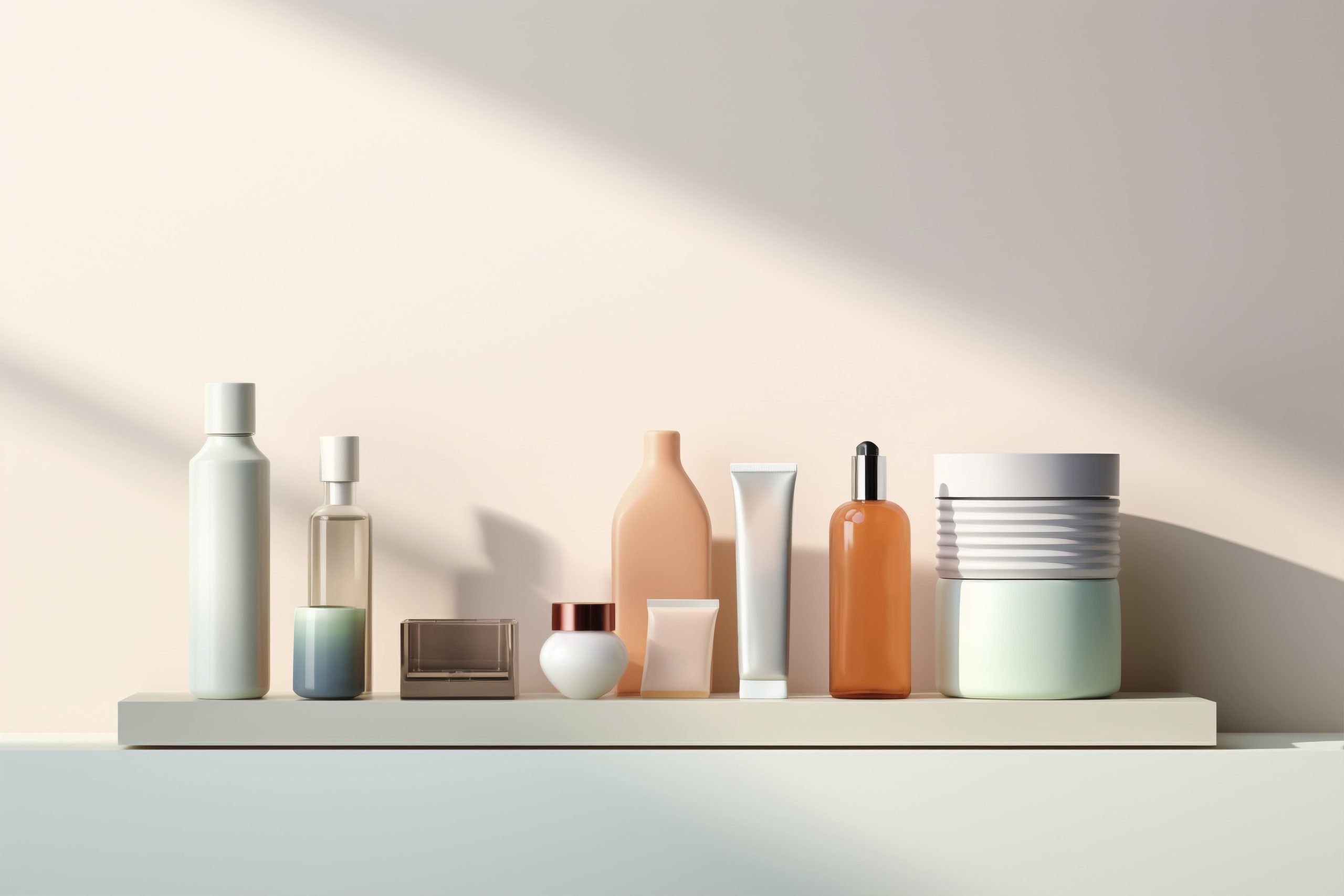
Skincare or skin care products are formulations specifically designed to maintain the health and appearance of the skin. These products contain various active ingredients with different functions, ranging from moisturizing and brightening to protecting the skin from environmental exposure. In practice, we often see that skincare packaging is highly diverse in terms of shape, material, and color.
This variation is not merely for aesthetic or visual appeal, but also serves an important function in maintaining the stability and quality of the product inside.
Various types of containers are used in the cosmetic industry, such as glass bottles, plastic bottles, mica based packaging, and flexible tubes. Even within plastic materials themselves, there are many types such as polypropylene (PP) and polyethylene (PE), each having different characteristics in terms of resistance to heat, humidity, and interaction with chemicals.
In addition, packaging colors also vary, ranging from transparent and translucent to amber or dark colored. All of these variations are designed to protect the product contents from external factors that could damage their quality. Therefore, packaging is not just a complement, but an integral part of the skincare product protection system.
Table of Content :
- The Role of Packaging in Maintaining Product Quality
- The Influence of Storage Environment on Skincare Stability
The Role of Packaging in Maintaining Product Quality
The quality of skincare products is greatly influenced by the container or packaging used. This is because most products are stored in open environments, making them vulnerable to exposure to light, temperature, air, and humidity. Proper packaging must be able to act as a barrier between the product and the external environment to prevent harmful chemical changes.
For example, some active ingredients such as vitamin C are highly sensitive to oxidation. Exposure to light, even from artificial sources like lamps, can accelerate the degradation process of this compound, reducing its effectiveness. Therefore, products containing vitamin C are generally packaged in dark or amber colored bottles to minimize light penetration.
If inappropriate packaging is used, the product can quickly change color, develop an odor, and even lose its effectiveness. In addition, the selection of packaging systems such as airless pumps is also a solution for ingredients that are easily oxidized. This system is designed to minimize product exposure to air since it does not require frequent opening and closing like conventional jars.
As a result, the risk of contamination from air or direct contact with hands or applicators can be reduced. This is crucial because microorganisms from the external environment can enter the product and trigger spoilage or even pose risks to users.
Read also :
Amino Acids in Skincare: Can Microorganisms Unlock the Future of Cosmetic Ingredients?
The Influence of Storage Environment on Skincare Stability
In addition to packaging, the storage environment also plays a significant role in maintaining the quality of skincare products. Skincare products contain various active ingredients and emulsion systems that are sensitive to environmental changes. Therefore, it is important to understand whether a product should be stored at cold temperatures such as in a refrigerator, at room temperature, or away from direct sunlight.
Exposure to ultraviolet radiation from sunlight can cause degradation of active compounds through photochemical reactions. These reactions can alter the molecular structure of active ingredients, making them less effective or even irritating to the skin. Furthermore, excessively high temperatures can accelerate chemical reactions within the product, while temperatures that are too low can cause texture changes, such as emulsion separation.
Humidity is another important factor that is often overlooked. Storing skincare products in the bathroom, for example, can increase the risk of contamination because humid environments support the growth of microorganisms such as bacteria and fungi. This can accelerate product deterioration and reduce its safety level. Therefore, storage locations such as shelves in a dry and cool room are more recommended compared to humid areas.
From a chemical perspective, changes in the quality of skincare products occur due to interactions between active ingredients and external factors such as light, oxygen, temperature, and water. Processes such as oxidation, hydrolysis, and photodegradation can lead to changes in color, odor, consistency, and overall effectiveness. In some cases, degraded products may even cause irritation or allergic reactions on the skin.
Conclusion
Overall, the quality and safety of skincare products are not only determined by their active ingredient formulations, but also by their packaging and storage conditions. Proper containers can protect products from external exposure, while appropriate storage environments can maintain their chemical and microbiological stability.
Therefore, understanding the function of packaging and the correct storage methods is essential for users. By paying attention to these two aspects, product quality can be preserved for a longer period, and the risk of damage or side effects can be minimized.
Author : Delfi
Editor : Alphi
References :
Juncan, A. M., & Rus, L. L. (2018). Influence of packaging and stability test assessment of an anti-aging cosmetic cream. Materiale Plastice, 55(3), 426–430.
S, S. U., S, R. E., & M, S. Z. (2014). PACKAGING OF COSMETICS: a REVIEW. Journal of Pharmaceutical and Scientific Innovation, 3(4), 286–293.