Fertilizer Efficacy Testing: Ensuring Agricultural Productivity and Farmer Confidence


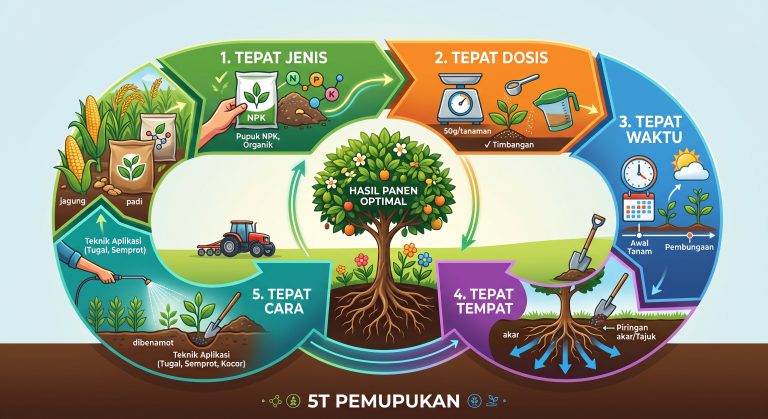
Fertilizers play a critical role in modern agriculture by supplying essential nutrients required for plant growth and high crop yields. However, not all fertilizers provide the same level of performance under field conditions. A fertilizer may contain the nutrients stated on its label, yet still fail to improve plant growth or yield significantly.
For this reason, fertilizer efficacy testing is an essential scientific process used to verify whether a fertilizer can effectively enhance crop performance and provide economic benefits to farmers. Efficacy testing protects farmers from ineffective products while supporting the development and registration of reliable fertilizers.
According to technical guidelines issued by the Indonesian Soil Research Institute, efficacy testing evaluates the influence of a fertilizer on plant growth, yield, and product quality under actual cultivation conditions.
Table of content:
- Understanding Fertilizer Efficacy
- Principles of Fertilizer Efficacy Testing
- Experimental Design and Data Collection
- Statistical and Economic Evaluation
- Criteria for Passing Fertilizer Efficacy Tests
Understanding Fertilizer Efficacy
Fertilizer efficacy testing refers to the ability of a fertilizer product to improve plant growth, increase crop yield, enhance product quality, or achieve a combination of these outcomes. Unlike fertilizer quality testing, which focuses on nutrient composition and compliance with standards, efficacy testing evaluates the actual agronomic performance of the fertilizer in the field.
A fertilizer that passes quality testing is not automatically considered effective. Therefore, fertilizer efficacy testing is conducted only after a fertilizer has successfully met quality requirements. The primary objective of efficacy testing is to determine whether a fertilizer can provide measurable benefits compared with untreated crops or standard fertilization practices.
This approach ensures that recommendations given to farmers are based on scientific evidence rather than marketing claims.
Principles of Fertilizer Efficacy Testing
The testing process is generally conducted under field conditions because environmental factors such as soil properties, climate, and biological interactions strongly influence fertilizer performance. The technical guidelines for fertilizer testing emphasize that trials should consider soil, climatic, and biological factors that may affect the experimental objectives.
To obtain reliable results, testing sites are usually selected in areas with relatively low nutrient status for the nutrient being evaluated. Such conditions allow researchers to observe clear crop responses to fertilizer application. In addition, experiments are ideally conducted on more than one soil type to ensure that the findings are applicable across different agricultural environments.
Researchers also use officially released crop varieties, high quality seed, and standard crop management practices to minimize experimental bias. Proper pest and disease management is maintained throughout the trial so that crop performance reflects fertilizer effects rather than other limiting factors.
Experimental Design and Data Collection
A well designed fertilizer efficacy trial includes several treatments. These commonly consist of a control treatment without the tested fertilizer, a standard fertilization treatment based on local recommendations, and multiple application rates of the fertilizer being evaluated.
The guidelines recommend using at least three fertilizer treatments with sufficient replication to determine the optimum application rate and generate reliable recommendations. During the experiment, researchers collect a wide range of data.
Soil analyses are conducted before and after the trial to assess changes in soil properties such as pH, organic carbon, cation exchange capacity, and base saturation. Plant growth parameters, including plant height, leaf number, canopy diameter, and stem diameter, are monitored throughout the growing season.
Reproductive characteristics such as flowering time, harvest time, and the number of productive tillers may also be recorded depending on the crop species. Yield measurement is one of the most important aspects of efficacy testing.
Researchers determine gross and net production and may also evaluate product quality characteristics. The resulting data provide a comprehensive assessment of fertilizer performance.
Statistical and Economic Evaluation
The effectiveness of a fertilizer cannot be determined solely by observing crop growth. Scientific evaluation requires statistical analysis to ensure that differences among treatments are significant rather than the result of random variation. The collected data are typically analyzed using analysis of variance (ANOVA), followed by multiple comparison tests such as Duncan’s Multiple Range Test (DMRT) when necessary.
In addition to agronomic performance, economic feasibility is a crucial component of efficacy testing. Farmers ultimately need technologies that increase profitability. Therefore, fertilizer trials often include economic analyses such as Benefit Cost Ratio (B/C), Revenue Cost Ratio (R/C), or Incremental Benefit Cost Ratio (IBCR). These analyses compare the additional income generated by fertilizer use with the additional costs incurred.
Criteria for Passing Fertilizer Efficacy Tests
A fertilizer must satisfy both technical and economic criteria to be considered effective. From a technical perspective, the fertilizer must perform statistically equal to or better than the standard fertilization treatment, or significantly outperform the untreated control at a 5% significance level.
From an economic perspective, fertilizer use must generate a positive financial return. The Indonesian technical guidelines specify that a fertilizer passes the economic evaluation when the IBCR value exceeds 1, indicating that the benefits gained are greater than the additional costs of using the product.
These dual requirements ensure that approved fertilizers are not only agronomically effective but also economically attractive for farmers.
Conclusion
Fertilizer efficacy testing is a fundamental component of fertilizer evaluation and agricultural quality assurance. Through carefully designed field experiments, comprehensive data collection, statistical analysis, and economic assessment, researchers can determine whether a fertilizer genuinely improves crop performance and farm profitability.
By ensuring that only effective products reach the market, efficacy testing protects farmers, strengthens confidence in agricultural inputs, and supports sustainable increases in crop productivity. As agriculture continues to face challenges related to food security, resource efficiency, and environmental sustainability, rigorous fertilizer efficacy testing will remain an essential tool for evidence-based nutrient management.
Back Your Fertilizer Claims with Scientifically Validated Efficacy Data
In an increasingly competitive fertilizer market, productivity claims without validated efficacy testing are not just a regulatory risk they are a liability to the market trust you have worked hard to build.
IML Testing & Research is an ISO 9001:2015 accredited independent laboratory with proven experience supporting fertilizer manufacturers and agricultural companies in designing and executing efficacy trials that meet the standards recognized by the Indonesian Ministry of Agriculture. Consult with our expert team about your fertilizer testing needs free of charge, and tailored to the specific challenges of your product.
Author: Fachry
Editor: Alphi
References
Suriadikarta, D. A., Setyorini, D., & Hartatik, W. (2004). Petunjuk Teknis Uji Mutu dan Efektivitas Pupuk Alternatif Anorganik. Bogor: Balai Penelitian Tanah, Pusat Penelitian dan Pengembangan Tanah dan Agroklimat, Badan Penelitian dan Pengembangan Pertanian.
Purba, T., Situmeang, R., Rohman, H. F., Mahyati, A., Firgiyanto, R., Junaedi, A. S. Suhastyo, A. A. (2021). Pupuk dan teknologi pemupukan. Medan: Yayasan Kita Menulis.