Dandruff-Free, Healthy Hair: Tips and Tricks for Scalp Care


- Understanding the Difference Between Dandruff and Seborrheic Dermatitis
- How Dandruff Impacts Daily Comfort and Confidence
- Active Ingredients Commonly Used for Dandruff Control
- How Succinic Acid Works to Disrupt Fungal Growth on the Scalp
- Regulatory Status and Safety Considerations for Succinic Acid in Shampoos
Understanding the Difference Between Dandruff and Seborrheic Dermatitis
Seborrheic Dermatitis and dandruff are common dermatological conditions that affect areas of the body with many sebaceous glands. They are often considered the same condition, but there are differences in both presentation and severity.Dandruff is limited to the scalp and is characterized by itching and flaking without visible inflammation. Meanwhile, seborrheic dermatitis affects the scalp as well as the face, the area behind the ears (retro-auricular), and the upper chest, causing flaking, scaling, inflammation, itching, and may be accompanied by noticeable erythema. Various intrinsic and environmental factors—such as sebaceous secretion, fungal colonization on the skin surface, individual susceptibility, and others play a role.
How Dandruff Impacts Daily Comfort and Confidence
Dandruff often disrupts both comfort and appearance. White flakes falling onto the hair or clothing can make some people feel uncomfortable and less confident, especially during social interactions. In some cases, dandruff can even produce an unpleasant odor due to the buildup of oil and dead skin cells on the scalp. Many people try various ways to address it, from home hair care remedies to specialized hair care products formulated to control and eliminate dandruff.
Active Ingredients Commonly Used for Dandruff Control
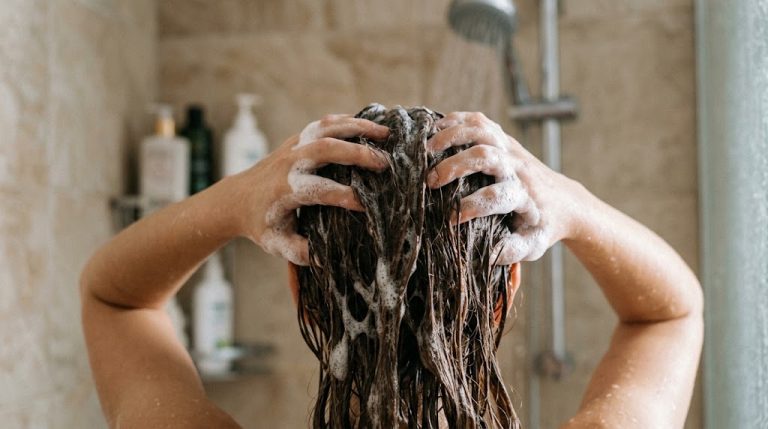
Today, there are many hair care products with various active ingredients to combat dandruff, ranging from zinc pyrithione, piroctone olamine, and selenium sulfide to more innovative ingredients such as succinic acid. Succinic acid is one of the active compounds because of its multifunctional properties: acting as a pH regulator, a mild keratolytic agent, and possessing antimicrobial activity. In shampoo and conditioner formulations, succinic acid helps soften the thickened scalp layer caused by the buildup of dead skin cells, making it easier to remove dandruff. In addition, its acidic nature creates a scalp environment less conducive to the growth of Malassezia a fungus that is one of the main causes of dandruff. By optimizing scalp pH and weakening the bonds between dead skin cells, succinic acid plays a dual role in controlling dandruff while maintaining hair and scalp health.
How Succinic Acid Works to Disrupt Fungal Growth on the Scalp
The mechanism of succinic acid in combating dandruff works by altering the scalp’s pH. The fungus responsible for dandruff (Malassezia) grows optimally at a near-neutral pH, so making the pH slightly more acidic will disrupt its growth. Moreover, organic acids can penetrate microbial cell walls, disrupting metabolism inside the cells and inhibiting their life cycle. In hair cleansing product formulations, succinic acid is generally not used alone but can be combined with other compounds.
Research conducted by Mikako Ezure et al. has shown positive results. Succinic acid formulated in shampoo and applied to hair resulted in significant changes in hair shaft strength. Succinic acid interacts strongly with hair proteins, particularly the cuticle layer, strengthening the outer layer. As a result, hair feels more flexible, elastic, and soft. Product formulations are developed with consideration of the mechanism of action of each active ingredient used. In the case of succinic acid, its effectiveness is optimized when formulated without the presence of cationic compounds, as these can bind to succinic acid and prevent it from penetrating deeper hair layers. By avoiding this interaction, succinic acid can penetrate the hair fibers more efficiently, work directly on the targeted layers, and deliver maximum treatment results.
Regulatory Status and Safety Considerations for Succinic Acid in Shampoos
According to regulations in Indonesia, succinic acid is permitted for use in cosmetic products and is listed in the ingredients regulated by BPOM, as long as it is used at safe concentrations and for its intended purpose. So far, there are no specific prohibitions regarding its use in shampoos. However, for individuals with highly sensitive scalps, there is still a potential for mild irritation. Consumers should be wise and understand the benefits of active ingredients in shampoos, tailoring their choices to the needs of their hair and scalp, while considering the possibility of minor side effects.
Read more:
3 Recommendations for Mandatory Testing Before Cosmetic Products Are Distributed
If you’re developing a hair care product, ensure its formulation and active ingredient claims are scientifically tested. Trust IML Research to test the safety, effectiveness, and quality of your ingredients. It’s time to provide consumers with anti-dandruff products that are proven to work, not just feel promising.
Author: Delfia
Editor: Sabilla Reza
References:
Ezure, M., Tanji, N., Nishita, Y., Mizooku, T., Nagase, S., & Osumi, T. (2019). The Secrets of Beautiful Hair: Why is it Flexible and Elastic? Cosmetics, 6(3), 40. https://doi.org/10.3390/cosmetics6030040