7 Facts About Mercury in Skin-Lightening Products


Mercury is a chemical element with the symbol Hg and atomic number 80. It belongs to the group of heavy metals and has a unique characteristic. Unlike iron and other metals that we commonly encounter in solid and hard forms, mercury exists as a liquid at room temperature.
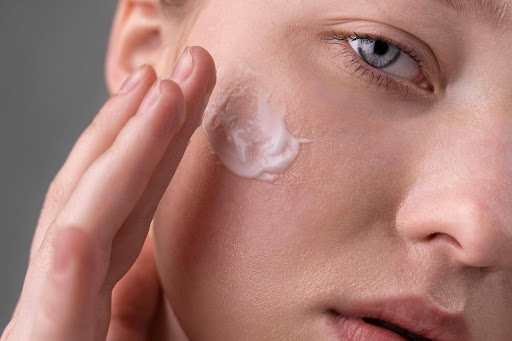
In cosmetic products, the presence of this heavy metal cannot always be identified simply by looking at the product. Certain compounds containing this element can dissolve or disperse within a formulation, allowing the product to maintain the appearance of an ordinary cream, lotion, or serum.
This is one of the reasons why heavy metal contamination is difficult to identify based solely on a product’s color, texture, or smell. The use of this substance in skin-lightening products is primarily associated with its ability to inhibit melanin production.
In fact, there are many safer skin-lightening ingredients that are widely used in cosmetics, such as niacinamide, vitamin C, alpha arbutin, and other active ingredients. So, why is mercury still found in products that claim to lighten the skin rapidly? Here are seven important facts you should know.
Table of Content:
- 1. Mercury Can Inhibit Melanin Production
- 2. Mercury Is Not Always Visible in the Product
- 3. The Lightening Effect May Appear Quickly
- 4. Mercury Is Not a Safe Skin-Lightening Ingredient
- 5. Illegal Products Are a Major Concern
- 6. Mercury Content Can Be Tested in a Laboratory
- 7. Skin May Look Glowing, but the Risks Should Not Be Ignored
1. Mercury Can Inhibit Melanin Production
One of the reasons mercury has been used as a skin-lightening agent is its ability to interfere with the process of melanin production. Simply put, mercury ions can interact with certain groups in proteins and enzymes involved in melanin production, including tyrosinase.
When tyrosinase activity is disrupted, melanin production may decrease, making the skin appear lighter. Therefore, although this substance belongs to the heavy metal group, its lightening effect does not occur because it “scrapes away” the skin.
Instead, it works by interfering with the biological processes involved in pigment production.
Read Also:
Mercury in Cosmetics: The Hidden Danger Behind the Promise of Brighter Skin
2. Mercury Is Not Always Visible in the Product
This heavy metal cannot be easily identified simply by examining a cosmetic product. Certain compounds containing this element can be present in a formulation without producing any distinctive visual characteristics.
A cream containing this heavy metal may still have a seemingly normal color, texture, and scent. As a result, consumers may not be aware of its presence in the product without laboratory testing.
Claims such as “whiter skin in just a few days” should also not be considered proof that a product contains this heavy metal.
3. The Lightening Effect May Appear Quickly
This heavy metal can cause relatively rapid changes in skin pigmentation by inhibiting melanin production. This effect may make the substance attractive to manufacturers of illegal cosmetic products that promote instant results.
However, a rapid change in skin appearance does not mean that the process is safe. Skin that appears whiter does not necessarily indicate that the skin has become healthier.
4. Mercury Is Not a Safe Skin-Lightening Ingredient
The rapid effects of this substance do not make it a suitable ingredient for cosmetic use. Exposure to this heavy metal through cosmetics can pose health risks, particularly when exposure occurs continuously or at high concentrations.
Therefore, the idea that “the faster the skin becomes lighter, the better” should be avoided. Cosmetic products should provide their intended benefits without compromising the safety of the skin or the body.
5. Illegal Products Are a Major Concern
Mercury is particularly concerning when found in cosmetic products that are not properly regulated or do not have clear authorization for distribution. Products with exaggerated claims, incomplete or inaccurate ingredient lists, or promises of extremely rapid changes in skin color should be approached with caution.
Consumers should not be persuaded solely by testimonials or before-and-after photographs.
6. Mercury Content Can Be Tested in a Laboratory
The presence of mercury does not have to be determined based on the physical characteristics of a product. Testing can be conducted using both qualitative and quantitative methods.
Qualitative testing is intended to determine whether mercury is present or absent, for example, by using specific reagents that produce a characteristic reaction in the presence of mercury. Meanwhile, quantitative testing is used to determine the concentration of mercury using analytical instruments in a laboratory.
Therefore, laboratory testing provides much more reliable results than simply examining the color or texture of a cosmetic product.
7. Skin May Look Glowing, but the Risks Should Not Be Ignored
During the early stages of use, reduced melanin production may make the skin appear brighter and more “glowing.” However, this does not necessarily mean that the skin has become healthier.
Mercury exposure can cause irritation, changes in skin pigmentation, and disruption of the skin barrier. After discontinuing the product, some users may experience the recurrence of pigmentation problems or worsening skin conditions.
Breakouts may also occur when the skin has already been compromised, although individual responses can vary. For this reason, consumers should not use instant results as an indicator of product safety.
It is important to be more aware of the skincare products being used. Make sure that products have appropriate regulatory approval, come from trustworthy sources, and clearly list their ingredients.
If there is any doubt about the presence of mercury, laboratory testing is a more reliable way to determine whether it is present. Healthy skin is not skin that becomes instantly lighter, but skin that is properly cared for with safe and scientifically tested ingredients.
Verify Mercury Content in Your Skin-Lightening Products
Product safety should not rely solely on packaging claims. Evaluate mercury content in skin-lightening products through laboratory testing!
IML Testing & Research provides Chemical Compound Testing services to help companies obtain analytical data on mercury and other relevant chemical parameters in cosmetic products.
Developing or evaluating a skin-lightening product? Contact IML Testing & Research today and discuss your laboratory testing requirements with our team!
Author: Delfia
Editor: Lina
References
Bastiansz, A., Ewald, J., Rodríguez Saldaña, V., Santa-Rios, A., & Basu, N. (2022). A systematic review of mercury exposures from skin-lightening products. Environmental Health Perspectives, 130(11), 116002. https://doi.org/10.1289/EHP10808
Hamann, C. R., Boonchai, W., Wen, L., Nishijima Sakanashi, E., Chu, C.-Y., Hamann, K., Hamann, C. P., Sinniah, K., & Hamann, D. (2014). Spectrometric analysis of mercury content in 549 skin-lightening products: Is mercury toxicity a hidden global health hazard? Journal of the American Academy of Dermatology, 70(2), 281–287.e3. https://doi.org/10.1016/j.jaad.2013.09.050