5 Signs Your Serum Is Not Suitable for Your Skin

The beauty industry is developing at an incredibly rapid pace. Innovations in skincare seem to emerge almost continuously, with new products regularly introduced to address the diverse needs of consumers.
Advances in technology have also made skincare formulations increasingly innovative, both in terms of the ingredients used and the way products are designed to work on the skin.
Table of Content:
- Different Skin Conditions Require Different Care
- Why Is Serum Often Considered a Key Skincare Product?
- 5 Signs Your Serum Is Not Suitable for Your Skin
- Why Can a Serum Be Unsuitable for Your Skin?
- Be a Smart and Careful Skincare Consumer
Different Skin Conditions Require Different Care
The wide variety of skincare products available today reflects the fact that everyone has different skin conditions and concerns. Some people have sensitive skin that is easily irritated and prone to redness, while others have dry skin that feels rough or tends to flake.
There are also people with oily skin and excessive sebum production, as well as acne-prone skin that is more susceptible to inflammation. Other common concerns include blackheads, enlarged-looking pores, uneven skin tone, acne marks, and signs of aging.
With so many skincare products available, one product that often receives particular attention is serum. Within a skincare routine, serum is often considered one of the key products because it is specifically formulated to provide more targeted care based on the skin’s needs.
Read Also:
Body Serum: Benefits, Ingredients, and the Importance of Product Testing
Why Is Serum Often Considered a Key Skincare Product?
Serums have different formulation characteristics compared with basic skincare products such as cleansers and moisturizers. They are generally designed with higher concentrations of active ingredients and may combine several ingredients to provide specific benefits for the skin.
This is why serum can become an important part of a skincare routine. In general, serum is used to help maintain the skin’s condition while providing more targeted care.
Depending on its formulation, a serum may help keep the skin hydrated, improve the appearance of brightness, make the skin look smoother, help maintain oil balance, and support overall skin health. However, the relatively high concentration of active ingredients also means that not every serum is suitable for everyone.
Instead of providing the expected benefits, certain serums may cause reactions that indicate the skin is not responding well to the product.
5 Signs Your Serum Is Not Suitable for Your Skin
Your skin feels hot or stings
A sensation of heat, burning, or stinging after applying a serum can be a sign that your skin is experiencing discomfort. A mild sensation that disappears quickly may occur with some products, but intense or persistent burning should be taken seriously.
Your skin becomes dry and feels tight
If your skin feels increasingly dry, rough, or tight after using a serum, the formula may not be suitable for your skin. This can happen when certain active ingredients are too strong or when the product disrupts the skin’s moisture balance.
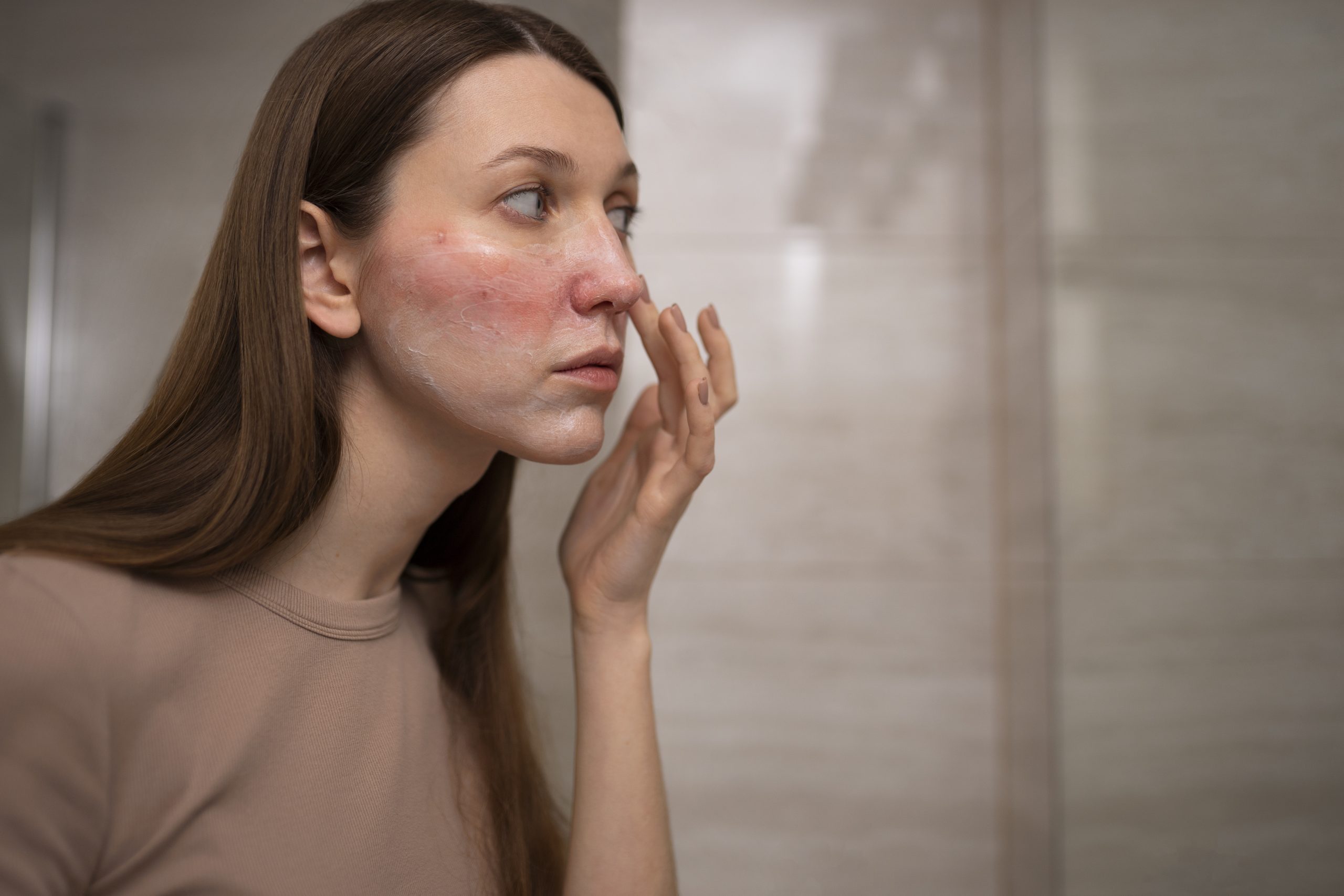
Redness or rashes appear
Redness, itching, or the appearance of a rash after application may indicate an unfavorable reaction. This is especially worth paying attention to if the symptoms repeatedly appear every time you use the serum.
You develop acne or small bumps
The appearance of new pimples or small bumps should also be monitored. This reaction may be influenced by an unsuitable formulation, certain ingredients that may clog pores for some individuals, or the simultaneous use of several active skincare products.
Irritation becomes increasingly severe
One of the most concerning signs is severe irritation, such as intense burning, excessive peeling, persistent redness, or discomfort that does not improve. If these symptoms occur, it is best to stop using the product.
Why Can a Serum Be Unsuitable for Your Skin?
One possible reason is that the skin may be overwhelmed by a high concentration of active ingredients, especially if it has not been exposed to them before. Certain ingredients may also be unsuitable for particular skin conditions.
For example, sensitive skin may be more prone to irritation when exposed to products containing strong acids. Using several active skincare products at the same time can also increase the risk of over-irritating the skin.
Therefore, choosing a serum should not be based solely on trends or product claims. It is equally important to consider your skin type, current condition, and specific concerns.
Be a Smart and Careful Skincare Consumer
Before applying a new serum all over your face, perform a patch test first, such as on a small area of your hand or behind your ear. This can be a useful preventive step to identify potential unwanted reactions before applying the product to a larger area of the face.
Introduce new products gradually and follow the recommended directions for use. Avoid combining too many active ingredients at once, and stop using the product if you experience severe or persistent reactions.
By understanding your skin and choosing products more carefully, you can build a skincare routine that is both more appropriate and safer for your skin.
Support Your Serum’s Safety With Testing Data!
IML Testing & Research provides testing services to help companies evaluate the safety aspects of cosmetic products before they reach the market. Developing a serum or skincare product? Contact IML Testing & Research today and discuss your product testing requirements with our team!
Author: Delfia
Editor: Lina
References
American Academy of Dermatology Association. (n.d.). How to test skin care products. https://www.aad.org/public/everyday-care/skin-care-basics/dry/skin-care-products
Draelos, Z. D. (2018). The science behind skin care: Cleansers, moisturizers, and serums. Journal of Cosmetic Dermatology, 17(4), 439–442.