Dangerous Cosmetics Found Again by BPOM: How Important Is Laboratory Testing Before Products Reach the Market?

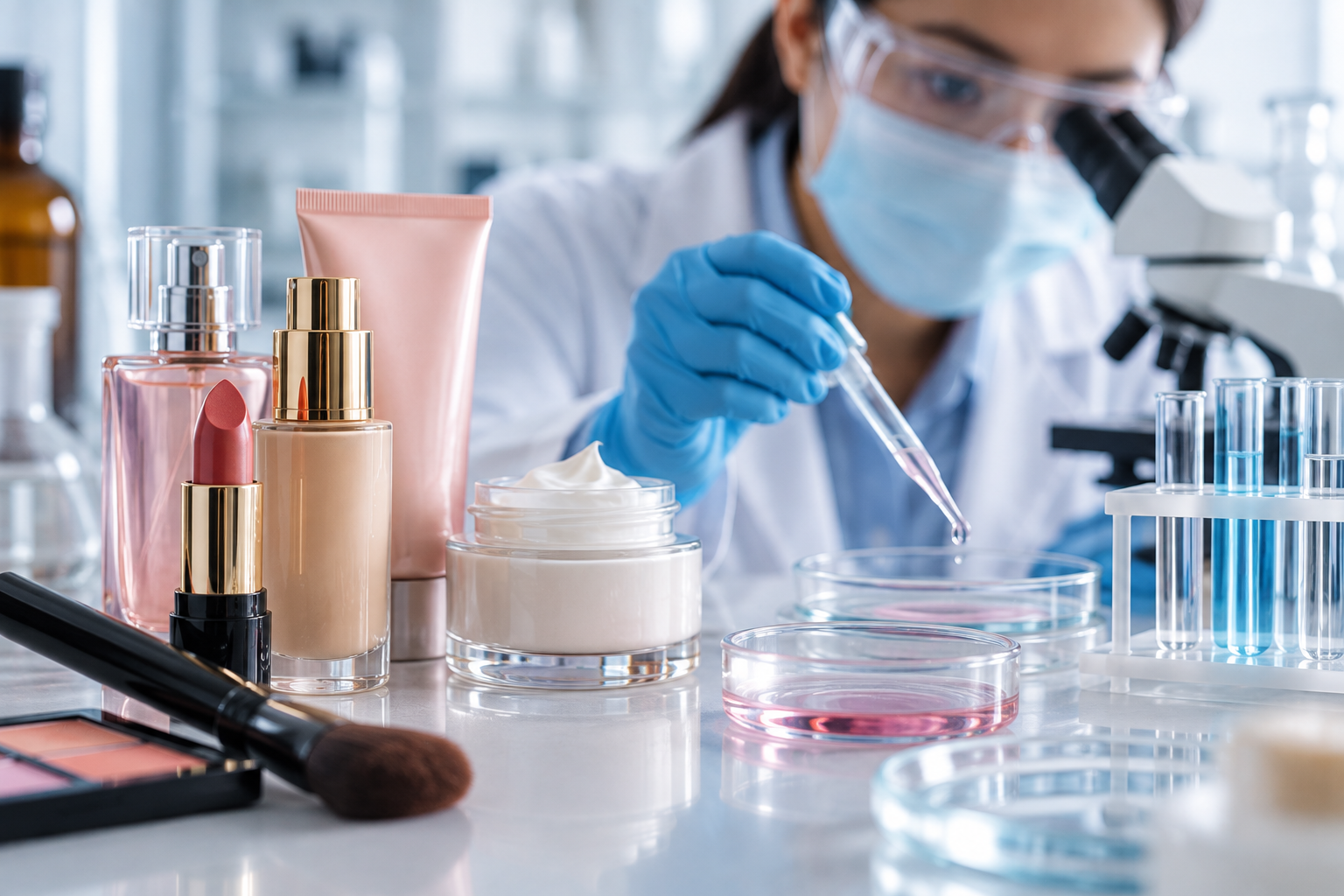
The cosmetics industry continues to grow with the introduction of various skincare, makeup, hair care, and personal care products. However, this rapid development should also be supported by appropriate safety and quality control measures to minimize the risk of dangerous cosmetics reaching consumers.
In July 2026, the Indonesian Food and Drug Authority (BPOM) announced another finding of dangerous cosmetics during its routine surveillance conducted from April to June 2026. A total of 14 cosmetic products were found to contain hazardous and/or prohibited ingredients.
According to BPOM, 11 of these dangerous cosmetics were locally manufactured through contract production, one was an imported product, and two did not have marketing authorization. All identified products underwent laboratory testing and were found to violate applicable safety requirements.
These findings demonstrate that laboratory testing plays an important role in providing objective data about product characteristics. For manufacturers, testing can also support quality control and formulation evaluation before products reach consumers.
Daftar Isi:
- What Dangerous Cosmetics Ingredients Did BPOM Find?
- A Cosmetic Product Can Look Normal but Still Have an Inappropriate Composition
- Does a Product with Marketing Authorization No Longer Need Testing?
- Cosmetic Ingredient Regulations Continue to Develop
- Don't Wait Until a Product Is Found to Be Problematic
- What Laboratory Tests Can Be Performed on Cosmetics?
What Dangerous Cosmetics Ingredients Did BPOM Find?
Based on BPOM's second-quarter 2026 surveillance, several hazardous and/or prohibited substances were identified in cosmetic products, including:
- retinoic acid;
- hydroquinone;
- clobetasol propionate;
- mometasone furoate;
- Red K10 colorant; and
- mercury.
Each of the substances found in these dangerous cosmetics has different characteristics and potential health risks. BPOM explains that retinoic acid may cause dry skin and burning sensations and carries teratogenic risks.
In these dangerous cosmetics, hydroquinone may contribute to hyperpigmentation and ochronosis, while clobetasol propionate and mometasone furoate may cause skin atrophy. BPOM also states that Red K10 colorant carries carcinogenic risks and may affect liver function, while mercury exposure may cause skin irritation and dark spots and potentially contribute to kidney damage.
The discovery of these dangerous cosmetics demonstrates why the physical appearance of a product alone cannot confirm whether its composition is appropriate.
Read Also:
Illegal Cosmetics On Marketplaces: Why Product Safety Testing Matters
A Cosmetic Product Can Look Normal but Still Have an Inappropriate Composition
Dangerous cosmetics containing inappropriate substances do not necessarily show obvious changes in color, odor, or texture. A cream may still appear white and smooth.
A lipstick may still provide an attractive color, even if it potentially falls into the category of dangerous cosmetics due to inappropriate ingredients. Nail polish may also look visually similar to other products.
The issue may lie within the chemical composition, which cannot always be identified through visual observation. This is one reason laboratory analysis is important.
Using appropriate analytical methods, laboratories can help identify or quantify specific compounds in raw materials and finished cosmetic products.
Why Is Laboratory Testing Important Before Cosmetics Reach the Market?
Laboratory testing should not simply be viewed as a process for generating numbers on a certificate of analysis. Testing data can help manufacturers understand the characteristics of raw materials and finished products more objectively while reducing the risk of dangerous cosmetics reaching the market.
Several reasons make laboratory testing particularly relevant to cosmetic quality and safety.
1. Helping Identify Unwanted Substances
One important function of laboratory analysis is to detect or identify specific chemical substances. The analytical method should be selected according to the target compound.
Chromatographic and spectrometric techniques, for example, can be used to analyze various organic compounds, while elemental analysis techniques may be appropriate for selected metals. Method selection should consider the analyte characteristics, cosmetic matrix, expected concentration, and analytical objective.
When investigating dangerous cosmetics, appropriate laboratory analysis can help identify substances that should not be present in a formulation or determine whether selected components comply with applicable specifications.
2. Verifying Raw Material Quality
Finished-product quality begins with appropriate raw material control. Manufacturers need to understand the identity and characteristics of the ingredients used in their formulations.
Depending solely on ingredient names or supplier documentation may not always provide all the information required for internal quality control. Depending on the material, laboratory evaluation may include:
- material identification;
- active ingredient concentration;
- purity;
- selected impurities;
- selected metals;
- physicochemical characteristics; and
- other specification-related parameters.
Raw material testing can therefore help manufacturers verify whether incoming materials meet predetermined specifications before entering the production process.
3. Evaluating Finished Products
A well-designed formulation still requires appropriate manufacturing controls. Weighing errors, raw material variation, cross-contamination, process changes, or deviations from established procedures may affect the characteristics of the finished product.
Therefore, finished-product testing can become an important component of quality control. Testing parameters may differ depending on the cosmetic category.
Manufacturers may evaluate chemical, physical, microbiological, or other relevant product characteristics. These evaluations provide objective data to determine whether the finished product meets its established specifications before market release.
4. Supporting Batch-to-Batch Consistency
A single batch meeting specifications does not automatically guarantee that every subsequent batch will have identical characteristics. Variations in raw materials, suppliers, mixing processes, temperature, production time, or storage conditions may affect the finished product.
Batch testing can provide data to monitor these variations. Manufacturers may compare parameters such as:
- concentrations of specific compounds;
- impurity profiles;
- physicochemical characteristics;
- stability parameters; and
- other relevant quality indicators.
Consistent monitoring can help reduce the possibility of products that do not meet specifications reaching consumers.
5. Supporting Cosmetic Safety Evaluation
Cosmetic safety cannot be determined from a single parameter. Scientific approaches to cosmetic safety assessment consider multiple factors, including the physicochemical and toxicological profiles of ingredients and expected consumer exposure.
Laboratory testing can therefore provide important data to support a broader safety evaluation. However, laboratory results should be interpreted together with other relevant scientific information rather than being treated as the only determinant of product safety.
This comprehensive approach can help manufacturers better understand the safety profile of their formulations.
6. Helping Detect Contamination
Problems in cosmetics do not always originate from ingredients intentionally added to a formulation. Contamination may occur through:
- raw materials;
- water;
- manufacturing equipment;
- production environments;
- packaging;
- storage; or
- cross-contamination.
Contaminants may include microorganisms or certain chemical substances. For this reason, good manufacturing practices should be supported by appropriate control of raw materials, production environments, processes, and relevant laboratory testing.
Does a Product with Marketing Authorization No Longer Need Testing?
Quality control does not end once a cosmetic product receives marketing authorization. Regulatory authorities continue to conduct post-market surveillance of products already available to consumers.
In its second-quarter 2026 findings, BPOM reported that 11 of the 14 identified products were locally manufactured through contract production, one was imported, and two did not have marketing authorization.
This highlights the importance of post-market surveillance. For manufacturers, it also demonstrates why product consistency needs to be maintained throughout the commercial lifecycle.
Changes involving suppliers, raw materials, manufacturing processes, facilities, or formulation characteristics should be properly controlled to maintain product quality.
Cosmetic Ingredient Regulations Continue to Develop
Manufacturers should also recognize that technical requirements for cosmetic ingredients may be updated. In Indonesia, BPOM Regulation No. 25 of 2025 concerning Technical Requirements for Cosmetic Ingredients is currently in force, replacing BPOM Regulation No. 23 of 2019 and its amendments.
Therefore, manufacturers need to ensure that formulations comply with the requirements applicable when products are developed and marketed. Determining whether an ingredient provides the desired function is not enough.
Applicable concentration limits, ingredient categories, restrictions, and other requirements must also be considered.
Don't Wait Until a Product Is Found to Be Problematic
Findings involving dangerous cosmetics should remind the industry that quality control should ideally begin before products enter the market. A reactive approach—investigating only after consumer complaints or regulatory findings occur—may result in significantly greater consequences.
Non-compliant products can potentially lead to:
- product recalls;
- distribution suspension;
- financial losses;
- reputational damage;
- loss of consumer trust; and
- regulatory action.
A preventive approach, on the other hand, can help manufacturers identify potential problems earlier.
What Laboratory Tests Can Be Performed on Cosmetics?
The appropriate type of testing depends on the product characteristics and evaluation objectives. When manufacturers need to evaluate specific chemical substances, ingredient purity, compound concentrations, or unwanted components, Chemical Compound Testing can be performed using appropriate analytical methods.
If the objective involves evaluating the potential safety effects of a substance, Toxicity Testing may form part of the testing strategy when appropriate. Meanwhile, Efficacy Testing can provide data when manufacturers need to evaluate product performance or substantiate particular efficacy-related claims.
In selected applications, Molecular Biology methods may also be relevant when the testing parameter specifically requires DNA- or RNA-based analysis. Therefore, there is no single laboratory test that automatically applies to every cosmetic product.
Testing strategies should be selected according to the formulation, parameters, claims, risks, and evaluation objectives.
Support Cosmetic Quality and Safety Through Laboratory Testing
Don't wait until a product is found to be problematic after reaching the market. Evaluate cosmetic raw materials and finished products through appropriate laboratory testing to obtain objective data about their quality, safety, and characteristics.
IML Testing & Research provides Chemical Compound Testing, Toxicity Testing, Efficacy Testing, and Molecular Biology services that can be adapted to your product parameters and testing objectives.
Contact IML Testing & Research today and discuss your cosmetic testing requirements with our team!
Author & Editor: Lina
References
Indonesian Food and Drug Authority (BPOM). (2026). BPOM Again Finds 14 Cosmetic Products Containing Hazardous and Prohibited Ingredients in the Second Quarter of 2026.
Indonesian Food and Drug Authority (BPOM). (2025). BPOM Regulation No. 25 of 2025 concerning Technical Requirements for Cosmetic Ingredients.
Rogiers, V., & Pauwels, M. (Eds.). (2008). Safety Assessment of Cosmetics in Europe. Current Problems in Dermatology, Vol. 36. Karger.
Rogiers, V., et al. (2010). Human health safety evaluation of cosmetics in the EU: A legally imposed challenge to science. Toxicology and Applied Pharmacology, 243(2), 260–274.
Barel, A. O., Paye, M., & Maibach, H. I. (Eds.). Handbook of Cosmetic Science and Technology. CRC Press.
Schlossman, M. L. (Ed.). The Chemistry and Manufacture of Cosmetics. Allured Publishing.