Urea Fertilizer and Nitrogen Content: Why It Must Be Verified with Laboratory Test Data

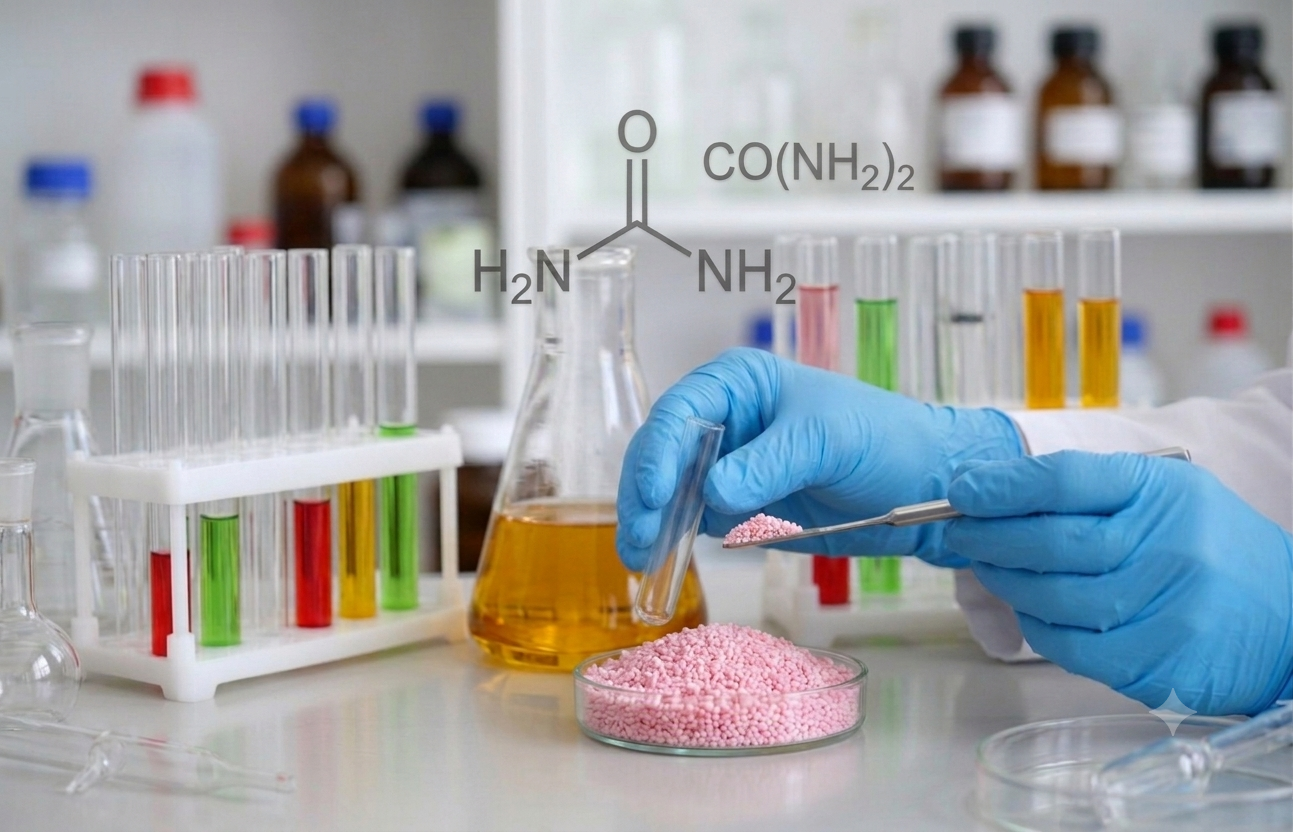
Urea fertilizer is the most widely used nitrogen fertilizer in modern agriculture due to its high nitrogen concentration and cost-effectiveness. With a guaranteed nitrogen content of approximately 46%, urea fertilizer plays a crucial role in supporting vegetative growth, chlorophyll formation, and protein synthesis in crops.
However, the growing circulation of substandard and counterfeit fertilizers has raised concerns about whether products marketed as urea truly contain the nitrogen levels stated on their labels. Laboratory testing has therefore become an essential step in verifying fertilizer quality before it reaches farmers.
Table of Content:
- Nitrogen: The Key Nutrient in Urea Fertilizer
- Why Nitrogen Content Must Be Verified
- Laboratory Testing Ensures Quality Assurance
- Scientific Data Build Trust
Nitrogen: The Key Nutrient in Urea Fertilizer
Nitrogen (N) is one of the three primary macronutrients required by plants. It is directly involved in photosynthesis, amino acid production, nucleic acid synthesis, and overall biomass development. Because nitrogen is highly mobile within plants, inadequate nitrogen supply often results in stunted growth, pale green leaves, and significant yield losses.
Urea fertilizer is valued because it contains approximately 46% nitrogen, making it the most concentrated solid nitrogen fertilizer available commercially. After application, urea is converted into ammonium and subsequently nitrate, which are readily absorbed by plant roots.
This high nutrient concentration allows efficient transportation, storage, and application while reducing logistics costs compared to fertilizers with lower nutrient densities. Nevertheless, these advantages depend entirely on the fertilizer actually containing the declared nitrogen content.
Read Also:
Advantages and Disadvantages of Urea Fertilizer for Plants and the Environment
Why Nitrogen Content Must Be Verified
Not all fertilizers sold in the market meet their declared specifications. Manufacturing errors, poor storage conditions, adulteration, or deliberate counterfeiting may significantly reduce nitrogen concentration. Urea fertilizers with insufficient nitrogen content fail to deliver the expected agronomic benefits, causing farmers to apply additional fertilizer, increasing production costs while reducing crop productivity.
Laboratory analysis provides objective evidence that the urea fertilizer complies with quality standards. Rather than relying solely on packaging labels or visual appearance, laboratory testing determines the actual nitrogen concentration through standardized analytical methods.
These data enable manufacturers, distributors, regulators, and farmers to confirm that the product meets regulatory requirements and performs as intended. For fertilizer manufacturers, laboratory verification also demonstrates commitment to product consistency and quality assurance.
Reliable analytical data strengthen customer confidence and help maintain brand credibility in an increasingly competitive fertilizer market.
Laboratory Testing Ensures Quality Assurance
Nitrogen determination is one of the primary parameters evaluated during fertilizer quality testing. Accredited laboratories use internationally recognized analytical methods to measure total nitrogen accurately and consistently.
These methods minimize analytical uncertainty while ensuring reproducible results across different laboratories. Laboratory testing also supports compliance with national fertilizer regulations and product specifications.
Besides nitrogen analysis, quality evaluation may include moisture content, biuret concentration, physical characteristics, and other parameters depending on regulatory requirements and product type. Routine testing throughout production and distribution helps identify quality deviations before fertilizers reach the market.
This preventive quality control approach protects both manufacturers and end users from economic losses caused by non-compliant products.
Scientific Data Build Trust
In today's agricultural industry, product claims alone are no longer sufficient. Farmers, distributors, and institutional buyers increasingly expect measurable evidence supporting fertilizer quality.
Laboratory reports provide transparent, scientifically validated data that can be used for quality certification, regulatory compliance, customer assurance, and technical documentation. Scientific verification is particularly important when evaluating competing fertilizer products.
Two fertilizers labeled as “urea” may differ significantly in actual nitrogen content if one does not meet quality specifications. Laboratory testing eliminates uncertainty by replacing assumptions with measurable analytical results. As fertilizer markets become more competitive and quality-conscious, laboratory data have evolved from being merely regulatory requirements into valuable tools for building long-term customer trust.
Conclusion
Urea fertilizer remains one of the most efficient nitrogen sources available for modern agriculture. However, its effectiveness depends entirely on whether the product truly contains the nitrogen concentration claimed by the manufacturer.
Laboratory testing provides objective, accurate, and reliable verification of nitrogen content, protecting manufacturers, distributors, and farmers from the risks associated with substandard fertilizers. Scientific data not only ensure regulatory compliance but also reinforce confidence in fertilizer quality and agricultural productivity.
Verify Your Fertilizer Quality with IML Research & Testing
Ensuring fertilizer quality begins with reliable laboratory analysis. Our laboratory offers professional fertilizer testing services using standardized analytical methods to determine nitrogen content and other essential quality parameters.
Whether you are a fertilizer manufacturer, importer, distributor, or agricultural business, we provide accurate, timely, and trustworthy testing results to support regulatory compliance, quality assurance, and customer confidence. Contact our team today to learn how our fertilizer testing services can help verify your urea products with dependable laboratory data.
Author: Fachry
Editor: Lina
References
Association of Official Analytical Chemists (AOAC). (2019). Official Methods of Analysis of AOAC International (21st ed.). AOAC International.
Fertilizers Europe. (2019). Infinite Nutrient Stewardship: Fertilizer Basics. Fertilizers Europe.
Ministry of Agriculture of the Republic of Indonesia. (2020). Pedoman Pengawasan Pupuk dan Pestisida. Directorate General of Agricultural Infrastructure and Facilities.
Ministry of Agriculture of the Republic of Indonesia. Technical Guidelines for Quality and Effectiveness Testing of Alternative Inorganic Fertilizers.
International Fertilizer Association (IFA). (2019). Fertilizer Use and Nutrient Management. International Fertilizer Association.