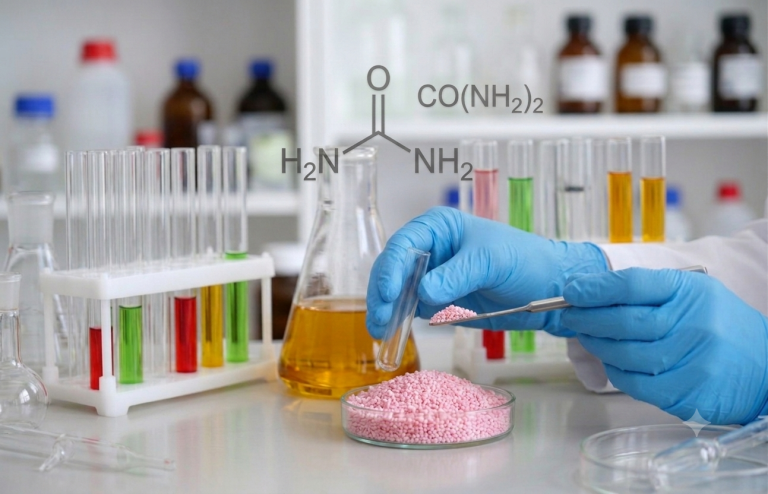
Liquid Foliar Fertilizer: Why Do We Need to Test Its Quality and Content?


Liquid foliar fertilizers are applied directly to plant leaves to supplement crop nutrition. They can be useful for addressing specific nutrient deficiencies and supporting plants during critical growth stages.
However, the performance of foliar fertilizer depends on more than the nutrients listed on the label. Nutrient absorption may be influenced by solution properties, formulation quality, leaf characteristics, application concentration, plant species, and environmental conditions.
Therefore, liquid foliar fertilizer should not be evaluated only by their appearance, color, or odor. Their nutrient composition, physical quality, stability, crop safety, and effectiveness should be supported by appropriate testing.
Table of Content:
- Verifying Nutrient Content
- Evaluating pH and Physical Quality
- Demonstrating Product Stability
- Controlling Contaminants and Impurities
- Preventing Leaf Injury
- Quality Testing and Effectiveness Testing
Verifying Nutrient Content
Liquid foliar fertilizer may contain macronutrients, secondary nutrients, and micronutrients, including nitrogen, phosphorus, potassium, calcium, magnesium, sulfur, iron, manganese, zinc, copper, boron, and molybdenum. Testing confirms whether the identity and concentration of these nutrients match the formulation, product specification, and label declaration.
Low nutrient concentrations may result in inadequate product performance. Excessive or unbalanced concentrations, however, may increase the risk of phytotoxic effects. Foliar fertilizer quality is influenced not only by total nutrient content but also by nutrient forms and the presence of potentially harmful impurities.
Evaluating pH and Physical Quality
The pH of a liquid foliar fertilizer can affect nutrient solubility, formulation stability, ingredient compatibility, and the characteristics of the diluted spray solution. A poorly controlled pH may cause certain nutrients to precipitate or become less available.
Excessively acidic or alkaline solutions may also increase the risk of leaf injury, particularly when applied at high concentrations.
Other relevant physical-quality parameters may include:
- Appearance and color
- Odor
- Homogeneity
- Solubility
- Density
- Viscosity
- Sedimentation
- Crystal formation
A homogeneous and soluble product helps maintain consistent dosing and reduces the risk of blocked spray nozzles.
Demonstrating Product Stability
Liquid fertilizers may change during storage because of temperature fluctuations, light, oxygen, moisture, and interactions with packaging materials. Potential signs of instability include color or odor changes, sediment formation, crystallization, component separation, pH changes, reduced nutrient content, and damaged or swollen packaging.
Stability testing supports the establishment of product specifications, storage instructions, packaging selection, and shelf life. It also helps confirm that the nutrient composition remains consistent throughout the intended storage period.
Controlling Contaminants and Impurities
Quality testing should also consider contaminants and impurities associated with raw materials and manufacturing processes. Relevant parameters may include heavy metals, excessive trace elements, and specific chemical impurities.
For urea-based fertilizers, for example, biuret may require attention because excessive levels may be harmful to plants. FAO guidance identifies physical and chemical characteristics, nutrient forms, and potentially toxic impurities as important aspects of fertilizer-quality evaluation.
Microbiological testing may also be relevant for organic liquid fertilizers, microbial fertilizers, or formulations containing biological materials.
Preventing Leaf Injury
Foliar fertilizers are normally diluted before application. Excessive concentrations may damage leaves and cause symptoms commonly described as leaf scorch.
FAO states that fertilizers used for foliar application should be applied at concentrations that do not burn plant leaves. Compatibility should also be assessed before fertilizers are mixed with pesticides or other agricultural inputs.
Effectiveness and phytotoxicity studies can support recommendations for application concentration, frequency, timing, crop suitability, and possible leaf injury.
Quality Testing and Effectiveness Testing
Quality testing evaluates whether a product meets its physical and chemical specifications. Effectiveness testing demonstrates whether it provides the intended benefit under specified conditions of use.
A product may contain the declared nutrients but still perform poorly if those nutrients are unstable, unavailable, or applied at an inappropriate concentration. Foliar nutrient uptake is influenced by formulation properties, plant surfaces, crop species, humidity, temperature, and application practices.
In Indonesia, the Ministry of Agriculture lists Minister of Agriculture Decree No. 05/KPTS/SR.340/M/01/2025 as the current minimum-requirement reference for inorganic fertilizers. The applicable parameters depend on the product category and formulation.
Ensure Reliable Nutrient Content and Product Foliar Fertilizer Performance
Testing helps manufacturers demonstrate that a liquid foliar fertilizer contains the appropriate nutrients, remains stable during storage, is safe for crops, and performs according to its claims. Discuss your nutrient-content, heavy-metal, stability, effectiveness, and phytotoxicity testing requirements with IML Testing & Research.
References
Ishfaq, M., Kiran, A., Rehman, H., Farooq, M., Ijaz, N. H., Nadeem, F., Azeem, I., Li, X., & Wakeel, A. (2022). Foliar nutrition: Potential and challenges under multifaceted agriculture. Environmental and Experimental Botany, 200, 104909. https://doi.org/10.1016/j.envexpbot.2022.104909.
Fernández, V., & Brown, P. H. (2013). From plant surface to plant metabolism: The uncertain fate of foliar-applied nutrients. Frontiers in Plant Science, 4, 289. https://doi.org/10.3389/fpls.2013.00289.
Fernández, V., Sotiropoulos, T., & Brown, P. H. (2013). Foliar Fertilization: Scientific Principles and Field Practices. International Fertilizer Industry Association.
Rengel, Z., Cakmak, I., & White, P. J. (Eds.). (2022). Marschner’s Mineral Nutrition of Higher Plants (4th ed.). Academic Press.
Kementerian Pertanian Republik Indonesia. Keputusan Menteri Pertanian Nomor 05/KPTS/SR.340/M/01/2025 tentang Persyaratan Minimal Pupuk An-Organik.