Vitamin C Serum Has Changed Color: Is It Still Safe to Use?

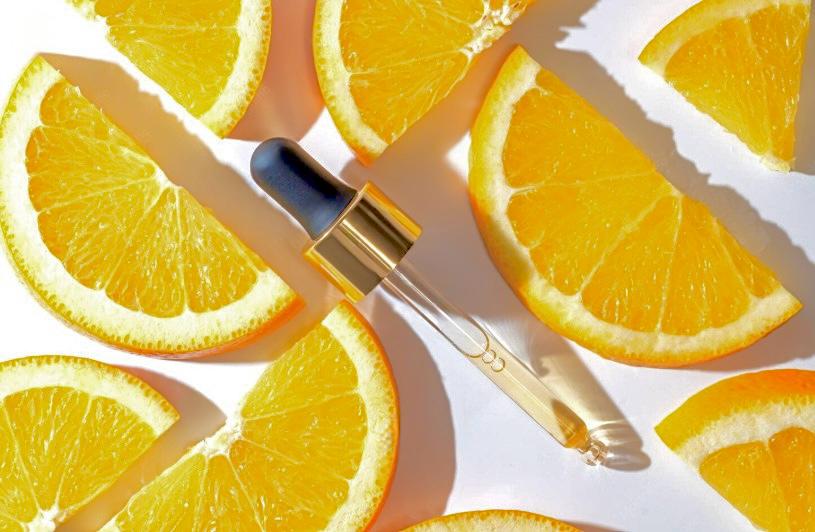
Vitamin C serum is a widely used skincare product known for helping to brighten the skin, fade hyperpigmentation, and protect the skin from damage caused by free radicals. Vitamin C is one of the most essential vitamins for maintaining overall health and skin function.
It is naturally found in a variety of fruits and vegetables, including oranges, guava, kiwi, strawberries, bell peppers, and broccoli. In the human body, vitamin C plays a critical role in collagen synthesis, wound healing, immune function, and protection against oxidative stress.
Among its many biological activities, its antioxidant property is considered the most important, making vitamin C one of the most extensively studied active ingredients in dermatology and cosmetic science. Numerous scientific studies have demonstrated that vitamin C effectively neutralizes free radicals, which explains why it is widely incorporated into skincare products such as toners, serums, essences, and moisturizers.
Every day, our skin is exposed to environmental factors that generate free radicals, including ultraviolet (UV) radiation, air pollution, cigarette smoke, and normal cellular metabolism. Free radicals are highly reactive molecules that can damage proteins, lipids, and DNA within skin cells if they accumulate excessively.
This oxidative damage contributes to dull-looking skin, uneven skin tone, reduced elasticity, fine lines, wrinkles, and premature aging. Antioxidants work by donating electrons to stabilize these reactive molecules before they can harm healthy cells.
Therefore, maintaining sufficient antioxidant protection is essential for preserving healthy, youthful, and resilient skin.
Table of Content:
- Does Our Skin Have Natural Antioxidants?
- Why Does Vitamin C Serum Change Color?
- Is an Oxidized Vitamin C Serum Still Safe to Use?
- More Stable Vitamin C Derivatives: A Better Formulation Strategy
Does Our Skin Have Natural Antioxidants?
The skin possesses its own natural antioxidant defense system. This system includes antioxidant enzymes such as superoxide dismutase (SOD), catalase, and glutathione peroxidase, as well as non-enzymatic antioxidants like vitamin E, glutathione, and coenzyme Q10. Together, these defense mechanisms help minimize oxidative damage caused by everyday environmental exposure.
However, the skin’s natural antioxidant capacity is often insufficient under modern lifestyle conditions. Continuous exposure to pollution, increasingly intense UV radiation, chronic stress, poor dietary habits, smoking, and inadequate sleep significantly increase oxidative stress, overwhelming the skin’s natural protective system.
As a result, additional antioxidants from external sources become increasingly important to maintain optimal skin health. External antioxidants can be obtained through oral intake from food or dietary supplements as well as topical application through skincare products.
Vitamin C remains one of the most popular topical antioxidants because its effectiveness has been consistently supported by scientific research. Today, vitamin C is commonly formulated into cosmetic products such as toners, serums, essences, and moisturizers to provide extra protection against oxidative stress.
Besides scavenging free radicals, vitamin C also promotes collagen synthesis, helps reduce hyperpigmentation, brightens the complexion, and supports skin regeneration. These multiple benefits explain why vitamin C has become a key ingredient in many brightening and anti-aging skincare formulations.
Read Also:
Vitamin C Serum: Benefits for the Face, Mechanism of Action, and Stability Testing
Why Does Vitamin C Serum Change Color?
In cosmetic formulations, vitamin C serves not only as an active ingredient that benefits the skin but also as an antioxidant that helps protect the formulation itself from oxidation. Ironically, its strong antioxidant activity also makes it chemically unstable.
Vitamin C readily reacts with oxygen, heat, light, and certain metal ions, leading to gradual oxidation during storage and repeated use. Every time the bottle is opened, fresh oxygen enters the container and accelerates this degradation process.
Consequently, maintaining vitamin C stability has become one of the greatest challenges in skincare formulation. Fresh vitamin C serums are typically clear, colorless, or slightly pale yellow, depending on the specific formulation and vitamin C derivative used.
As oxidation progresses, the serum gradually turns darker, often becoming yellow, orange, brown, or even dark brown. This color change is one of the most visible indicators that vitamin C has undergone chemical degradation through oxidation, a reaction in which the molecule loses electrons after exposure to oxygen.
The darker the serum becomes, the greater the proportion of vitamin C that has degraded, resulting in reduced antioxidant activity. Therefore, a noticeable color change is often considered a practical sign that the product’s effectiveness has declined.
Is an Oxidized Vitamin C Serum Still Safe to Use?
A vitamin C serum that has changed color is not necessarily harmful immediately, especially if the discoloration is minimal. However, the color change indicates that a portion of the active vitamin C has already oxidized, reducing its ability to function as an effective antioxidant.
As oxidation continues, the concentration of active vitamin C decreases further, making the product progressively less effective. In addition, chemical degradation may generate by-products that no longer provide the intended skincare benefits. Although these degradation products are not always known to be dangerous, they cannot be expected to perform like fresh vitamin C.
Therefore, continuing to use a heavily oxidized serum is unlikely to deliver the desired improvements in skin health and appearance.
More Stable Vitamin C Derivatives: A Better Formulation Strategy
To overcome the instability of pure ascorbic acid, cosmetic manufacturers increasingly formulate products using chemically modified vitamin C derivatives that are significantly more stable. Ingredients such as sodium ascorbyl phosphate, magnesium ascorbyl phosphate, 3-O-ethyl ascorbic acid, and tetrahexyldecyl ascorbate are much less susceptible to oxidation caused by oxygen and light.
Once applied to the skin, these derivatives can be converted into biologically active vitamin C while maintaining antioxidant activity, stimulating collagen production, and improving skin brightness. Their enhanced stability allows skincare products to retain their quality and effectiveness for a longer period without rapid discoloration.
Consequently, stable vitamin C derivatives have become one of the most effective solutions for developing high-performance skincare formulations. In conclusion, a vitamin C serum that has noticeably darkened due to oxidation is best discarded rather than continued for regular use.
The discoloration indicates that the antioxidant activity of vitamin C has significantly decreased or may have been almost completely lost. As a result, the product is unlikely to deliver the protective and skin-rejuvenating benefits expected from vitamin C.
Moreover, prolonged use of an oxidized formulation may expose the skin to degradation compounds whose biological effects are not fully understood. Choosing products formulated with more stable vitamin C derivatives, storing them properly, and discontinuing use once significant discoloration occurs are the best practices for maintaining both the safety and effectiveness of vitamin C skincare products.
Verify the Active Ingredient Content of Your Vitamin C Serum
IML Testing and Research provides chemical assay testing for cosmetic products to verify that active ingredients, such as Vitamin C, remain within specification, maintain product quality, and support quality control throughout the product lifecycle. Contact the IML Testing and Research team to discuss your cosmetic testing requirements.
Author: Delfia
Editor: Lina
References
Pinnell SR, Yang H, Omar M, Riviere NM, DeBuys HV, Walker LC, Wang Y, Levine M. (2001). Topical L-ascorbic acid: Percutaneous absorption studies. Dermatologic Surgery, 27(2), 137–142.
Pullar JM, Carr AC, Vissers MCM. (2017). The Roles of Vitamin C in Skin Health. Nutrients, 9(8), 866. https://doi.org/10.3390/nu9080866