Clinical Testing for Beauty Cosmetics: Proven Strategies to Validate Brightening and Moisturizing Claims

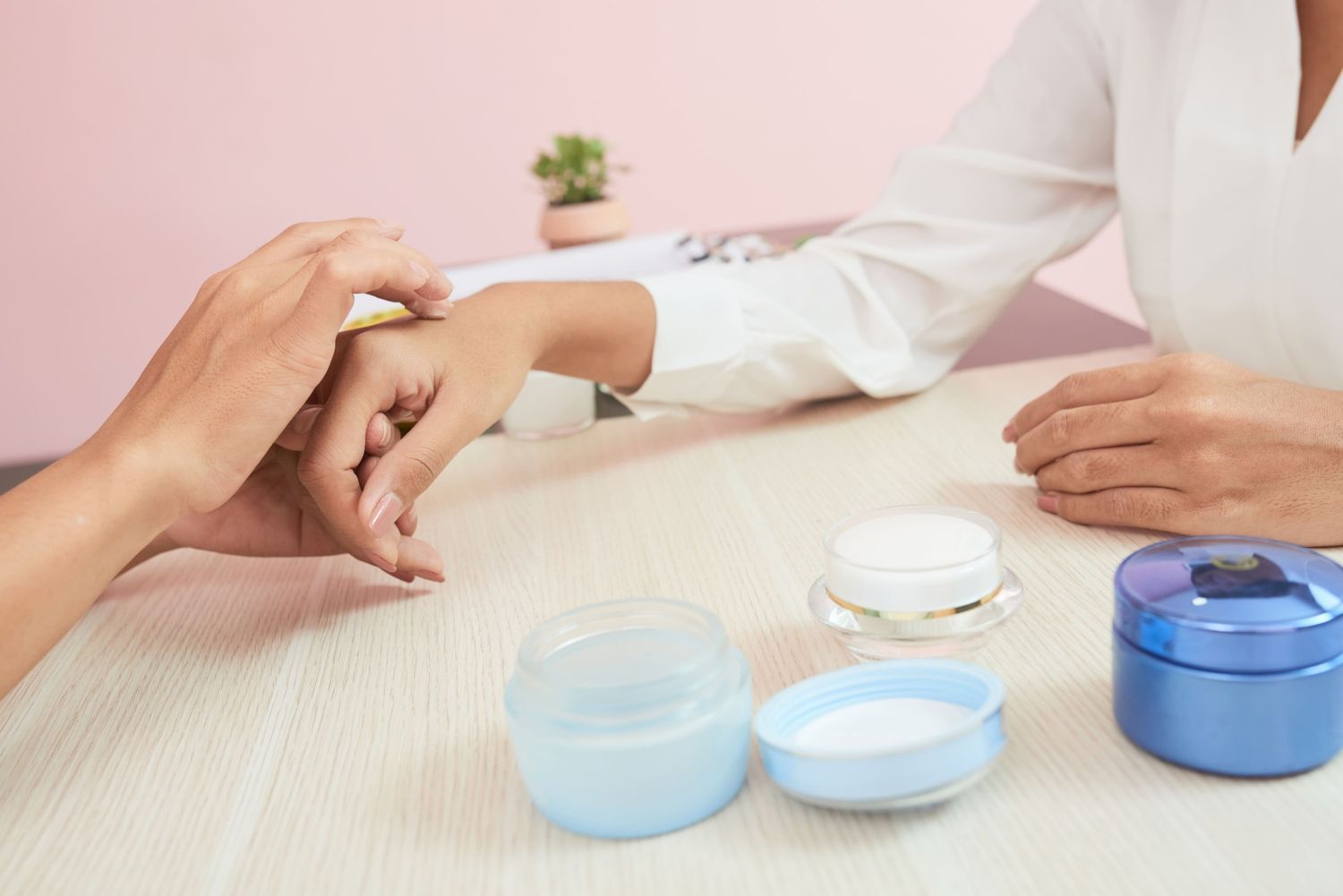
The Beauty cosmetics industry continues to grow rapidly as public awareness of skincare increases. Today, consumers are not only looking for products that are comfortable to use, but also for evidence that the products truly deliver the benefits claimed on the packaging.
Various international regulations emphasize that every beauty cosmetics claim should be supported by adequate scientific evidence. Therefore, clinical testing has become one of the most important methods for demonstrating the effectiveness of a cosmetic product.
Claims such as “moisturizes for up to 24 hours,” “brightens the skin,” or “makes skin look more radiant” are commonly found on a wide range of skincare products. Amid increasingly intense market competition, cosmetic manufacturers can no longer rely solely on subjective claims.
Table of Charts:
- Why Is Clinical Testing Important for Beauty Cosmetics?
- How Are Moisturizing Claims Proven?
- How Are Brightening Claims Proven?
Why Is Clinical Testing Important for Beauty Cosmetics?
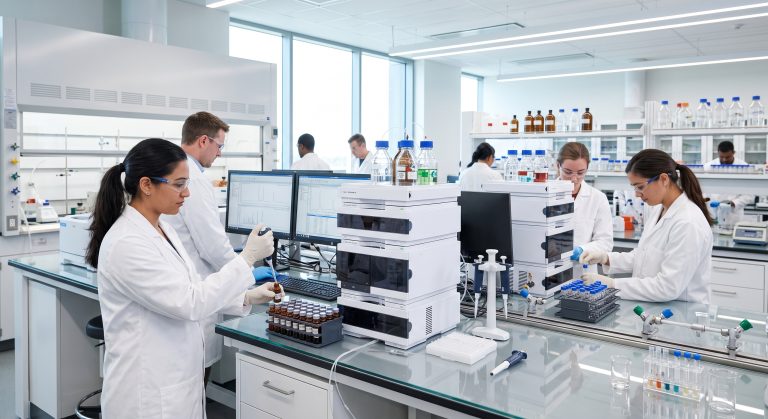
Beauty Cosmetics clinical testing refers to studies conducted on human participants under controlled procedures to evaluate the safety, tolerability, and effectiveness of a product. The main objective is to ensure that the benefits claimed by the manufacturer can truly be experienced and measured objectively.
In addition to increasing consumer confidence, clinical test results also help companies meet regulatory requirements related to claim substantiation. According to efficacy evaluation guidelines published by Cosmetics Europe, beauty cosmetics claims should be supported by scientific data obtained through valid and reproducible testing methods.
In practice, cosmetic clinical testing often combines two approaches:
- Instrumental measurements: using specialized devices to obtain objective data.
- Clinical assessments and consumer perception studies: to determine whether users also experience the claimed benefits.
How Are Moisturizing Claims Proven?
Moisturizing claims are among the most common claims found in skincare products. To substantiate such claims, researchers must demonstrate that the product genuinely increases the water content of the outermost layer of the skin (the stratum corneum).
One of the most widely used methods is measurement with a Corneometer, an instrument that assesses skin hydration based on the electrical capacitance properties of the skin surface. The higher the water content of the skin, the higher the measured value.
This method has been extensively used in cosmetic research and is considered to have good reproducibility and sensitivity for distinguishing between dry and hydrated skin. In a clinical study, participants are typically asked to use the product for a specific period, such as 2 to 8 weeks.
Measurements are taken before product use and at several time points afterward. If a significant increase in skin hydration is observed compared with baseline values or a control group, the moisturizing claim can be scientifically supported.
For example, several studies have shown that moisturizing ingredients such as urea and gluconolactone can increase skin hydration levels measured by Corneometer after regular use.
How Are Brightening Claims Proven?
Unlike moisturizing claims, which focus on skin water content, brightening claims relate to changes in skin color that make the skin appear brighter, more even-toned, or more radiant. To evaluate these claims, researchers generally use skin color measurement devices such as a colorimeter, spectrophotometer, or standardized digital imaging systems.
These instruments objectively measure skin color parameters, including brightness and pigmentation levels. Measurements are performed before and after product use over several weeks. In addition to instrumental measurements, dermatologists or trained evaluators often perform visual assessments of skin color changes, dark spots, and overall skin tone uniformity.
In some studies, consumer perceptions are also collected through questionnaires to determine whether users feel their skin appears brighter after using the product. Because changes in skin color usually occur gradually, clinical studies for brightening claims generally last longer than hydration studies, often ranging from 4 to 12 weeks.
The results are then analyzed statistically to ensure that the observed changes are truly caused by product use rather than by chance. Cosmetic claims such as “moisturizing” and “brightening” should not be made without a scientific basis.
Through well-designed clinical testing, the effectiveness of a product can be demonstrated objectively using valid measurement instruments, expert evaluations, and consumer assessments. With such scientific evidence available, consumers can have greater confidence that the benefits promised on the packaging are supported by accountable and reliable data.
Author: Jihan
Editor: Lina
Support Beauty Cosmetics Claims with Reliable Clinical Testing Data
Brightening and moisturizing claims should be supported by more than marketing statements. IML Testing and Research helps beauty cosmetics companies conduct clinical testing to validate product claims objectively, safely, and reliably.
REFERENCES
Jarząbek-Perz, S., Mucha, P., & Rotsztejn, H. (2021). Corneometric evaluation of skin moisture after application of 10% and 30% gluconolactone. Skin research and technology : official journal of International Society for Bioengineering and the Skin (ISBS) [and] International Society for Digital Imaging of Skin (ISDIS) [and] International Society for Skin Imaging (ISSI), 27(5), 925–930. https://doi.org/10.1111/srt.13044
Park, J. H., Choi, Y., Jung, Y. J., Lee, T., Kim, H., Cho, Y., & Lee, J. H. (2024). Skin Hydration Measurement: Comparison Between Devices and Clinical Evaluations. Annals of dermatology, 36(5), 275–281. https://doi.org/10.5021/ad.23.103
Serup, J., & Danish Environmental Protection Agency, Ministry of Environment and Energy (2001). Efficacy testing of cosmetic products. A proposal to the European Community by the Danish Environmental Protection Agency, Ministry of Environment and Energy. Skin research and technology : official journal of International Society for Bioengineering and the Skin (ISBS) [and] International Society for Digital Imaging of Skin (ISDIS) [and] International Society for Skin Imaging (ISSI), 7(3), 141–151. https://doi.org/10.1034/j.1600-0846.2001.70301.x