Green Manure: A Sustainable Fertilization Alternative for Long-Term Soil Fertility

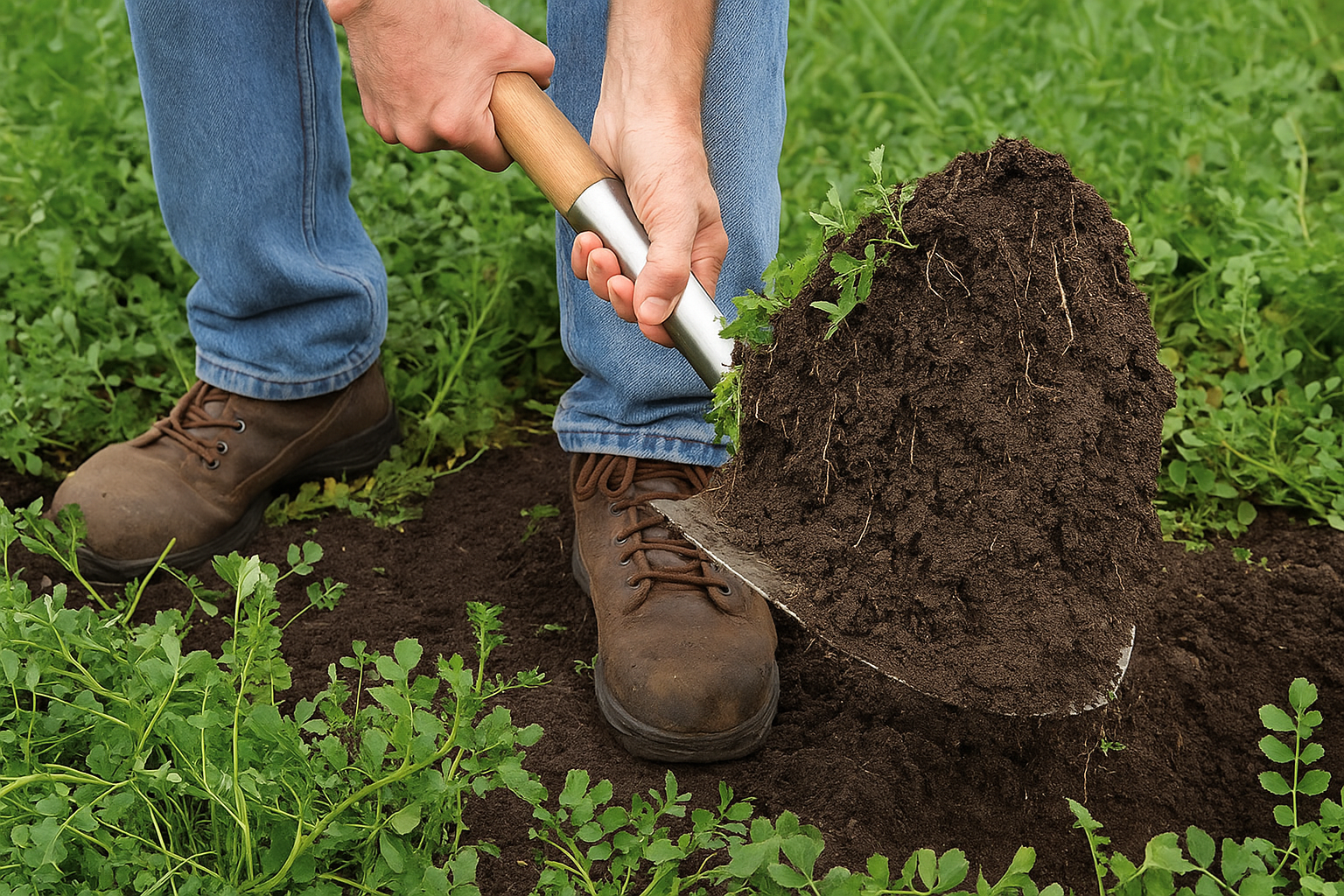
Green manure, also known as green fertilizer, refers to plants or young plant parts that are cultivated and then incorporated into the soil to improve its fertility and structure. This practice has been used for centuries as a natural way to restore soil nutrients, particularly nitrogen, while enhancing soil health and supporting sustainable agriculture.
- The Concept of Green Manure
- Benefits of Green Manure
- Criteria for Selecting Green Manure Plants
- Application and Management
- Challenges in Using Green Manure
The Concept of Green Manure
Green manure is typically derived from leguminous plants such as Crotalaria juncea (sunn hemp), Sesbania grandiflora (turi), Leucaena leucocephala (lamtoro), Tephrosia candida, Calopogonium mucunoides, and Centrosema pubescens. These plants are rich in nitrogen and organic matter, making them ideal for maintaining soil fertility. Once these plants are grown and reach a certain level of maturity, they are plowed back into the soil, allowing them to decompose naturally.
The decomposition process releases essential nutrients that improve the chemical, physical, and biological properties of the soil. Among all nutrients, nitrogen plays a vital role in plant growth and productivity. Leguminous green manures have a unique advantage because they harbor Rhizobium bacteria in their root nodules, which can fix atmospheric nitrogen and convert it into a form that plants can readily use.
Benefits of Green Manure
Green manure offers multiple long-term benefits for soil health and agricultural sustainability.
- Increases Organic Matter – Incorporating green manure enhances the organic content of the soil, which improves soil structure, porosity, and aeration.
- Improves Nutrient Availability – Decomposition of green plants adds nitrogen, phosphorus, potassium, and other microelements that enrich the nutrient pool available to crops.
- Enhances Water Retention – Organic matter from green manure increases the soil’s capacity to retain moisture, which is particularly beneficial in dry regions.
- Boosts Microbial Activity – The addition of organic residues supports beneficial microorganisms that contribute to nutrient cycling and soil respiration.
- Prevents Soil Erosion – Green manure plants protect the soil surface from erosion by wind and water, especially when used as cover crops.
- Reduces Dependence on Chemical Fertilizers – Continuous use of green manure minimizes the need for synthetic fertilizers, reducing input costs and environmental risks such as nutrient leaching and pollution.
Criteria for Selecting Green Manure Plants
Not all plants are suitable for use as green manure. Ideal green manure crops should:
- Grow rapidly and produce abundant biomass.
- Contain minimal woody tissue for easier decomposition.
- Be tolerant of drought and poor soil conditions.
- Have deep root systems to enhance soil structure and nutrient recovery.
- Belong to the Leguminosae family to maximize nitrogen fixation.
Application and Management
In practice, green manure crops are often planted as intercrops or in rotation with main crops. After growing for several weeks, they are cut or plowed under before flowering. This timing ensures that the plants decompose quickly and release nutrients during the next crop’s growing season. In tropical agriculture, species like Crotalaria or Sesbania are often used between rice or maize planting cycles to maintain soil fertility.
Farmers are encouraged to integrate green manure into their cropping systems as part of sustainable soil management. When combined with compost or organic fertilizers, green manure can further enhance soil productivity and resilience.
Read more:
Why Fertilizer Laboratory Testing Is Key to Sustainable Food Production?
Challenges in Using Green Manure
Despite its many benefits, the use of green manure also has limitations. It requires land and time that might otherwise be used for cash crops. Additionally, the benefits are not immediately visible, as nutrient release depends on decomposition rates influenced by temperature, moisture, and microbial activity. However, with proper planning and crop rotation strategies, these challenges can be minimized.
Conclusion
Green manure represents a valuable, eco-friendly alternative to conventional chemical fertilizers. By improving soil fertility, structure, and biodiversity, it provides long-term sustainability for agricultural systems. In an era where soil degradation and climate change threaten food security, adopting green manure practices is a step toward a more resilient and regenerative farming future.
Amid efforts to promote sustainable agriculture, green manure is often seen as a natural solution to improve soil fertility. However, the effectiveness of green manure is strongly influenced by the quality of the plant biomass used, nutrient content, the C/N ratio, and the decomposition process.
Without laboratory testing of the fertilizer material itself, the benefits of green manure may not be optimal or predictable in field applications. Therefore, laboratory testing of green manure is an important step to ensure its quality and consistency in supporting agricultural systems.
Ensure that the green manure used meets quality and nutrient requirements. Conduct fertilizer laboratory testing at IML Testing and Research to accurately and reliably determine nutrient content, organic matter, and key characteristics of green manure as a basis for field application.
Author: Fachry
Editor: Sabilla Reza
References:
Lesilolo, M.K., Riry, J., & Matatula, E.A. (2013). Seed Viability and Vigor Testing of Several Plant Species Sold in Ambon City Market. Agrologia, Vol. 2, No. 1.
Nazara, R.V. et al. (2024). Ilmu dan Teknologi Benih. CV HEI Publishing Indonesia.Panggabean, E.L. (2012). Diktat Teknologi Benih. Faculty of Agriculture, Universitas Medan Area.