Is Organic Fertilizer Required to Meet SNI Standards?

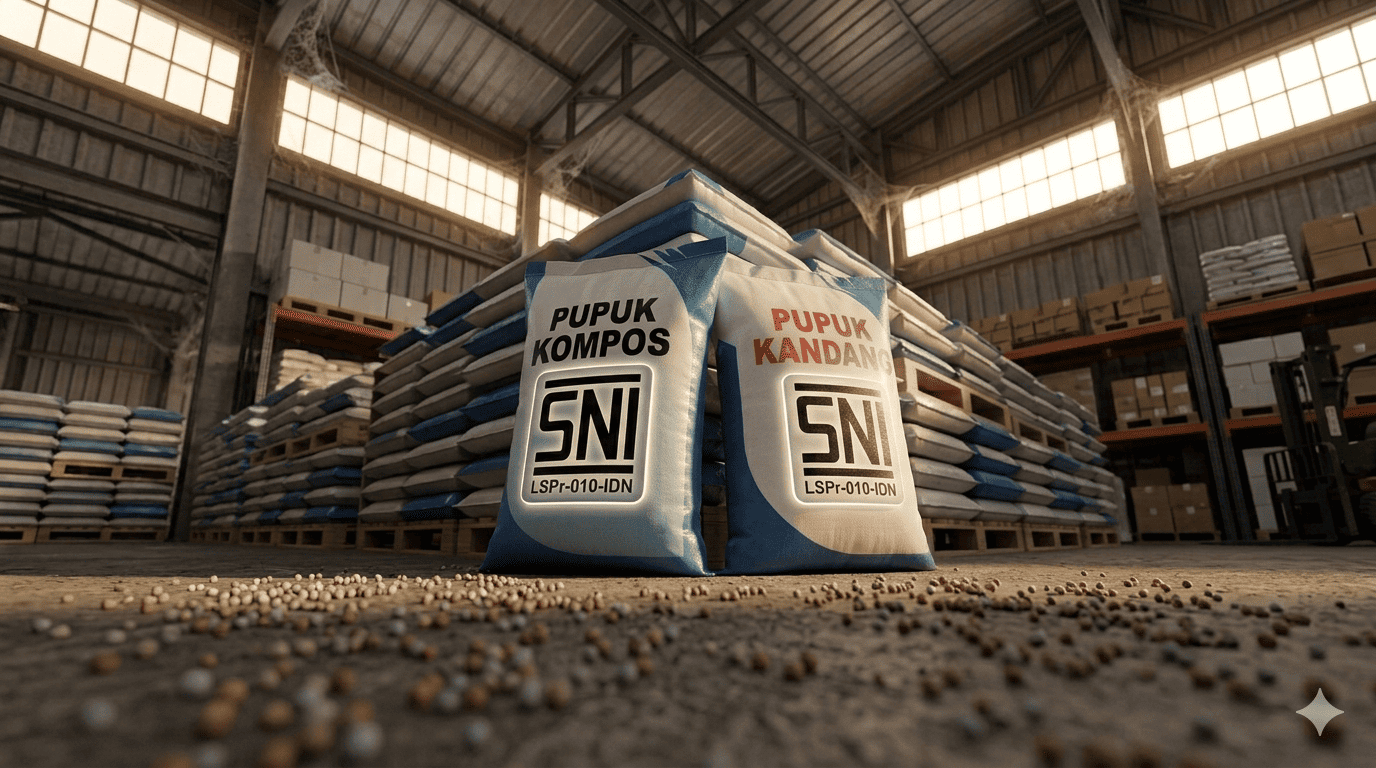
Organic fertilizers are widely used in sustainable agriculture due to their ability to improve soil structure, enhance biological activity, and recycle natural nutrients. However, a common regulatory question arises in Indonesia: are organic fertilizers required to comply with SNI (Standar Nasional Indonesia)? The answer is nuanced and depends on the regulatory context, product status, and intended distribution.
Understanding SNI in Fertilizer Regulation
SNI, or Standar Nasional Indonesia, is a national standard developed to ensure product quality, safety, and consistency. In the agricultural sector, SNI serves as a benchmark for fertilizer quality, including nutrient content, contamination limits, and labeling requirements. According to regulatory frameworks, SNI is closely tied to quality assurance and consumer protection.
In the case of fertilizers, SNI is often linked with certification systems such as SPPT-SNI (Product Certification for SNI Mark Usage), which indicates that a product has met standardized testing and quality criteria.
Regulatory Focus: Organic vs. Inorganic Fertilizers
The regulation outlined in Peraturan Menteri Pertanian Nomor 36 Tahun 2017 primarily governs inorganic fertilizers, particularly regarding their registration, testing, and distribution. This regulation explicitly requires that inorganic fertilizers:
- Undergo quality and effectiveness testing
- Meet standardized quality requirements, often based on SNI
- Be registered before circulation in the market
However, this regulation does not directly mandate SNI compliance for organic fertilizers, as its scope is limited to inorganic products.
Are Organic Fertilizers Required to Have SNI?
In practice, organic fertilizers are not universally required to have SNI certification. Their obligation depends on several factors:
- Commercial Distribution
If organic fertilizers are produced and marketed commercially on a large scale, compliance with quality standards including SNI or equivalent technical standards may be required to ensure safety and consistency. - Government Programs and Procurement
Organic fertilizers used in government supported agricultural programs often need to meet specific technical standards, which may reference SNI or similar criteria. - Quality Assurance and Market Trust
While not always mandatory, obtaining SNI certification can enhance product credibility, especially in competitive markets.
From a technical perspective, literature on fertilizer quality control indicates that SNI standards exist for organic fertilizers, including specifications on nutrient content and safety parameters . This shows that although SNI is available as a benchmark, its application is situational rather than universally compulsory.
Functional Perspective on Organic Fertilizers
Organic fertilizers are derived from plant or animal residues and primarily function to:
- Improve soil physical, chemical, and biological properties
- Supply nutrients in a slower, more natural release pattern
- Enhance long-term soil fertility
Because their composition can vary significantly depending on raw materials and processing methods, standardization (such as SNI) becomes important for ensuring consistent quality especially in commercial contexts.
Conclusion
Organic fertilizers are not strictly required to have SNI certification in all cases, unlike inorganic fertilizers that are tightly regulated under specific ministerial regulations. However, SNI becomes relevant and sometimes necessary when:
- The product is distributed commercially
- It must meet government procurement standards
- Producers aim to guarantee quality and gain market trust
In summary, SNI for organic is conditional rather than mandatory, but it plays a critical role in standardization, quality assurance, and regulatory compliance within Indonesia’s agricultural sector.
Is Your Organic Fertilizer SNI Certified? Don't Make the Wrong Choice!
Choosing organic is not just about the organic label on the packaging there are scientific standards that prove whether a fertilizer is truly safe and beneficial for your crops and land. As a farmer striving for maximum yields without compromising long term soil fertility, you deserve to know whether the organic you use meets Indonesia's National Standard (SNI) set by the government.
SNI certified fertilizer not only guarantees more reliable nutrient content it also provides greater protection against harmful contaminants such as heavy metals that can damage your soil and health. Make sure your organic fertilizer of choice is certified and tested because healthy soil starts with the right decision.
Author: Fachry
Editor: Alphi
References
Kementerian Pertanian Republik Indonesia. (2017). Peraturan Menteri Pertanian Nomor 36/PERMENTAN/SR/10/2017 tentang pendaftaran pupuk anorganik.
Maguire, R., Alley, M., & Flowers, W. (2019). Fertilizer types and calculating application rates. Virginia Cooperative Extension, Virginia Tech.
Purba, T., Situmeang, R., Rohman, H. F., Mahyati, A., Firgiyanto, R., Junaedi, A. S., … Suhastyo, A. A. (2021). Pupuk dan teknologi pemupukan. Medan: Yayasan Kita Menulis.