New Breakthrough! Bacterial Nanocellulose for Healthy and Glowing Skin


The cosmetic industry is increasingly focusing on utilizing biologically derived materials as alternatives to synthetic ingredients. One of the trending biological materials in cosmetics is bacterial nanocellulose (BNC), a type of biopolymer known for its biodegradability, biocompatibility, and high performance. This biopolymer is considered an eco-friendly biomaterial as it does not require harmful reagents and decomposes easily.
The advantages of BNC include its organized nanofiber morphology, capability to deliver active ingredients without compromising the product’s function, high mechanical strength, exceptional water absorption capacity, and non-toxic composition.
Bacterial nanocellulose (BNC) is produced through fermentation by non-pathogenic bacterial strains capable of synthesizing extracellular polysaccharides. These polysaccharides form fibers and nanofibers surrounding the bacterial cells. The bacteria most commonly used for high-yield BNC production belong to the genus Komagataeibacter, such as Komagataeibacter xylinus and Komagataeibacter hansenii.
There are two primary methods for producing BNC in laboratories, namely Static and agitated culture. Static Culture: Fermentation conducted without external agitation. This method has limitations, including low oxygen supply and less homogeneous production. Meanwhile, Agitated Culture: Fermentation using a shaker to improve oxygen and nutrient supply, resulting in higher productivity. However, challenges remain, such as genetic instability of BNC-producing strains and low homogeneity, necessitating further research into efficient bioreactor designs.

The Use of Bacterial Nanocellulose in Cosmetics
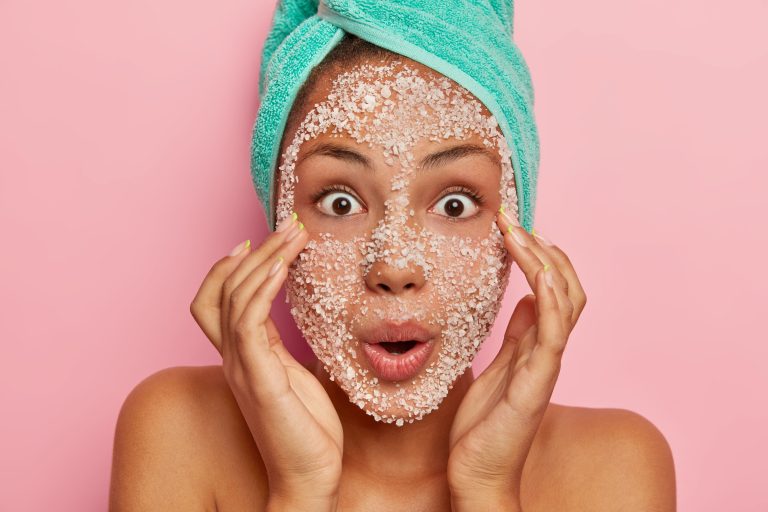
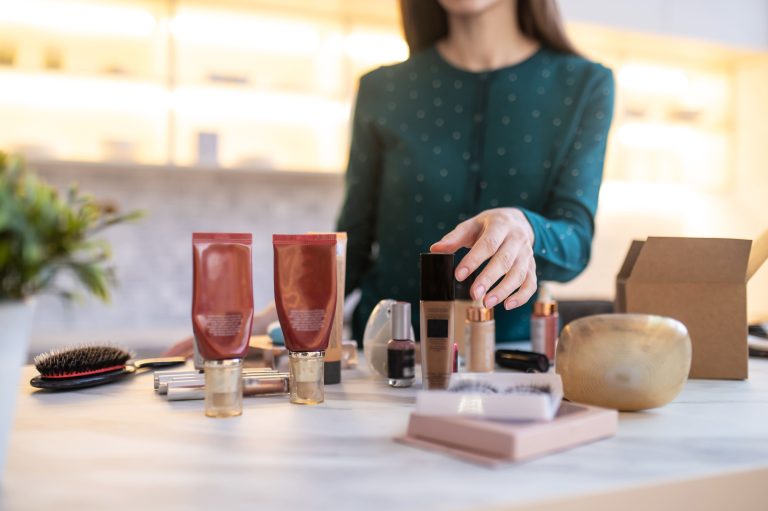
BNC is quite popular in the cosmetics industry, especially in face mask products because it has a high water absorption capacity, thereby facilitating the absorption of active ingredients into the skin. Some commercial cosmetic products that have integrated BNC include CELMAT® and the Intense Whitening Biocellulose Mask from Elizabeth Arden.
To reduce costs and simplify production, active substances, especially natural compounds, can be incorporated into the BNC membrane during biosynthesis. The BNC membrane is then added to the culture medium for further processing.
Study on the Utilization of BNC-DHA in Cosmetics
One of the studies investigating the use of BNC as an active ingredient carrier was conducted by Stasiak-Roznska (2018). In this study, 1,3-dihydroxy-2-propanone (DHA) was used as the active ingredient that plays a role in camouflaging uneven skin tone. DHA was impregnated in BNC membranes with various concentrations (20, 50, 80, and 110 g/L) and tested on human skin.
After 30 minutes of application, skin pigmentation increased according to the concentration of DHA. DHA works through the Maillard reaction, where it reacts with keratin on the skin surface to form melanoidin pigments that bind to stratum corneum proteins. The advantage of BNC-DHA is that it does not leave an unpleasant odor and disappears along with the skin pigmentation process.
The Potential of BNC-DHA for Vitiligo Therapy
DHA can also be applied in vitiligo therapy, which is an autoimmune disorder that causes skin depigmentation. The application of the BNC-DHA membrane was performed for 15, 30, and 60 minutes on vitiligo patients.The intensity of pigmentation increases with higher DHA concentration and longer application duration. A DHA concentration of 50 g/L for 30 minutes provides optimal results in enhancing skin pigmentation.

Cosmetic and Skincare Safety Testing at IML Research
If you are a cosmetics or skincare manufacturer looking to ensure the safety and effectiveness of your products, IML Research is ready to help! Conduct laboratory tests for cosmetics and skincare to ensure your products are safe, effective, and compliant with regulations.
Wait for the next article update for more information on the trend of biological ingredients in cosmetics!
Reference:
Almeida, T., Silvestre, A.J.D., Vilela, C., Freire, C.S.R. 2021. Bacterial Nanocellulose toward Green Cosmetics: Recent Progresses and Challenges. Int. J. Mol. Sci., 22, 2836. https://doi.org/10.3390/ijms22062836.
Oliveira, T.J., Segato, T.C.M., Machado, G.P., Grotto, D., Jozala, A.F. 2022. Evolution of Bacterial Cellulose in Cosmetic Applications: An Updated Systematic Review. Molecules, 27, 8341. https://doi.org/10.3390/molecules27238341.