Fertilizer Testing as the Basis for Determining Plant Growth Quality


Plants grow and develop well when supported by three main factors: soil fertility, fertilizer availability, and environmental conditions. Soil provides both the medium for root growth and a source of nutrients, while fertilizers replenish the nutrients lost through harvesting or leaching. Plant health is strongly influenced by the balance of nutrients in the soil. If one of these factors is disrupted, plant growth will be limited and yields will decrease.
- Soil as the Foundation of Plant Life
- The Role of Fertilizers in Supporting Soil Fertility
- Plant Health and Nutrient Sufficiency
- The Interconnection of Fertilizers, Soil, and Plant Health
Soil as the Foundation of Plant Life
Soil is more than just a rooting medium; it is a complex living system. It contains minerals, water, air, and microorganisms that all play crucial roles in maintaining fertility. Healthy soil is characterized by being loose, rich in organic matter, capable of holding water, and supportive of microbial activity. However, intensive farming without proper management can deplete soil nutrients, increase acidity, and lead to degradation.
The Role of Fertilizers in Supporting Soil Fertility
Fertilizers function as a bridge between the nutrient needs of plants and the natural availability of soil nutrients.
- Organic fertilizers (such as manure, compost, and green manure) improve soil structure, increase water retention, and stimulate microbial activity.
- Synthetic fertilizers (such as urea, SP-36, KCl, and NPK) provide high concentrations of nutrients that are readily available for plant uptake, but they must be applied carefully to avoid damaging the soil.
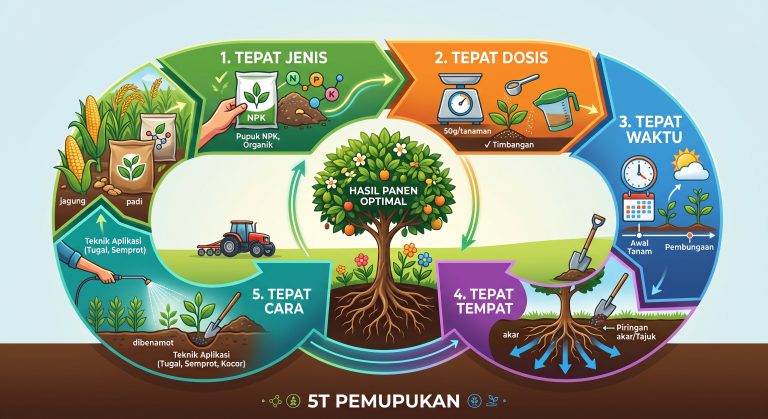
Proper fertilization in terms of timing, dosage, and type is essential to avoid nutrient imbalances. Too little fertilizer results in stunted plant growth, while excessive fertilizer use can poison plants or harm soil structure.
Plant Health and Nutrient Sufficiency
Plant health is closely related to nutrient availability. Each nutrient has a specific role. Nitrogen supports leafy growth, phosphorus is important for root and flower development, and potassium enhances plant resistance to stress and diseases. Both deficiencies and excesses of nutrients can negatively affect plant health.
In addition, soil conditions strongly influence nutrient uptake. Soils low in organic matter make it difficult for roots to develop, reducing nutrient absorption. Soils that are too acidic or alkaline also limit the availability of certain nutrients. Maintaining soil quality is therefore inseparable from maintaining plant health.
The Interconnection of Fertilizers, Soil, and Plant Health
These three aspects form an interconnected relationship:
- Soil provides the basic nutrients absorbed by plants.
- Fertilizers supplement nutrients that are depleted and improve soil quality.
- Plant health depends on the balance of nutrients supplied by both soil and fertilizers.
When fertilizers are applied wisely, soil fertility is preserved, and plants grow healthy and productive. On the other hand, excessive fertilizer use can lead to pollution, soil degradation, and increased plant susceptibility to diseases.
Read more:
Why is Fertilizer Nutrient Content Lab Testing Necessary?
Conclusion
The relationship between fertilizers, soil, and plant health is inseparable. Soil provides the foundation, fertilizers act as supplements, and plant health is the outcome of balanced management. To ensure long-term productivity, farmers should apply balanced fertilization, combining organic and synthetic fertilizers, while maintaining soil quality. With proper management, agriculture can achieve high yields while also protecting the environment.
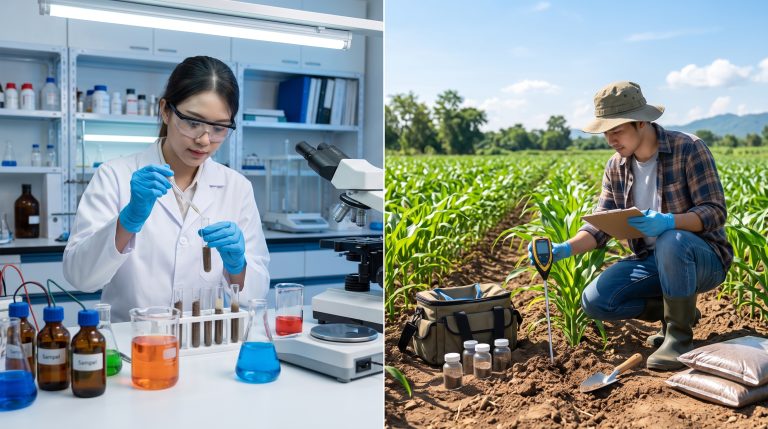
Before fertilizer is used or marketed, it’s crucial to ensure its formula actually works as promised. Many field problems—unresponsive plants, suboptimal growth, or decreased yields—often stem from fertilizer products whose effectiveness and quality have not been proven. Therefore, data-driven verification is crucial to ensure every fertilizer application delivers tangible results.
Want to ensure your fertilizer is truly effective and meets quality standards? Conduct efficacy and quality testing in a laboratory to assess the performance, stability, and nutritional content of your product. IML Research provides comprehensive, accurate, and reliable testing to ensure your fertilizer is proven to work. Consult with our team of experts for free and ensure your fertilizer product passes the test before it reaches the end user.
Author : Fachry
Editor: Sabilla Reza
References:
Fertilizers Europe. (2018). Fertilizer basics: Why we need fertilizers, where they come from, how they work, and how they are used. Brussels: Fertilizers Europe.
Maguire, R., Alley, M., & Flowers, W. (2019). Fertilizer types and calculating application rates. Virginia Cooperative Extension, Virginia Tech.
Purba, T., Situmeang, R., Rohman, H. F., Mahyati, A., Firgiyanto, R., Junaedi, A. S., … Suhastyo, A. A. (2021). Pupuk dan teknologi pemupukan. Medan: Yayasan Kita Menulis.