Detection of E. coli Virulence Genes as a Food Risk Prevention Measure

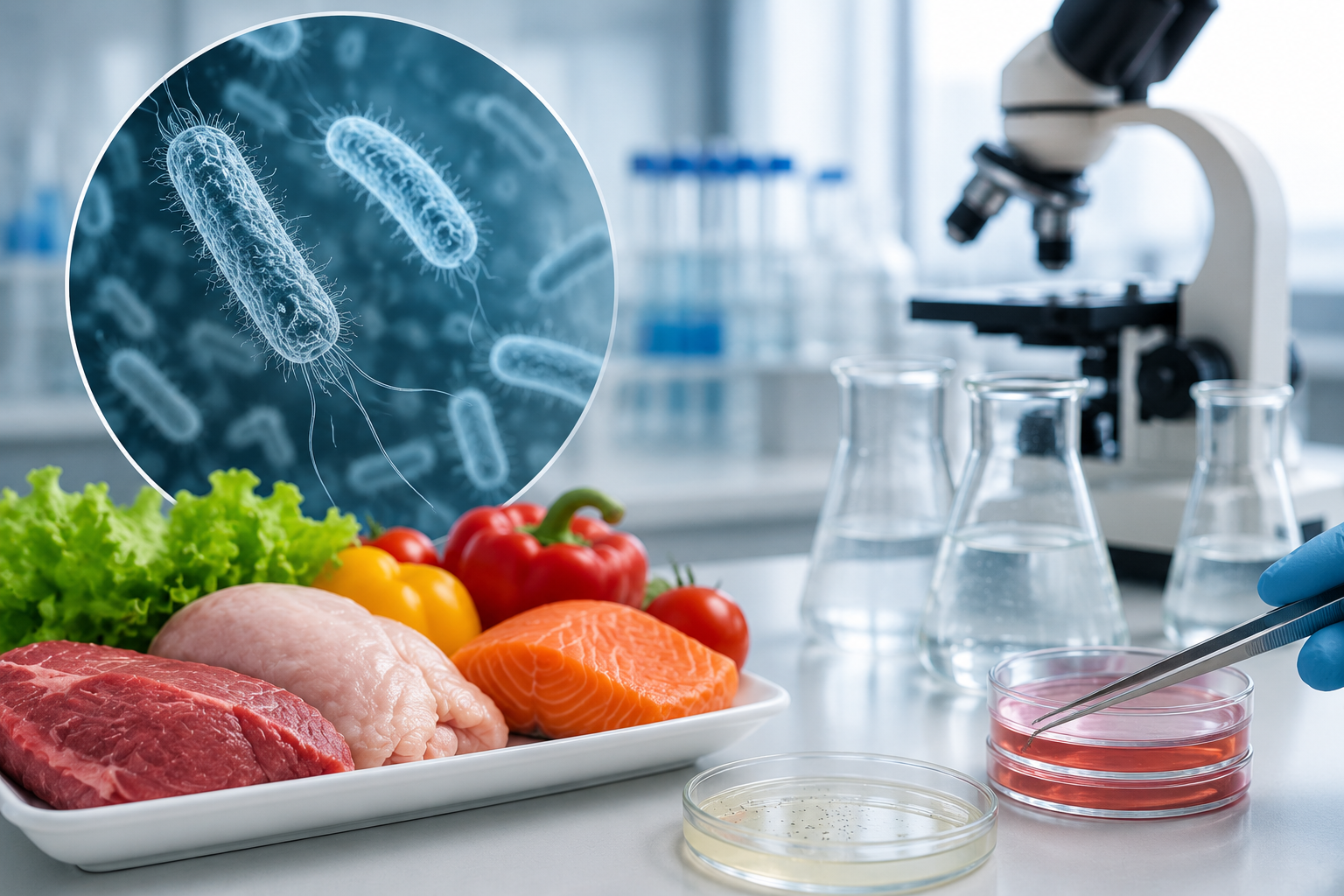
Food safety is not only about taste, appearance, or shelf life. For the food industry, safety also means ensuring that products are free from harmful microbial contamination that could affect consumer health and damage business credibility.
One of the most important microorganisms of concern is Escherichia coli, or E. coli. This bacterium is widely recognized as an indicator of hygiene and sanitation, especially in relation to fecal contamination.
However, not all E. coli strains are harmful. Many strains normally live in the intestines of humans and animals. Still, some pathogenic strains can cause illness ranging from mild diarrhea to severe disease. This is why the food industry must pay close attention to the risk of E. coli contamination.
The presence of this bacterium in food may signal weaknesses in hygiene, sanitation, raw-material handling, processing conditions, or the overall quality-control system.
Table of Content:
- Why Is E. coli a Major Concern?
- How Does E. coli Contamination Occur?
- Risks for the Food Industry
- Why Is E. coli Testing Important?
- Testing Alone Is Not Enough
- When Should the Industry Perform Testing?
- Test Data Help Protect Market Confidence
Why Is E. coli a Major Concern?
In food production, E. coli is commonly used as an indicator organism suggesting that a product or process may have been exposed to unsanitary conditions, unsafe water, unclean equipment, or poor handling practices. Beyond its role as an indicator, certain pathogenic E. coli strains can cause serious illness.
One of the best-known groups is Shiga toxin-producing Escherichia coli (STEC), including E. coli O157:H7. These strains may cause bloody diarrhea, severe abdominal cramps, and in some cases serious complications such as hemolytic uremic syndrome, especially in children and other vulnerable groups.
In other words, E. coli findings in food should never be considered trivial. For the food industry, this is not merely a laboratory issue, but also a consumer-safety, quality-compliance, and business-risk issue.
Read Also:
Strategies Detection of Harmful Microorganisms Through Microbiological Contamination Testing
How Does E. coli Contamination Occur?
E. coli contamination can occur at multiple points throughout the food chain. Risks may arise from raw materials, processing, packaging, storage, distribution, and final handling.
Common contamination sources include:
- Process water that does not meet microbiological requirements
- Contaminated raw materials
- Inadequate sanitation of equipment and food-contact surfaces
- Poor worker hygiene
- Cross-contamination between raw and ready-to-eat products
- Improper storage temperature
- Ineffective washing or cooking processes
High-risk foods may include fresh produce, meat, milk, ready-to-eat foods, sauces, ice, and other products with high moisture content or extensive handling during production.
Risks for the Food Industry
E. coli contamination can create wide-ranging consequences for food businesses. The risk does not end with a failed test result; it may escalate into operational and commercial problems.
Some of the main risks include:
1. Consumer health risks
Contaminated products may cause digestive illness, diarrhea, vomiting, abdominal pain, and even severe complications in sensitive groups such as children, the elderly, and immunocompromised individuals.
2. Product recall risks
Detection of microbial contamination may lead to product recalls, which can result in financial loss, supply disruption, and reduced consumer trust.
3. Brand reputation risks
A single food-safety incident may significantly affect corporate image. A reputation built over years can be damaged by one contamination event.
4. Regulatory non-compliance
Food products must comply with applicable safety requirements. Unsatisfactory results may affect market approval, business partnerships, quality audits, and market-expansion opportunities.
5. Operational loss
When contamination occurs, companies may need to investigate the cause, stop production, conduct deep cleaning, revalidate processes, retrain employees, and perform additional testing.
Why Is E. coli Testing Important?
E. coli testing is an important part of a food-quality control system. It helps companies detect potential problems before products reach consumers.
In general, testing can help to:
- Assess the cleanliness of production processes
- Identify possible fecal contamination
- Verify sanitation effectiveness
- Support evaluation of raw materials and finished products
- Meet food-quality and safety requirements
- Provide a basis for corrective and preventive actions
In practice, testing may be performed on raw materials, water, in-process samples, finished products, production environments, food-contact surfaces, and where needed, workers’ hands.
Testing Alone Is Not Enough
Although laboratory testing is essential, prevention remains the first line of defense. The food industry cannot rely only on final-product testing. Food-safety systems must be built into the process from the beginning.
Important control measures include:
- Sourcing raw materials from reliable suppliers
- Monitoring process-water quality
- Consistent implementation of GMP and SSOP
- Good personal hygiene practices
- Prevention of cross-contamination
- Control of storage and distribution temperatures
- Validation of cooking or washing processes
- Routine environmental monitoring
- Scheduled microbiological testing programs
Strong laboratory results usually come from strong control systems, not from chance.
When Should the Industry Perform Testing?
E. coli testing should be carried out regularly and based on risk. Particular attention is needed in situations such as:
- Evaluation of new raw materials
- Supplier verification
- Validation of sanitation procedures
- Internal or external audits
- Consumer complaints
- New product development
- Changes in process or facility conditions
- Products with a high risk of microbial contamination
With consistent testing data, companies can more easily monitor trends, detect deviations, and make data-based decisions.
Test Data Help Protect Market Confidence
In an increasingly competitive food industry, product safety is one of the key drivers of market trust. Consumers, distributors, retailers, and business partners increasingly expect evidence that food products are safe for consumption.
For this reason, microbiological testing is not only a technical laboratory requirement. Test data provide important support for quality assurance systems, audits, regulatory compliance, and corporate credibility.
Watch the Risk Before It Becomes a Bigger Problem
E. coli contamination in food may indicate weaknesses in hygiene and sanitation systems. If left unaddressed, it can affect consumer health, product quality, and business continuity.
Make sure your food products are supported by appropriate microbiological testing. Discuss your E. coli, coliform, and other food-safety testing needs with IML Testing & Research.
Author: Lina
Editor: Lina
References
Scallan, E., Hoekstra, R. M., Angulo, F. J., et al. (2011). Foodborne illness acquired in the United States—major pathogens. Emerging Infectious Diseases, 17(1), 7–15.
Feng, P., Weagant, S. D., Grant, M. A., & Burkhardt, W. (2020/updated). Enumeration of Escherichia coli and the Coliform Bacteria. In FDA Bacteriological Analytical Manual.
Doyle, M. P., Diez-Gonzalez, F., & Hill, C. (Eds.). (2019). Food Microbiology: Fundamentals and Frontiers (5th ed.). ASM Press.
Adams, M. R., & Moss, M. O. (2008). Food Microbiology (3rd ed.). Royal Society of Chemistry.