Is the Avobenzone Content in Sunscreen Consistent with Its Formulation? Here Is How to Test It

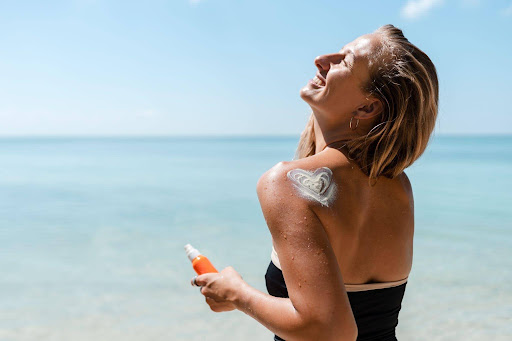
Sunscreen is a cosmetic product that plays an important role in helping protect the skin from exposure to ultraviolet (UV) radiation. One of the active ingredients commonly used in sunscreen formulations is avobenzone, a UV absorbing compound that primarily provides protection against UVA radiation.
However, does the avobenzone content in sunscreen products always match the established formulation? To determine this, laboratory chemical testing is required to quantitatively measure the avobenzone concentration.
Table of Content:
- Understanding Avobenzone and Its Function in Sunscreen
- Why Does Avobenzone Content in Sunscreen Need to Be Tested?
- How Is Avobenzone Content Tested in the Laboratory?
- Understanding the HPLC Method for Avobenzone Content Analysis
Understanding Avobenzone and Its Function in Sunscreen
Avobenzone, also known as butyl methoxydibenzoylmethane, is an organic UV filter used in various sunscreen formulations. This compound can absorb UVA radiation within a wavelength range of approximately 320–400 nm.
UVA exposure is known to contribute to photoaging and skin damage. Although avobenzone has the ability to absorb UVA radiation, it has a limitation in terms of photostability that needs to be considered.
Exposure to UV radiation can trigger changes or degradation of the compound. Therefore, sunscreen formulations need to be designed by considering the stability of the active ingredient and its compatibility with other ingredients.
Read Also:
Mineral vs Chemical Sunscreen: Which Is Safer and Better Tested?
Why Does Avobenzone Content in Sunscreen Need to Be Tested?
Testing avobenzone content is necessary to ensure that the active ingredient concentration in a product complies with the established formulation specifications. Differences in concentration may occur due to inaccurate weighing of raw materials, suboptimal mixing processes, or changes in the compound during storage.
Therefore, quantitative analysis can help manufacturers evaluate product consistency and support quality control. Test results can also be used to compare the measured avobenzone concentration with the target concentration specified in the formulation.
If discrepancies are identified, manufacturers can conduct further investigations to determine the possible causes. However, avobenzone concentration is not the only factor that determines sunscreen performance.
Active ingredient stability, the combination of UV filters, formulation characteristics, and UV protection efficacy testing must also be considered separately.
How Is Avobenzone Content Tested in the Laboratory?
Avobenzone content testing generally involves several stages of chemical analysis. First, the sunscreen sample is accurately weighed to ensure that the amount of sample being analyzed is known.
Next, butyl methoxydibenzoylmethaneis extracted using a suitable solvent so that the compound can be separated from the product matrix, such as oils, emollients, thickeners, and other additives. The sample solution then undergoes further preparation steps, such as dilution and filtration, depending on the analytical method used.
At the same time, an butyl methoxydibenzoylmethane reference standard is prepared to assist in identifying and determining the concentration of the compound in the sample. The butyl methoxydibenzoylmethane concentration is subsequently calculated based on the instrument response obtained from the sample solution and compared with the response of the standard solution.
To ensure reliable test results, the method needs to be evaluated or validated using relevant parameters, such as specificity, linearity, accuracy, precision, and measurement range.
Understanding the HPLC Method for Avobenzone Content Analysis
One method that can be used to determine butyl methoxydibenzoylmethane content is High Performance Liquid Chromatography (HPLC). This technique separates sample components based on their interactions with the stationary and mobile phases.
After separation, the target compound is detected using a suitable detector, such as a diode array detector (DAD). In sunscreen analysis, reversed phase columns, such as C18 columns, have been used to separate butyl methoxydibenzoylmethane from other UV active ingredients and matrix components.
The chromatographic response, expressed as peak area, can be used to calculate the butyl methoxydibenzoylmethane concentration through a calibration curve prepared using standard solutions. To ensure that the butyl methoxydibenzoylmethane content in sunscreen meets the formulation specifications, laboratory chemical testing is an important step in supporting product quality control.
Test Your Sunscreen’s Avobenzone Content at IML Testing and Research Now!
Entrust your avobenzone content testing and cosmetic product chemical analysis needs to IML Research and Testing. Through appropriate testing and validated analytical methods, the results can help support the evaluation of your sunscreen product’s quality and consistency.
Schedule an exclusive consultation with our expert team to validate your product’s exact composition using precise, rapid, and legally backed HPLC analytical testing.
Author: Elmira
Editor: Lina
References
Dencausse, L., Galland, A., Clamou, J. L., & Basso, J. (2008). Validation of HPLC method for quantitative determination of Tinosorb S and three other sunscreens in a high protection cosmetic product. International Journal of Cosmetic Science, 30(5), 373–382. https://doi.org/10.1111/j.1468-2494.2008.00461.x
Afonso, S., Horita, K., Sousa e Silva, J. P., Almeida, I. F., Amaral, M. H., Lobão, P. A., Costa, P. C., Miranda, M. S., Esteves da Silva, J. C. G., & Sousa Lobo, J. M. (2014). Photodegradation of avobenzone: Stabilization effect of antioxidants. Journal of Photochemistry and Photobiology B: Biology, 140, 36–40. https://doi.org/10.1016/j.jphotobiol.2014.07.004
International Council for Harmonisation of Technical Requirements for Pharmaceuticals for Human Use. (2023). ICH harmonised guideline: Validation of analytical procedures Q2(R2). https://www.ema.europa.eu/en/scientific-guidelines/ich-q2r2-validation-analytical-procedures