Inhalation Toxicity Testing: Are Aerosol Products Safe to Use?

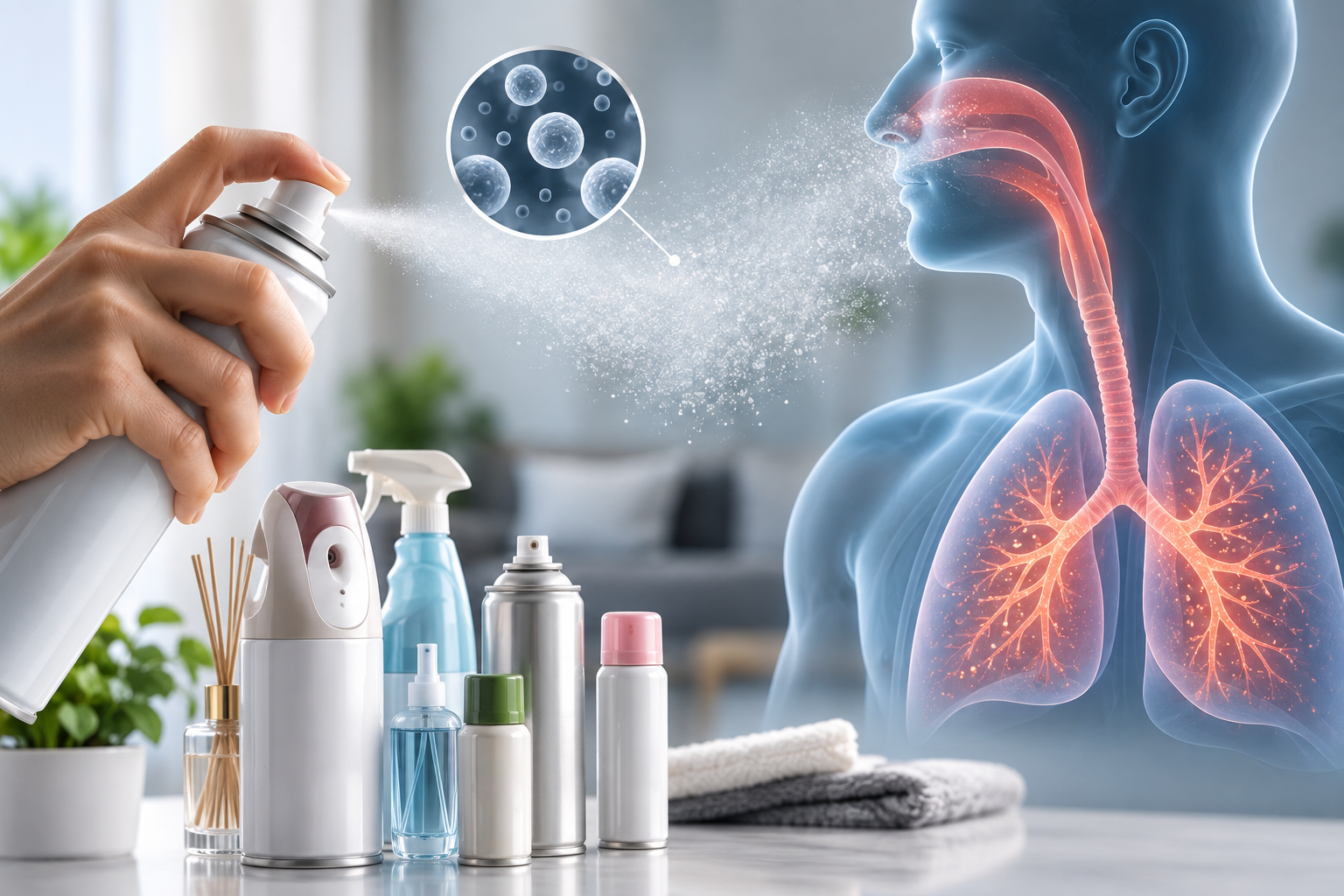
Aerosol products are widely used in everyday life, from air fresheners and household sprays to insecticides, personal care products, and industrial formulations. Their practical advantage comes from their ability to disperse a formulation into small droplets or particles in the air.
However, this characteristic also means that some of the dispersed material may be inhaled. Therefore, aerosol product safety should not be evaluated solely in terms of skin contact or product performance.
Potential exposure through the respiratory tract should also be considered. One approach used to evaluate this type of exposure is inhalation toxicity testing.
OECD guidelines describe inhalation studies for assessing health hazards associated with short-term or repeated exposure to gases, vapors, aerosols, and particulate materials.
Table of Content:
- What Is Inhalation Toxicity Testing?
- Why Should Aerosol Products Be Evaluated?
- Particle Size Can Influence Respiratory Deposition
- Exposure Concentration Influences Biological Response
- Exposure Duration and Frequency Matter
- Effects May Extend Beyond the Lungs
- Product Formulation Influences Exposure
- Why Is Testing the Final Aerosol Formulation Important?
What Is Inhalation Toxicity Testing?
Inhalation toxicity testing evaluates the potential toxic effects of a substance when exposure occurs through the respiratory system. Test materials may include:
- gases;
- vapors;
- liquid aerosols;
- solid aerosols; or
- selected particulate materials.
Different study designs can be used depending on the objective. OECD provides several relevant guidelines, including TG 403 for acute inhalation toxicity, TG 412 for 28-day repeated inhalation exposure, and TG 413 for 90-day repeated exposure.
These studies allow researchers to characterize biological responses at defined concentrations and exposure durations.
Read Also:
Inhalation Testing: Why Is It Important for Aerosol Products and Chemicals?
Why Should Aerosol Products Be Evaluated?
When an aerosol product is sprayed, droplets or particles become suspended in the surrounding air. Their inhalation profile can be influenced by several factors, including:
- particle or droplet size;
- active ingredient concentration;
- solvent composition;
- propellant;
- duration of use;
- frequency of use;
- room ventilation; and
- spray characteristics.
Scientific literature in inhalation toxicology demonstrates that gases, vapors, and aerosols may produce effects ranging from localized respiratory irritation to systemic toxicity depending on the properties and level of exposure. For this reason, inhalation toxicity testing can provide important scientific information for product safety assessment.
Particle Size Can Influence Respiratory Deposition
Not all aerosols behave in the same way after inhalation. Particle or droplet size can influence where material deposits within the respiratory tract.
Relatively larger particles may deposit primarily in the upper airways, while smaller particles may penetrate more deeply into the respiratory system. OECD repeated inhalation guidelines specifically consider whether a test material is presented as a gas, vapor, liquid aerosol, or solid aerosol when designing the study.
Therefore, safety assessment should consider both chemical composition and physical aerosol characteristics.
Exposure Concentration Influences Biological Response
Concentration is a fundamental consideration in toxicology. The same substance may produce different biological responses at different exposure levels.
During inhalation toxicity testing, atmospheric concentrations need to be appropriately controlled and characterized so researchers can evaluate concentration-response relationships. OECD TG 403 is specifically designed to provide information on health hazards associated with short-term inhalation exposure and can generate concentration-response information for gases, vapors, aerosols, and particulate test materials.
Therefore, aerosol safety cannot be determined simply by identifying the ingredient present in the formulation. The level of exposure also matters.
Exposure Duration and Frequency Matter
A single exposure is different from repeated daily exposure. Testing strategies should therefore consider expected patterns of use.
Acute Inhalation Toxicity
OECD TG 403 evaluates hazards associated with relatively short inhalation exposure.
Subacute Inhalation Toxicity
OECD TG 412 is designed to characterize toxicity after repeated exposure over 28 days. Under the guideline, animals are generally exposed for six hours per day at multiple concentration levels.
Subchronic Inhalation Toxicity
OECD TG 413 evaluates repeated inhalation exposure over 90 days and is intended to provide data useful for quantitative inhalation risk assessment. The appropriate type of inhalation toxicity testing should therefore be selected according to the research and regulatory objectives.
Effects May Extend Beyond the Lungs
The lungs are an obvious organ of concern during aerosol exposure, but inhalation effects are not necessarily limited to the respiratory tract. A substance deposited in the lungs may interact locally with respiratory tissues.
Depending on its properties, some material may also be absorbed into systemic circulation and affect other organs. OECD TG 413 includes endpoints such as clinical observations, hematology, clinical chemistry, ophthalmology, organ weights, gross pathology, and histopathology.
Additional evaluations such as bronchoalveolar lavage or lung burden measurements may also be incorporated when relevant. Therefore, inhalation studies can provide information on both local and systemic biological responses.
Product Formulation Influences Exposure
An aerosol formulation generally contains more than one component. Depending on the product, it may include:
- active ingredients;
- solvents;
- propellants;
- fragrances;
- carriers;
- surfactants; and
- other additives.
These components may influence aerosol characteristics during use. For example, changes in viscosity, volatility, formulation composition, or propellant characteristics may alter the size and distribution of droplets.
For this reason, toxicological information about an active ingredient alone may not always fully represent the inhalation characteristics of a finished formulation.
What Products May Require Inhalation Evaluation?
Not every aerosol product automatically requires the same inhalation study. However, inhalation evaluation may be relevant when foreseeable use can generate respiratory exposure.
Examples may include:
- aerosol insecticides;
- air fresheners;
- household cleaning sprays;
- industrial aerosols;
- selected personal care sprays;
- spray coatings; and
- other gases, vapors, or particulate products.
Testing requirements should always be based on product characteristics, exposure scenarios, intended use, existing toxicological data, and applicable regulations.
What Parameters Can Be Evaluated?
Endpoints depend on the study design. Potential observations may include:
- clinical signs;
- behavioral changes;
- body-weight changes;
- food consumption;
- respiratory responses;
- hematology;
- clinical chemistry;
- organ weights;
- gross pathology; and
- histopathology.
For repeated-exposure studies, OECD TG 412 and TG 413 also allow additional evaluations such as bronchoalveolar lavage, lung burden measurements for particulate materials, and selected additional pathological assessments when scientifically justified. This means that inhalation toxicity testing should be designed according to the specific toxicological question being investigated.
Does the Absence of a Strong Odor Mean an Aerosol Is Safe?
No, odor alone is not a reliable indicator of inhalation toxicity. Some compounds may have a strong odor at relatively low concentrations, while other potentially hazardous substances may have little or no detectable smell.
Therefore, safety conclusions should be based on exposure levels, substance properties, toxicological evidence, and appropriate testing rather than odor perception.
Are Smaller Aerosol Particles Always More Dangerous?
Not necessarily, particle size influences respiratory deposition, but toxicity depends on multiple factors. These include:
- chemical composition;
- particle size;
- exposure concentration;
- exposure duration;
- exposure frequency;
- solubility;
- persistence; and
- local or systemic biological activity.
Particle size therefore represents only one part of the overall exposure and hazard profile.
Why Is Testing the Final Aerosol Formulation Important?
An active ingredient may already have toxicological data available. However, a finished aerosol formulation can have different exposure characteristics.
Changes in propellant type, ingredient concentration, droplet size, solvent composition, or spray pattern may alter the amount of material that can potentially be inhaled. Appropriate inhalation toxicity testing can therefore provide additional data relevant to the specific material or formulation being evaluated.
Such information may support:
- safety assessment;
- research and development;
- hazard characterization;
- exposure interpretation;
- product evaluation; and
- selected regulatory documentation requirements.
Evaluate Aerosol Product Safety Through Inhalation Toxicity Testing
Developing an aerosol, spray, or other product that may be inhaled during use? Don't evaluate product performance alone—consider potential exposure through the respiratory tract as well.
Inhalation toxicity testing can provide scientific data to support safety evaluation using an appropriate study design and relevant endpoints. Contact IML Testing & Research today and discuss your aerosol Toxicity Testing requirements with our team!
Author & Editor: Lina
References
OECD. (2024). Test No. 403: Acute Inhalation Toxicity. OECD Guidelines for the Testing of Chemicals, Section 4. OECD Publishing.
OECD. (2018). Test No. 412: Subacute Inhalation Toxicity: 28-Day Study. OECD Guidelines for the Testing of Chemicals, Section 4. OECD Publishing.
OECD. (2018). Test No. 413: Subchronic Inhalation Toxicity: 90-Day Study. OECD Guidelines for the Testing of Chemicals, Section 4. OECD Publishing.
Hayes, A., & Bakand, S. (2010). Inhalation toxicology. EXS, 100, 461–488.
Salem, H., & Katz, S. A. (Eds.). (2006). Inhalation Toxicology. 2nd ed. CRC Press.
Phalen, R. F. (2009). Inhalation Studies: Foundations and Techniques. 2nd ed. Informa Healthcare.
Klaassen, C. D. (Ed.). Casarett & Doull's Toxicology: The Basic Science of Poisons. McGraw-Hill.
Hayes, A. W., & Kruger, C. L. (Eds.). (2014). Hayes' Principles and Methods of Toxicology. 6th ed. CRC Press.