Effective Fertilization Strategies for Palawija Crops to Boost Productivity

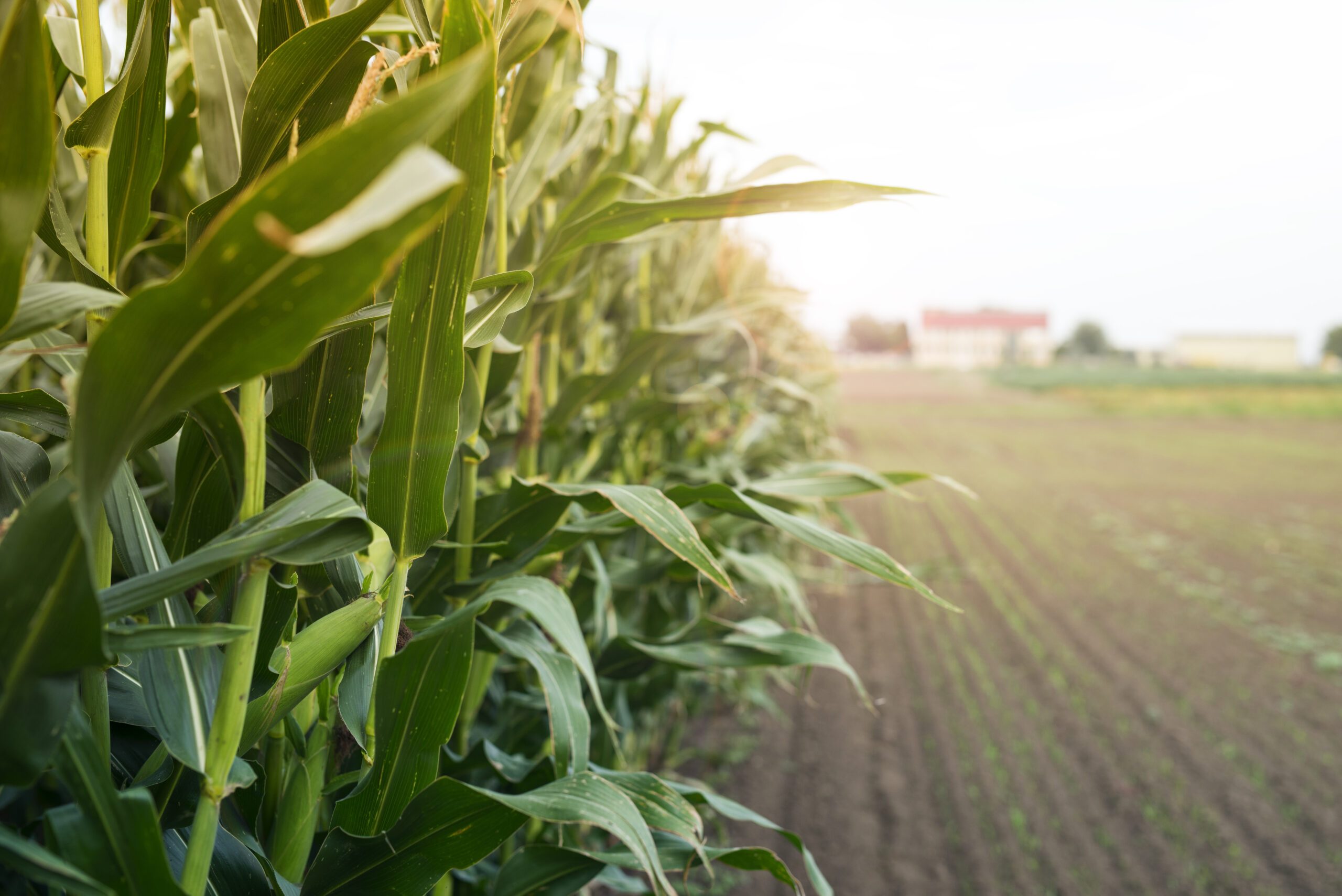
Secondary crops, commonly known as palawija, include crops such as Zea mays (maize), Glycine max (soybean), Arachis hypogaea (peanut), and Vigna radiata (mung bean). These crops play an important role in supporting food security, diversifying agricultural production, and increasing farmers’ income.
However, achieving high productivity in palawija cultivation depends greatly on proper fertilization practices. Fertilization provides essential nutrients needed for plant growth and development.
When applied appropriately, fertilizers can improve soil fertility, increase crop yield, and maintain sustainable agricultural production. Conversely, improper fertilization may lead to nutrient imbalance, reduced yields, and environmental problems.
Therefore, understanding proper fertilization strategies is crucial for maximizing palawija productivity.
Read also :
Green Manure: A Sustainable Fertilization Alternative for Long-Term Soil Fertility
Table of Content :
- Nutrient Requirements of Palawija Crops
- Types of Fertilizers for Palawija Crops
- Fertilization Timing and Application Methods
- Soil Testing and Balanced Fertilization
- Sustainable Fertilization Practices
- Conclusion
- Ensure Your Fertilizer Effectively Improves Crop Productivity
Nutrient Requirements of Palawija Crops
Like other crops, palawija plants require both macro and micronutrients. The main macronutrients include nitrogen (N), phosphorus (P), and potassium (K). Nitrogen plays a significant role in vegetative growth, leaf formation, and chlorophyll development.
Phosphorus supports root growth, flowering, and seed formation. Potassium strengthens plant resistance to diseases and improves overall crop quality. In addition to these primary nutrients, palawija crops also require secondary nutrients such as calcium (Ca), magnesium (Mg), and sulfur (S), as well as micronutrients like zinc (Zn), iron (Fe), manganese (Mn), and boron (B).
Although micronutrients are needed in smaller quantities, their deficiency can significantly affect plant growth and productivity. Each palawija crop has different nutrient requirements depending on its growth characteristics and production targets.
For instance, maize generally requires higher nitrogen levels for rapid vegetative growth, while legumes such as soybean and mung bean can fix atmospheric nitrogen through symbiotic bacteria in their root nodules.
Types of Fertilizers for Palawija Crops
Farmers commonly use two main types of fertilizers for palawija cultivation: organic fertilizers and inorganic fertilizers. Organic fertilizers include compost, manure, and green manure.
These fertilizers improve soil structure, enhance microbial activity, and increase the soil’s capacity to retain water and nutrients. Organic fertilizers are particularly beneficial for maintaining long term soil fertility. Inorganic fertilizers, on the other hand, provide nutrients in concentrated and readily available forms.
Common examples include urea for nitrogen, triple superphosphate for phosphorus, and potassium chloride for potassium. These fertilizers can quickly supply nutrients needed by plants, especially during critical growth stages.
An integrated approach that combines organic and inorganic fertilizers is often recommended. This strategy helps maintain soil health while ensuring adequate nutrient supply for optimal crop growth.
Fertilization Timing and Application Methods
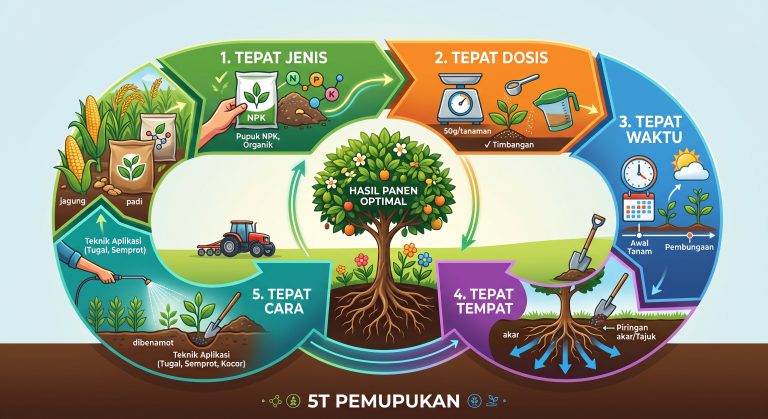
The timing and method of fertilizer application greatly influence nutrient uptake and crop productivity. Fertilizers can be applied before planting (basal fertilization) or during crop growth (top dressing).
Basal fertilization is usually applied during land preparation or at planting time. It provides essential nutrients needed for early plant growth. Phosphorus and potassium fertilizers are often applied at this stage because they are less mobile in the soil.
Top dressing involves applying fertilizers during the vegetative stage of the crop. Nitrogen fertilizers are commonly applied in this way because nitrogen is easily lost through leaching or volatilization.
Splitting nitrogen application into two or three stages can increase nutrient efficiency and reduce losses. Fertilizers can be applied through several methods, including broadcasting, band placement, and side dressing.
Band placement near the root zone often improves nutrient availability and reduces fertilizer waste.
Soil Testing and Balanced Fertilization
Soil testing is an important step in determining the appropriate fertilizer type and dosage. By analyzing soil nutrient content, farmers can apply fertilizers more accurately and avoid unnecessary applications.
Balanced fertilization ensures that crops receive nutrients in the right proportions. Excessive application of one nutrient may reduce the availability of others and negatively affect plant growth.
For example, too much nitrogen without sufficient phosphorus and potassium can lead to excessive vegetative growth but poor seed production. Balanced fertilization not only improves crop yield but also helps maintain soil health and prevent environmental pollution.
Sustainable Fertilization Practices
Sustainable fertilization practices are essential for maintaining long term agricultural productivity. Farmers are increasingly encouraged to adopt integrated nutrient management strategies.
This approach combines organic fertilizers, inorganic fertilizers, crop residues, and biological inputs to maintain soil fertility. Crop rotation with legumes is another effective strategy.
Leguminous palawija crops can fix atmospheric nitrogen through symbiosis with nitrogen fixing bacteria, reducing the need for synthetic nitrogen fertilizers. In addition, the use of precision fertilization technologies, such as site specific nutrient management, can improve fertilizer efficiency and reduce environmental impacts.
Conclusion
Proper fertilization is a key factor in achieving high productivity in palawija cultivation. By understanding crop nutrient requirements, selecting appropriate fertilizer types, and applying them at the right time and method, farmers can significantly improve crop yields.
Balanced fertilization supported by soil testing helps ensure efficient nutrient use while preventing soil degradation. Combining organic and inorganic fertilizers, along with sustainable nutrient management practices, can enhance soil fertility and support long term agricultural productivity.
With proper fertilization strategies, palawija crops can continue to contribute significantly to food security and agricultural sustainability.
Ensure Your Fertilizer Effectively Improves Crop Productivity
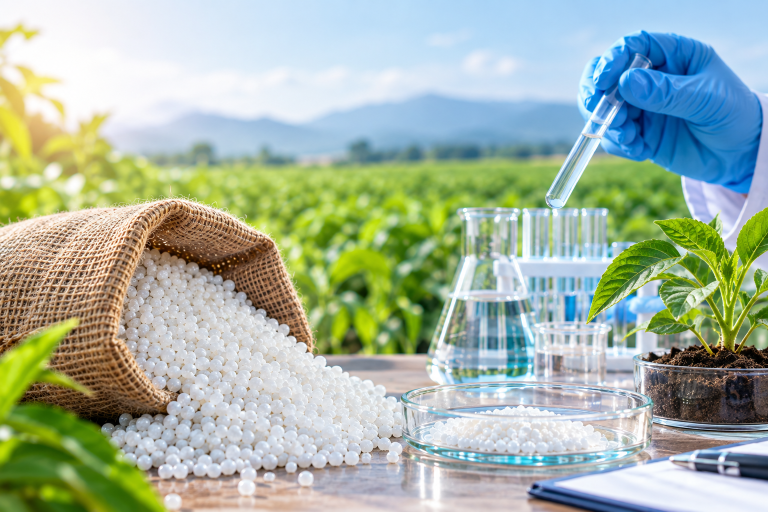
Proper fertilization does not only depend on the dosage and timing of application, but also on the quality and effectiveness of the fertilizer used. Through efficacy testing and laboratory analysis, the effectiveness of fertilizers in supporting the growth and yield of palawija crops can be scientifically proven.
Conduct your testing with IML Testing and Research and consult your testing needs with the IML expert team to ensure your fertilizer products are more optimal, high quality, and trusted.
Author : Fachry
Editor : Alphi
References
Fertilizers Europe. (2018). Fertilizer basics: Why we need fertilizers, where they come from, how they work, and how they are used. Brussels: Fertilizers Europe.
Maguire, R., Alley, M., & Flowers, W. (2019). Fertilizer types and calculating application rates. Virginia Cooperative Extension, Virginia Tech.
Purba, T., Situmeang, R., Rohman, H. F., Mahyati, A., Firgiyanto, R., Junaedi, A. S., … Suhastyo, A. A. (2021). Pupuk dan teknologi pemupukan. Medan: Yayasan Kita Menulis.