Complete Review of Types of Surfactants and Their Functions in the Industrial World


- Surfactant Classification
- Types of Surfactants Based on Hydrophilic Groups
- The Role of Surfactants in Reducing Surface Tension
- Surfactant Applications in Cosmetics
- Function of Surfactants in Cosmetic Product
Surfactants are surface-active agents with the ability to adsorb at interfaces, possessing both hydrophobic and hydrophilic components.
Surfactant Classification
Based on their hydrophilic groups, surfactants are classified into four types: nonionic, anionic, cationic, and amphoteric. Anionic surfactants, the most widely used type, derive their hydrophilic groups from carboxylates, phosphates, sulfates, and sulfonates. The production of anionic surfactants is more economical compared to other surfactant types. As bio-based surfactants, they are less toxic and biodegradable.
Anionic surfactants are commonly used in detergents, paints, dyes, cosmetics, agrochemicals, plastics, the pharmaceutical industry, and gene therapy. Surfactants can be synthesized from petrochemical raw materials, vegetable oils, and animal fats. Surfactants are used in cosmetics due to their ability to reduce interfacial tension, functioning as emulsifiers, wetting agents, foaming agents, and dispersants.
Types of Surfactants Based on Hydrophilic Groups
Based on their hydrophilic properties, surfactants are classified into four categories: anionic surfactants, cationic surfactants, amphoteric surfactants, and nonionic surfactants. Anionic surfactants are the most commonly used in industry due to their low production cost and are widely applied in detergents. Common hydrophilic groups include carboxylates, sulfates, phosphates, and sulfonates.
Cationic surfactants are generally used as antimicrobial and antifungal agents, with primary, secondary, tertiary, and quaternary ammonium groups being the most commonly used hydrophilic components. Amphoteric surfactants are water-soluble and function optimally at pH levels suitable for their hydrophilic groups but have low solubility at their isoelectric point. Common hydrophilic groups include aminocarboxylates, betaines, sulfobetaines, and amine oxides.
Nonionic surfactants are typically ethylene oxide-based, commonly known as ethoxylated surfactants. Their characteristic feature is that the minimum surface tension is achieved when the critical micelle concentration (CMC) decreases with a reduction in the number of ethylene oxide units in the carbon chain.
The Role of Surfactants in Reducing Surface Tension
Surfactants function as surface tension reducers, forming micelles that act as wetting agents, emulsifiers, dispersants, detergents, and solubilizers. The minimum concentration of surfactants required to form micelles is known as the Critical Micelle Concentration (CMC). CMC represents the saturation concentration of surfactants in an emulsion. At the critical concentration, surface tension remains unchanged or changes only slightly with increasing surfactant concentration.
Surfactant Applications in Cosmetics

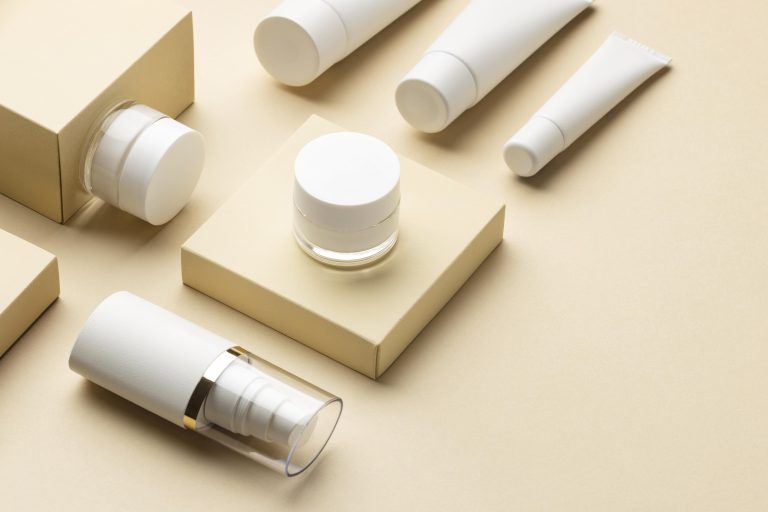
Taken by RDNE Stock project on Pexels
Surfactant applications depend on their properties. The chemical characteristics of surfactants are determined by parameters such as Hydrophilic-Lipophilic Balance (HLB), Critical Micelle Concentration (CMC), and Interfacial Surface Tension (IFT). In cosmetic applications, surfactants function as cleansing and wetting agents due to their ability to form micelles.
Oil forms a layer on the surface, and in water, the hydrophilic group binds with water while the hydrophobic group binds with oil. The entire oil surface is surrounded by surfactants, forming micelles. With the addition of friction, the micelles move to the solution’s surface, leaving the surface free of oil.
Function of Surfactants in Cosmetic Products
Surfactants can also act as foaming agents. Foam consists of air trapped in a liquid, and surfactants help stabilize air within the liquid. Additionally, surfactants serve as emulsifying agents. Surfactants help mix and stabilize oil and water in cream or lotion products by creating an oil-in-water (O/W) emulsion system.
Read more:
Regular Soap vs Antibacterial Soap: Which is More Effective?
The purpose is that when applied to the skin, the micelles break apart, releasing the oily ingredients. Since cosmetic formulations typically contain various ingredients that can make products appear cloudy, surfactants with the ability to reduce interfacial tension are needed to create smaller particles, allowing light to pass through and resulting in a clear product. This property makes surfactants essential as solubilizing agents.
Similarly, in soap formulations, surfactants act as cleaning agents, emulsifying oil. With the aid of water (during rinsing) and friction, the surface is freed from oil and becomes clean. In cosmetic formulations, surfactants are essential components added to create emulsions, facilitating interactions between the water and oil phases. The type of surfactant used is selected based on its function and potential side effects. Further research is necessary to determine its effects on users' skin.
Author: Delfia
Editor: Sabilla
References:
Alwadani, N., and Fatehi, P. (2018). Synthetic and lignin-based surfactants: Challenges and opportunities, Carbon Resources Conversion, 1, 126–138.
Rosen, M. J. (2004). Surfactants and Interfacial Phenomena, John Wiley & Sons, Inc., Hoboken, NJ, USA.
Tadros, T. F. (2014): An Introduction to Surfactants, DE GRUYTER.
Xu, Q., Wang, L., and Xing, F. (2011): Synthesis and Properties of Dissymmetric Gemini Surfactants, Journal of Surfactants and Detergents, 14, 85–90.
Yenny Meliana dan Melati Septiyanti (2016). Karakterisasi Sediaan Topikal Anti Aging dari Kombinasi Ekstrak Pegagan dan Kulit Buah Manggis. Jurnal Sains Materi Indonesia, 17, 178–183.