Microorganisms as Powerful Weapons Against Pests


- Microbial Pesticides in Crop Protection
- Mechanisms of Microbial Pesticides
- Sources of Microbial Pesticides
- Mode of Action of Microbial Biopesticides
- Market Potential of Microbial Biopesticides
Plant protection is essential for preventing pests and diseases that harm cultivated crops. To date, the use of chemical pesticides has increased significantly. However, the emergence of pest resistance to chemical pesticides necessitates alternative solutions. Biopesticides have emerged as a sustainable alternative in modern agriculture.
Microbial Pesticides in Crop Protection
Their advantages include lower toxicity compared to chemical pesticides, high specificity toward target pests, rapid degradation, and a reduced likelihood of pest resistance. However, biopesticides are less effective in controlling pests and are more costly compared to chemical pesticides. According to Helepciuc & Todor, the efficacy of biopesticides is only 50%, whereas chemical pesticides exhibit a higher efficacy of approximately 80%.
A combination of chemical pesticides and biopesticides can balance effectiveness while reducing environmental risks, helping minimize overall use of synthetic chemical pesticides. Biopesticides are categorized into three main groups: macro-organisms (parasites and predators), natural compounds (plant extracts), and microorganisms (bacteria, fungi, viruses, and protozoa). Microbial pesticides have been extensively studied and are considered environmentally friendly.
Mechanisms of Microbial Pesticides
Microbial pesticides control plant pathogens and pests by producing toxins, releasing enzymes, emitting volatile compounds, colonizing or directly consuming the host, and inducing resistance in plants. A key characteristic of microbial pesticides is their ability to persist in the environment, providing long-term protection against pests or diseases.
Additionally, when microorganisms encounter favorable conditions, they produce toxic metabolites that prevent pest emergence in plants. Based on global market analysis, microbial pesticides account for over 55% of the biopesticide market, emphasizing their importance in meeting consumer demand for sustainable agricultural products.
Sources of Microbial Pesticides
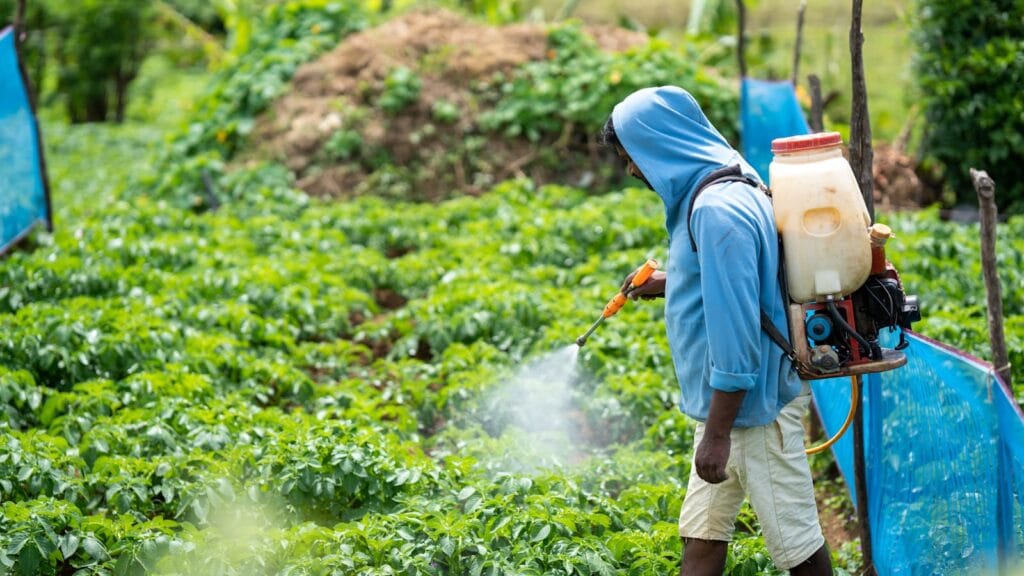
Photo by Dinuka Gunawardana on Pexel
Microbes used in pesticide formulations, whether genetically engineered or not, have specific modes of action against pests and do not harm non-target species. Microbial pesticides include bacteria, fungi, and viruses:
1. Bacteria-Based Pesticides
These are relatively inexpensive and widely used. Bacteria produce endotoxins that disrupt pest digestive systems and colonize plants to outcompete pathogenic species. Common bacterial agents include: Bacillus thuringiensis (produces parasporal crystals toxic to insects), Pseudomonas fluorescens (produces enzymes and antimicrobial compounds), and Serratia marcescens (a potential pathogen).
2. Fungal Pathogens
Known as entomopathogens, these fungi infect insects by producing chitinase and protease enzymes that penetrate the insect's cuticle. Commercially available examples include Beauveria bassiana, Metarhizium anisopliae, and Trichoderma harzianum.
3. Virus-Based Pesticides
These are known as entomopathogenic viruses, categorized into inclusion (form occlusion bodies in host cells) and non-inclusion viruses. Baculoviruses are highly specific to insects and safe for vertebrates but are more expensive, slower-acting, and less stable under UV exposure.
Mode of Action of Microbial Biopesticides
1. Induced Resistance
This approach activates resistance mechanisms in plants triggered by microbial application, enhancing their ability to detect threats through biochemical and physiological reactions. It also triggers innate immune responses such as Microbe-Associated Molecular Pattern (MAMP)-Triggered Immunity, leading to systemic acquired resistance in neighboring plants.
2. Competition
Microbial agents outcompete pathogens for space and nutrients, significantly reducing pest populations. Examples include Pseudomonas sp. and Trichoderma asperellum.
3. Hyperparasitism
Specific microbes rely on plant pests as hosts to acquire nutrients. For instance, Trichoderma sp. acts as an effective hyperparasite against Rhizoctonia solani.
4. Antibiosis
This involves microbial production of secondary metabolites, such as iturin, fengycin, and surfactants from Bacillus sp., or phenazines from Pseudomonas sp., which inhibit or kill competing microorganisms.
Market Potential of Microbial Biopesticides
Formulated microbial biopesticides are not approved for direct human consumption and must not be distributed in raw form. Approximately 90% of commercially available microbial pest control agents (MPCAs) derive from Bacillus thuringiensis, with an estimated global market value of USD 3 billion, representing 5% of the total pesticide market. By 2050, microbial pest control agents are projected to dominate the market, increasing crop yields and providing greater protection against diverse pests.
Read more:
What are Biopesticides?
The first microbial biopesticide, Agrobacterium radiobacter strain K84, was approved in 1979 by the EPA for controlling crown gall disease. The global potential of biopesticides underscores their role in sustainable agriculture and promises significant growth in the future. However, its effectiveness and stability are highly dependent on the quality of the formulation and its suitability to the target pest.
To ensure that your product works optimally, laboratory testing is a crucial step that cannot be missed. Before being applied in the field or marketed widely, it is important to test the extent of your microbial pesticide's ability to control the target pest, as well as ensuring that there are no detrimental impacts on plants or the environment. From efficacy testing to toxicity testing, comprehensive laboratory testing can help you maintain the quality of your formulation and strengthen market confidence.
Author: Safira, Editor: Sabilla
References:
Chaudhary, R., Nawaz, A., Khattak, Z., Butt, M. A., Fouillaud, M., Dufossé, L., Munir, M., Haq, I.U., and Mukhtar, M.2024. Microbial bio-control agents: A comprehensive analysis on sustainable pest management in agriculture. Journal of Agriculture and Food Research, Volume 18.
Helepciuc F-E, Todor A. EU microbial pest control: a revolution in waiting. Pest Manag Sci. 2022;78(4):1314–25.
Wend, K., Zorrilla, L., Freimoser, F.M. et al. Microbial pesticides – challenges and future perspectives for testing and safety assessment with respect to human health. Environ Health 23, 49 (2024). https://doi.org/10.1186/s12940-024-01090-2