Why is Fly Bait Efficacy Testing Important for Pest Control?


Flies are insects that are often considered pests because of their role in spreading various diseases. Although they have ecological functions such as helping decompose organic matter, the presence of flies in the home environment or livestock area can be a serious health threat.
Flies can be vectors of various diseases, such as diarrhea, dysentery, cholera, typhus, hepatitis, diphtheria, anthrax, and myiasis. Flowers spread disease by contaminating food and drink through vomit, feces, or disease agents that stick to their bodies.
Effective Methods for Controlling Fly Pests
One of the most widely used fly control methods is poisoned fly bait. Although effective, long-term use often causes flies to become resistant to certain active ingredients, reducing their efficacy or success rate significantly.
Therefore, testing the efficacy of fly bait is a very important step before this product is widely used. Efficacy testing aims to evaluate the extent to which bait can efficiently attract and kill flies and ensure that the bait remains effective despite challenges such as fly resistance.
This test covers a variety of parameters, including fly attraction to the bait, death time after consumption, and the extent of fly population control in an area. By ensuring the efficacy of fly bait, we not only support the success of pest control but also prevent the spread of dangerous diseases to humans and animals.
However, the effectiveness of fly bait can decrease over time due to fly resistance to certain active ingredients. Therefore, efficacy testing is an important step to ensure that the fly bait product used can still attract and kill flies optimally.
Fly Bait Formulation
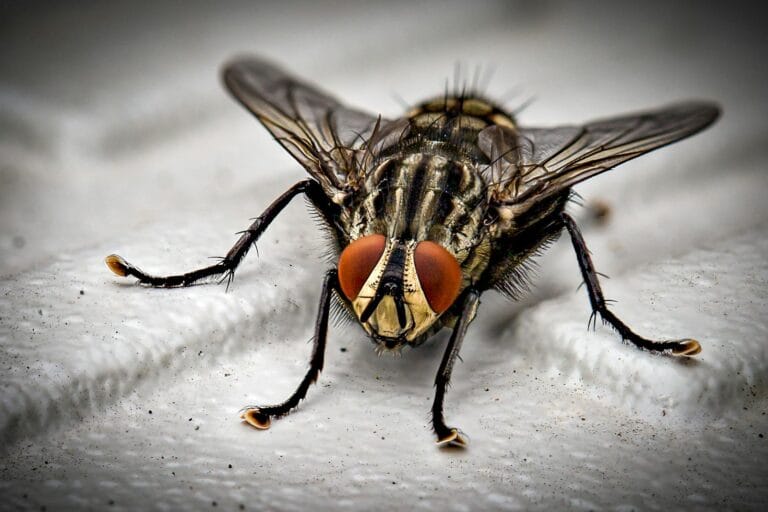
Fly bait formulations continue to develop by utilizing more innovative active ingredients. Some of the ingredients commonly used in house and industrial fly baits include:
- Neonicotinoids (Imidacloprid, Thiamethoxam, Acetamiprid): Disrupt the fly's nervous system and kill it quickly.
- Carbamates: Work by inhibiting important enzymes in the fly's nervous system.
- Cyantraniliprole: A new class of insecticides with a slower effect but still effective.
- Sexual Attractant (Z)-9-Tricosene: A substance that can increase the attractiveness of fly bait to male flies.
With the right combination of active ingredients, fly bait is more effective in eradicating flies. It helps reduce the risk of insecticide resistance.
The Importance of Fly Bait Efficacy Testing

Efficacy testing aims to evaluate how effectively a bait attracts and kills flies under various conditions. This testing is carried out through several methods in the laboratory and field.
- No-Choice Bioassay: In this method, flies are given only one type of bait to measure the attraction and mortality rate caused. This method is suitable for assessing the effectiveness of active ingredients under controlled conditions.
- Choice Bioassay: Unlike the previous method, this method tests various types of bait simultaneously to find out which is most attractive to flies.
- Field Test: Testing is carried out in real environments, such as farms, restaurants, or landfills, to determine the effectiveness of the bait under real conditions.
With comprehensive efficacy testing, manufacturers can ensure that the fly bait marketed has high attraction and is effective in killing flies so that it can control the fly population optimally.
IML Research is a laboratory testing institution that provides efficacy testing services that provide high-quality test results (comprehensive, accurate, and reliable) because it has strong analysis and sophisticated methodology with experienced and credible experts.
Want to know more about other research and testing? Read other interesting articles from IML Research and find the best solution for your research and testing needs!
References:
Levchenko, M.A., Silivanova, E.A., Ruzilya, K.B., & Galina, F.B. (2018). Efficacy of Acetamiprid and Friponil Fly Baits Against the Housefly (Musca domestica L.) Under Laboratory Conditions. Veterinary World, 11(7), 953-958.
Parker, C., Baldwin, R., Roberto, P., & Philip, K. (2015). Evaluation of Cyantraniliprole and Other Commercial Fly Baits Under Laboratory and Field Conditions. Insects, 6, 977-987. Doi:10.3390/insects6040977.
Rustiawan, A., & Rifai, M. (2022). Local Wisdom Fly Trap Effectiveness in the Culinary Area of Bantul Beach Tourism, Yogyakarta. Epidemiology and Society Health Review, 4(2), 54-60.
Tahir, N.A., Hassan, A.A., Nur, A.H., & Norasmah, B. (2008). Field Evaluations of the Granular Fly Bait, Quick Bayt® and the Paint-On Fly Bait, Agita® Against Synanthropic Flies. Tropical Biomedicine, 25(2), 126-133.