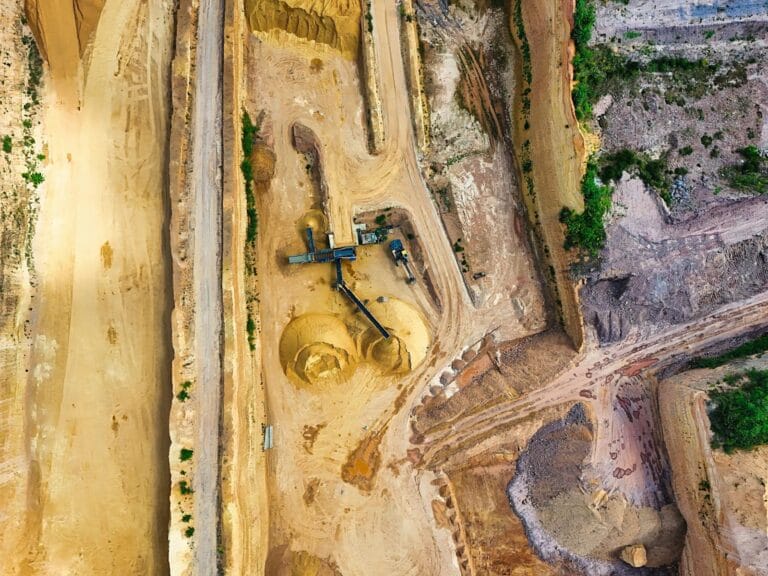
Potential Dangers of Heavy Metal Contamination in Coal-Mine Used Land for Humans


To better understand this article, it discusses the following:
- Why Former Mining Land Can Be Dangerous?
- How Heavy Metals Enter Our Bodies?
- Harmful Effects on Human Health
- What Research Shows?
- Reducing the Risks
- Protecting Future Generations
Why Former Mining Land Can Be Dangerous?
Former coal-mine land often hides invisible toxic substances. During the mining process, waste such as tailings, sludge, and coal dust containing arsenic, lead, cadmium, chromium, mercury, and nickel is released into the environment.
These heavy metals can persist for decades in soil and water. Once the land is converted into farmland or housing areas, the risk of human exposure rises dramatically.
How Heavy Metals Enter Our Bodies?
There are many pathways by which heavy metals from former mining land reach the human body. Contaminated groundwater or surface water can be used for drinking and household activities. Dust particles carrying heavy metals can be inhaled during outdoor activities, especially in dry seasons.
Polluted soil also transfers metals to the roots of crops, so vegetables and fruits bring heavy metals into the food chain. Even direct contact with contaminated soil or water can increase the risk of exposure.
Harmful Effects on Human Health
Exposure to heavy metals from former mining land can trigger a wide range of health problems, from mild symptoms to chronic diseases. Arsenic and hexavalent chromium, for instance, are known to cause skin, lung, and bladder cancer.
Lead affects the nervous system and brain development in children, while cadmium may cause kidney damage and bone disorders. Mercury harms the central nervous system and neurological disorder.
Even manganese and iron at high concentrations may contribute to neurological disorders. Because these metals accumulate in the body over time, long-term exposure increases the risks.
What Research Shows?
Numerous international studies confirm high levels of heavy metals around mining areas. A study in China found chromium, manganese, and iron as major cancer-risk contributors in groundwater from abandoned mines.
In Bangladesh, farmland near coal mines showed excessive arsenic and lead in soil and harvested crops. Meanwhile, in India, roadside dust in coal-mining and coal-power regions contained cadmium and mercury that may trigger respiratory problems in children. These findings highlight the importance of strict monitoring before reusing former mining land.
Read more:
Health risks of heavy metals from long-range transboundary air pollution
Reducing the Risks
To minimize potential dangers, regular monitoring of soil and water quality must be carried out before reusing post-mining land. Land reclamation, planting vegetation covers, and using phytoremediation plants can help reduce heavy-metal mobility.
Water treatment and filtration systems are also essential to ensure safe groundwater for consumption. Governments need to enforce strict regulations on permissible heavy-metal limits and provide community education so residents become aware of exposure sources.
Protecting Future Generations
Heavy-metal contamination in former coal-mine land poses a real threat to human health. Exposure can occur through water, air, food, or skin contact, with effects ranging from nervous system damage and kidney or liver problems to cancer risks.
Through monitoring, remediation, and effective regulation, these dangers can be reduced so that former mining land can be used more safely for housing and agriculture in the future.
Through proper mine waste testing and environmental toxicity test, the potential hazards of heavy metal contamination can be identified at an early stage, enabling risks to soil, water, living organisms, and human health to be managed more effectively.
Author : Indah Nurharuni
Editor : Shoofi
References :
Surenbaatar, U., Lee, S., Kwon, J.-Y., Lim, H., Kim, J.-J., Kim, Y.-H., & Hong, Y.-S. (2023). Bioaccumulation of Lead, Cadmium, and Arsenic in a Mining Area and Its Associated Health Effects. Toxics, 11(6), 519.
Hua Cheng & Liugen Zheng. (2025). Identification of Heavy Metal Sources and Health Risk Assessment in Coal Mining Area Soils Using Mercury Isotopes and Positive Matrix Factorization (PMF) Model. Sustainability, 17(10), 4334.