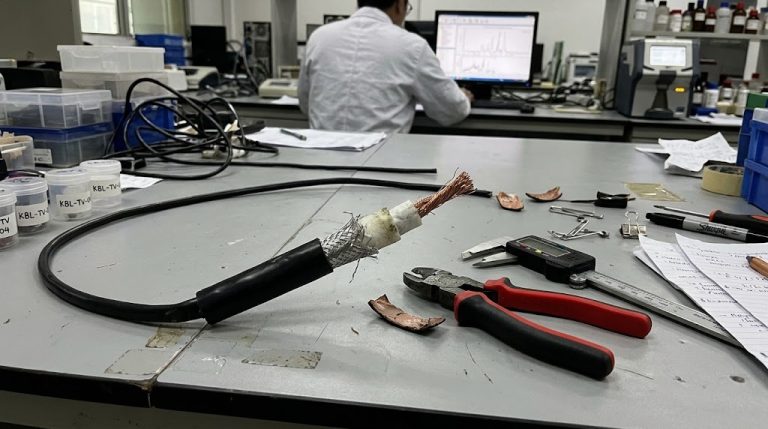
LAN Cable Protective Sheath Resistance to Rat Bites: Understanding the Rodent Bite Resistance Test

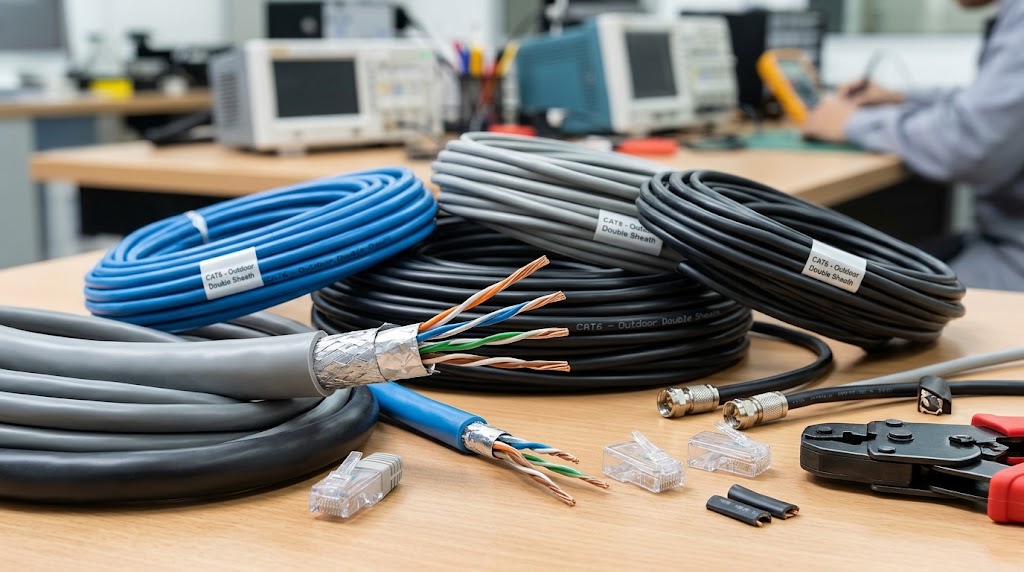
LAN cables are essential components of computer network infrastructure. They are widely used in offices, commercial buildings, industrial facilities, data centers, and public facilities.
However, one potential risk that is sometimes overlooked during network maintenance is cable damage caused by rodent gnawing. Rats and mice have a natural gnawing behavior that can damage various materials in their surroundings.
When rodents bite cables, the outer protective sheath may become damaged, potentially exposing the insulation and internal conductors. This damage can disrupt network connectivity, affect data transmission, and increase maintenance and replacement costs.
To evaluate a cable product’s protective performance, manufacturers may consider a Rodent Bite Resistance Test. This test is designed to assess the ability of a cable’s protective sheath to withstand rodent gnawing under defined testing conditions.
Table of Content:
- Why Are LAN Cables Vulnerable to Rodent Bites?
- What Is a Rodent Bite Resistance Test?
- Parameters That Can Be Evaluated During Testing
- Factors Affecting LAN Cable Sheath Resistance to Rodent Bites
- Why Should Manufacturers Conduct This Test?
- Laboratory Testing as Part of LAN Cable Product Development
Why Are LAN Cables Vulnerable to Rodent Bites?
A typical LAN cable consists of several components, including conductors, individual core insulation, and an outer jacket. The outer jacket serves as a protective layer against environmental exposure and certain forms of physical damage.
However, polymer-based materials such as PVC and PE may still be vulnerable to rodent gnawing. The extent of damage can depend on the material properties, sheath thickness, cable construction, and the characteristics and behavior of the rodents involved.
Rodents may also damage cables installed in concealed areas, such as ceilings, server rooms, cable pathways, storage rooms, and utility spaces. Such damage may remain unnoticed until network performance is affected. For this reason, cable manufacturers should consider the physical durability of their products, including their ability to withstand potential rodent-related damage.
Read Also:
Minimizing Fire Triggers Caused by Rodent Bites through Anti Rodent Cable Testing
What Is a Rodent Bite Resistance Test?
A Rodent Bite Resistance Test is a testing approach used to evaluate the resistance of materials or cable products to damage caused by rodent gnawing. During the test, cable samples or protective sheath materials are assessed based on their response to rodent exposure under predefined conditions.
The objective is not simply to determine whether bite marks are present, but also to evaluate the extent and severity of the resulting damage. One method reference specifically addressing this type of evaluation is JB/T 10696.10-2011, titled Test Methods for Determining Mechanical, Physical and Chemical Properties of Electric Cables and Wires—Part 10: Rat Gnawing Test.
It describes testing conditions, procedures, and result evaluation for rodent-resistant wire and cable products using rodent repellents. Nevertheless, applying this method to LAN cables requires a preliminary assessment of cable construction, sheath materials, testing objectives, and agreed acceptance criteria.
A method developed for one cable type should not automatically be considered suitable for every LAN cable design.
Parameters That Can Be Evaluated During Testing
Several parameters may be considered when evaluating the resistance of a protective sheath, depending on the selected test design.
a. Surface damage
Visual examination can identify bite marks, scratches, cracks, deformation, and other changes on the cable sheath.
b. Bite penetration depth
This parameter evaluates how deeply the gnawing damage penetrates the protective material. It helps distinguish superficial damage from penetration through the outer sheath.
c. Damaged material area or volume
Changes in mass, volume, or material dimensions may be used as quantitative indicators to compare damage levels between samples, where appropriate for the selected method.
d. Damage to internal layers
Further examination can determine whether the gnawing reaches the cable core insulation or conductor. This is important because damage extending beyond the outer sheath may compromise the cable’s protective structure.
e. Overall penetration or damage level
Observations can be classified into damage categories or indices based on criteria established before testing.
The selected parameters should reflect the testing objectives and provide relevant information about the protective performance of the product.
Factors Affecting LAN Cable Sheath Resistance to Rodent Bites
Not all LAN cables have the same level of resistance to rodent damage. Several factors may influence the test results:
- Sheath material: PVC, PE, and other polymer materials have different physical and mechanical properties.
- Protective layer thickness: Thickness may affect how far gnawing damage can penetrate before reaching the internal cable components.
- Cable construction: Layer arrangement, additional protective barriers, and overall cable structure may influence resistance.
- Rodent characteristics: Species, size, age, condition, and gnawing behavior may affect the response during testing.
- Testing conditions: Exposure duration, environment, sample positioning, and testing procedures should be controlled to support consistent evaluation.
Since these factors may interact, test results should consider not only the sheath material but also the overall cable construction.
Why Should Manufacturers Conduct This Test?
For LAN cable manufacturers, rodent bite resistance testing can provide useful information during product development and quality control. First, it evaluates protective material performance.
Manufacturers can obtain information about how the sheath material responds to rodent gnawing. Second, it supports formulation and construction comparisons. Test results can help evaluate alternative materials, protective layer thicknesses, and cable structures.
Third, it supports quality control. Testing can become part of product quality evaluation, particularly when rodent resistance is one of the intended product characteristics.
Fourth, it supports product development. The resulting data can help R&D teams identify material or construction aspects that may require improvement.
Fifth, it provides evidence for product performance claims. If manufacturers intend to claim rodent bite resistance, the claim should be supported by test results obtained using clearly defined methods, conditions, and evaluation criteria.
It is important to understand that passing a rodent bite resistance test does not guarantee that a cable will be completely protected from all rodent-related damage. The results represent the performance of the tested samples under the specific conditions and methods applied.
Laboratory Testing as Part of LAN Cable Product Development
LAN cable development involves more than data transmission performance. Manufacturers must also consider the physical characteristics and durability of their products throughout their intended service life. The protective sheath plays an important role in shielding internal cable components from potential damage.
Through testing designed according to the characteristics of the sample, manufacturers can obtain data to evaluate protective layer performance. These results may also help compare alternative materials and support product development decisions.
The testing design should consider cable type, sheath construction, relevant rodent species, observation parameters, and animal welfare requirements when live animals are involved. Testing methods and acceptance criteria should also be agreed upon before the study begins.
Evaluate Your LAN Cable Sheath with a Rodent Bite Resistance Test!
Rodent-related damage can present a challenge to maintaining reliable network infrastructure. Evaluating the protective performance of cable sheaths is therefore an important consideration when developing products intended for different operating environments.
IML Testing & Research provides testing services to help companies evaluate product performance through testing approaches suited to sample characteristics and testing objectives.
For LAN cable manufacturers seeking to evaluate protective sheath resistance to rodent bites, contact IML Testing & Research to discuss your Rodent Bite Resistance Test requirements and determine a relevant testing approach.
Author & Editor: Lina
Daftar Pustaka
Kementerian Kesehatan Republik Indonesia. (2015). Pedoman Pengendalian Tikus dan Mencit. Direktorat Jenderal Pengendalian Penyakit dan Penyehatan Lingkungan, Jakarta.
Priyambodo, S. (2003). Pengendalian Hama Tikus Terpadu. Penebar Swadaya, Jakarta.
Rahmawati, E., Theodolfi, R., & Sila, O. (2023). Buku Ajar Pengendalian Vektor dan Tikus. CV. Rena Cipta Mandiri.
Shumake, S. A., Sterner, R. T., & Gaddis, S. E. (2000). Repellents to reduce cable gnawing by wild Norway rats. Journal of Wildlife Management, 64(4), 1004–1013.
Wang, X., & Zhu, S. (2025). Rodent resistance test scheme of all dielectric self-supporting optical cables based on penetration rate measurement. Wire & Cable, 68(12), 36–41. https://doi.org/10.16105/j.dxdl.1672-6901.20258031
JB/T 10696.10-2011. Test Methods for Determining Mechanical, Physical and Chemical Properties of Electric Cables and Wires—Part 10: Rat Gnawing Test.
Howard, W. E. (1953). Tests of pocket gophers gnawing electric cables. The Journal of Wildlife Management, 17(3), 296–300.
Suryaningrum, P. (2024). Teknologi Jaringan Kabel dan Nirkabel untuk SMK/MAK. Penerbit ANDI, Yogyakarta.