Cytotoxicity Testing of Pesticides Using the MTT Assay

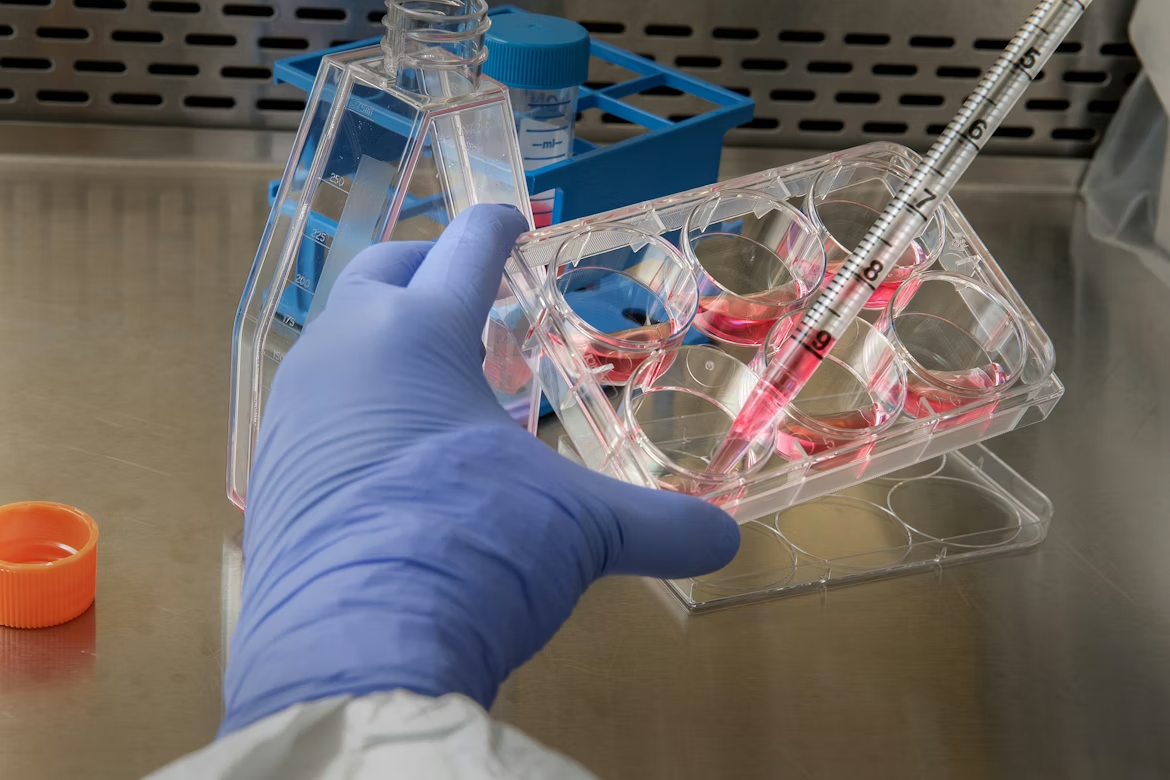
The increasingly widespread use of pesticides has the potential to cause negative impacts on human health and the environment due to their toxic properties. Therefore, effective testing methods are needed to evaluate the cytotoxic effects of pesticides at the cellular level.
Cytotoxicity testing using the MTT assay is one of the most widely used in vitro methods to quantitatively assess the effects of pesticides on cell viability and metabolic activity.
- What is the MTT Assay in Cytotoxicity Testing?
- Application of the MTT Assay to Determine Pesticide Toxicity
What is the MTT Assay in Cytotoxicity Testing?
The MTT assay is a quantitative colorimetric test used to assess the toxicity of a sample based on the metabolic activity of living cells. In principle, this method measures the ability of viable cells to reduce the tetrazolium salt MTT into a purple-colored compound known as formazan.
MTT (3-(4,5-dimethylthiazol-2-yl)-2,5-diphenyltetrazolium bromide) is a yellow tetrazolium salt. In living and metabolically active cells, enzymes associated with the endoplasmic reticulum and the pyridine nucleotide reduction system (NADH/NADPH) reduce MTT to dark purple, water-insoluble formazan.
The reduction reaction of MTT occurs only in living cells, indicating the presence of an active enzymatic system. Cells that are damaged or have died due to toxic effects of pesticides are unable to carry out this reaction, which indicates a decrease in cell viability.
Thus, the intensity of the purple color formed reflects the number and activity of viable cells.
Application of the MTT Assay to Determine Pesticide Toxicity
In the field of toxicology, the MTT assay is used to evaluate the toxicity levels of various chemical compounds, including pesticides, on cultured cells in vitro. The assay estimates parameters such as IC₅₀ (the concentration that causes a 50% reduction in cell viability).
This information is important for risk assessment and the development of safety standards for pesticide substances. In the MTT assay, living cells and pesticide samples are initially placed in a 96-well microplate.
The pesticide samples are usually prepared in several dilution levels to determine the effects of different concentrations on the cells. Control treatments containing only cells without pesticide samples are also required.
In addition, one column is left empty as a blank for instrument readings. This setup allows clear comparison between normal cells and cells exposed to the samples.
Next, the plate is incubated in an incubator at 37°C with 5% CO₂ to simulate physiological conditions. During incubation, the cells interact with the test samples. After the incubation period, the MTT solution is added to each well.
The formazan formed by living cells appears as crystals and is insoluble in water, so it must be dissolved first. After the MTT reaction is complete, the medium in the wells is removed, and DMSO is added to dissolve the formazan crystals.
The resulting solution appears purple with varying intensities. This color is then measured using a microplate reader. The darker the purple color, the greater the number of metabolically active living cells.
The results of the MTT assay are evaluated by comparing the color intensity and absorbance values between control wells and sample wells. Control wells typically appear dark purple because the cells are healthy and active.
In contrast, wells containing toxic samples show a paler color or may appear nearly colorless. If cell viability decreases to less than 50% compared to the control, the sample is considered cytotoxic.
Read this important article:
3 Recommended Pesticide Lab Tests to Pass the Ministry of Agriculture’s Distribution Permit!
Overall, the MTT assay provides a simple yet effective overview of how a substance affects cell viability. Therefore, this method is widely used as an initial screening test to assess the safety or toxic potential of pesticide compounds before further testing is conducted.
Cytotoxicity testing such as the MTT assay provides an important early overview of how a pesticide formulation affects cell viability. However, in the development and distribution of pesticide products, safety evaluation cannot rely solely on assumptions or internal data. Standardized, well-documented, and independently conducted laboratory testing is required to ensure that products meet applicable safety and regulatory requirements.
IML Testing and Research is ready to support your pesticide product testing needs through cytotoxicity testing services, toxicology analysis, and other quality parameters in accordance with applicable standards. With validated methods and accurate, reliable results, we help ensure product safety before it is marketed.
Consult your pesticide testing needs with IML Testing and Research today.
Author: Dherika
Editor: Sabilla Reza
References:
Sharma, R. (Feb 27th, 2025). MTT Cytotoxicity Assay Lab: Principle, Protocol & Applications. Retrieved from https://acmeresearchlabs.in/2025/02/27/mtt-cytotoxicity-assay-lab-principle-protocol-applications/ (Accessed: Dec 25th, 2025).Twaruzek, M., Zastempowska, E., Ewelina, S., & Iwona, A. (2018). The Use of In Vitro Assays for the Assessment of Cytotoxicity on the Example of MTT Test. Folia Biologica et Oecologia, 14, 23-32. Doi: 10.1515/fobio-2017-0006.