5 Types of Titration You Need to Know in Laboratory Analysis

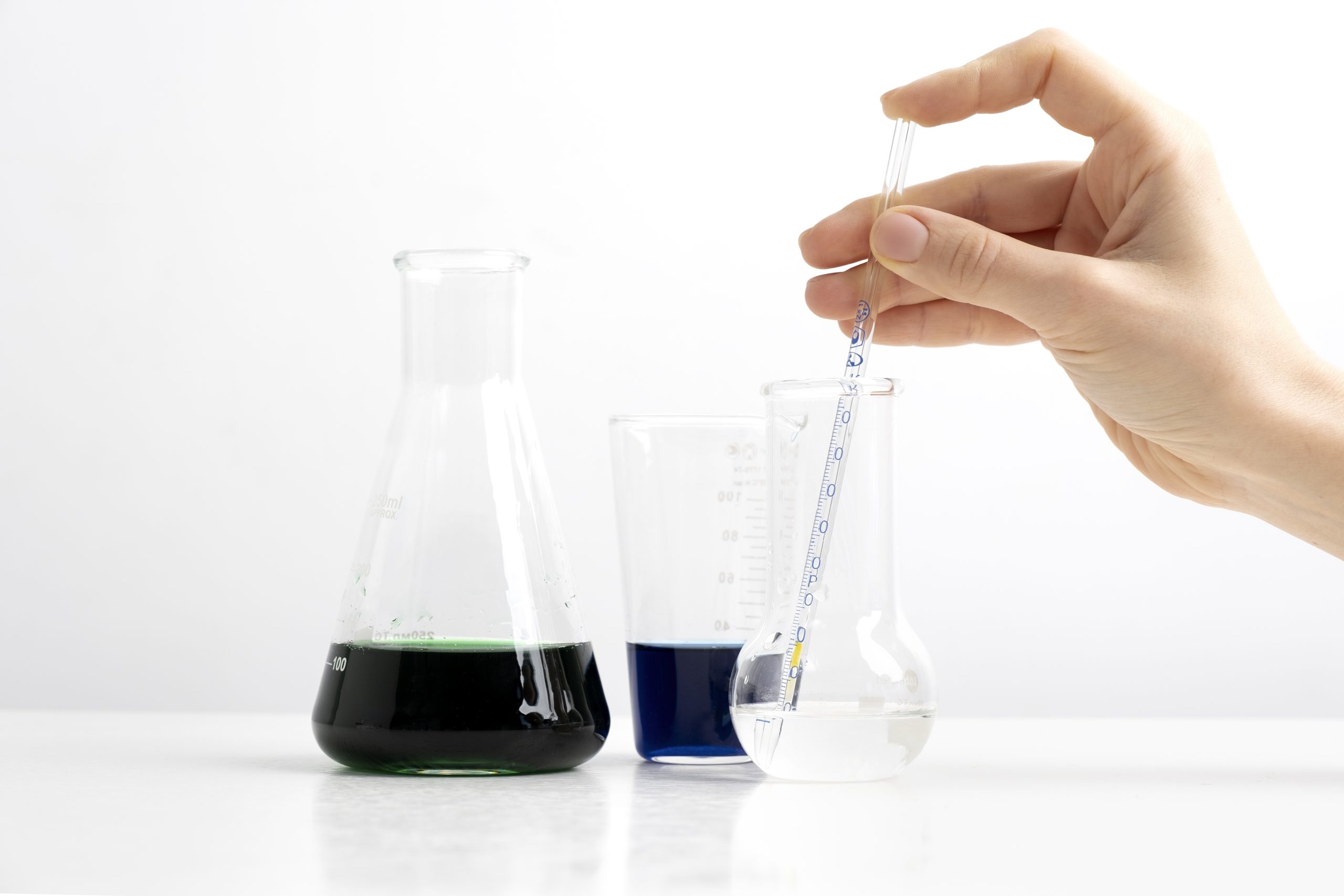
Titration is one of the most widely used techniques for determining the concentration of various analytes. It is based on a quantitative chemical reaction between the analyte and a standard solution, known as the titrant, allowing the analyte concentration to be measured accurately.
During the analysis, the titrant is gradually added from a burette into a sample of known volume until the equivalence point is reached, where the number of moles of the titrant is stoichiometrically equivalent to the number of moles of the analyte. The equivalence point is typically determined visually through a color change of an indicator, which signifies that the titration endpoint has been reached.
Based on the type of chemical reaction involved, titration can be classified into five major categories, as described below.
Table of Content:
- Acid-Base Titration
- Redox (Oxidation-Reduction) Titration
- Complexometric Titration
- Precipitation Titration
- Karl Fischer Titration
Acid-Base Titration
Acid-base titration is one of the most widely used analytical methods in laboratories. It is based on the neutralization reaction between an acid and a base until the equivalence point is reached, where the number of moles of hydrogen ions (H⁺) equals the number of moles of hydroxide ions (OH⁻). During the analysis, a standard solution (titrant) is gradually added to the sample until the indicator changes color, indicating that the endpoint has been reached.
During the titration, a standard solution (titrant) is added gradually to the sample until the indicator changes color, indicating that the endpoint has been reached. This method is widely used to determine the concentration of acidic and basic compounds.
In the pharmaceutical industry, acid-base titration is commonly applied to assay acetylsalicylic acid (aspirin), sodium carbonate, and magnesium hydroxide in antacid formulations. In the food industry, it is frequently used to determine the acidity of vinegar, fruit juices, and dairy products.
In the cosmetics industry, acid-base titration can be used to determine the free fatty acid content of vegetable oils used as cosmetic raw materials.
Read Also:
What Is the Titration Method? Why Is It Still Widely Used?
Redox (Oxidation-Reduction) Titration
Redox titration is an analytical method based on electron transfer reactions between an oxidizing agent (oxidant) and a reducing agent (reductant). During the analysis, one substance undergoes oxidation by losing electrons, while the other undergoes reduction by gaining electrons. This electron transfer continues until the reaction reaches its endpoint, allowing the concentration of the analyte to be accurately determined.
The endpoint can be detected through a color change of an indicator or by the inherent color of the titrant itself, such as the purple color of potassium permanganate. This method is commonly used to determine the concentration of compounds with oxidizing or reducing properties.
Examples include the determination of vitamin C using iodine solution, the assay of hydrogen peroxide in antiseptic or cosmetic products using potassium permanganate, and the determination of iron content in various samples using potassium dichromate.
Complexometric Titration
Complexometric titration is based on the formation of coordination complexes between metal ions in the sample and a specific ligand. The most commonly used titrant is EDTA (ethylenediaminetetraacetic acid) because it forms highly stable complexes with a wide range of metal ions, including calcium, magnesium, zinc, copper, and iron.
Widely applied in various industries, this analytical method is commonly used for metal analysis. One of its primary applications is determining water hardness by measuring the concentration of calcium and magnesium ions.
Complexometric titration is also used to determine zinc content in dietary supplements, calcium content in dairy products, and specific metal concentrations in pharmaceutical and cosmetic raw materials.
Precipitation Titration
Precipitation titration is an analytical method based on the formation of an insoluble precipitate between the analyte and the titrant. The reaction continues until all of the analyte has been converted into the precipitate, indicating that the endpoint has been reached.
One of the most commonly used titrants is silver nitrate (AgNO₃), which reacts with halide ions, such as chloride, to produce a white precipitate of silver chloride (AgCl). This method is commonly used to determine the concentration of chloride, bromide, and iodide ions in a variety of samples.
Typical applications include the determination of sodium chloride concentration in intravenous infusion solutions and physiological saline, salt content analysis in food products, and halide ion determination in water samples and chemical materials.
Karl Fischer Titration
Karl Fischer titration is a specialized analytical method used to determine the water content of a sample. Unlike most other analytical techniques, it relies on a highly specific reaction between water and the Karl Fischer reagent, which contains iodine, sulfur dioxide, a base, and an alcohol.
Because of its exceptional selectivity for water, Karl Fischer titration can accurately measure moisture levels down to very low concentrations, even in the parts-per-million (ppm) range. This method is widely used in the pharmaceutical industry to determine the moisture content of pharmaceutical raw materials, tablets, capsules, and hygroscopic active pharmaceutical ingredients (APIs).
In the cosmetics industry, it is used to measure the water content of oils, waxes, lip balms, and other raw materials that cannot be accurately analyzed using conventional oven-drying methods. In addition, Karl Fischer titration is commonly applied to organic solvents, industrial chemicals, and lubricating oils that require precise moisture determination.
Conclusion
ach type of titration has its own analytical principle, advantages, and applications depending on the characteristics of the analyte being tested. From acid-base, redox, complexometric, precipitation, and Karl Fischer methods, each approach continues to play an important role in laboratory analysis by providing accurate and reliable results when performed using validated procedures.
Although modern analytical instruments are now widely available, titration remains an essential quality control method in the pharmaceutical, cosmetic, food, and environmental industries. It continues to be recognized by major pharmacopoeias and international standards for its accuracy, reliability, and practicality in quantitative analysis.
Verify Your Product’s Chemical Content with the Right Testing Method
Accurate analytical data is essential for product quality and regulatory compliance. IML Testing and Research offers chemical assay testing using validated analytical methods, including titration, to accurately determine the concentration of chemical compounds in your products.
Contact the IML Testing and Research team today to discuss your laboratory testing requirements and strengthen confidence in your product quality.
Author: Jihan
Editor: Lina
REFERENCES
Davani, B. (Ed.). (2017). Common Methods in Pharmaceutical Analysis. In Pharmaceutical Analysis for Small Molecules. John Wiley & Sons. https://doi.org/10.1002/9781119425021.ch3
Harris, D. C. (2007). Quantitative Chemical Analysis (7th ed.). W. H. Freeman.