5 Types of Plants Fertilizer and Their Uses: A Guide to Choosing the Right One

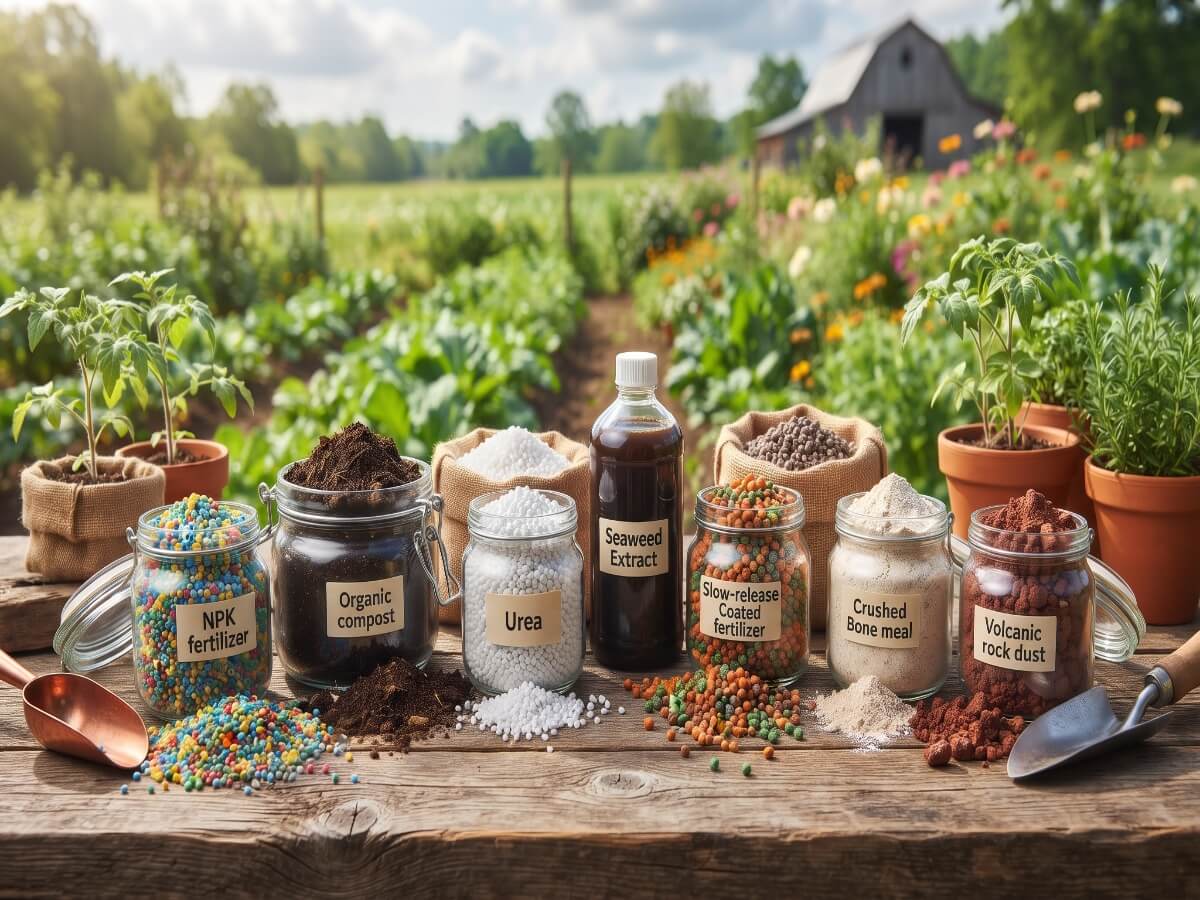
Ever stood in front of a shelf at the farm supply store, unsure which one to pick? That’s understandable, because there are many types of plants fertilizer, and each has its own job. This article walks through the most common ways plants fertilizer are grouped, so you can choose the right one for your crops and soil.
Table of Content:
- 1. Natural Fertilizers vs. Synthetic Fertilizers
- 2. Organic vs. Inorganic Fertilizers
- 3. Single Fertilizers vs. Compound Fertilizers
- 4. Solid vs. Liquid Fertilizers
- 5. Biofertilizers and Soil Conditioners
1. Natural Fertilizers vs. Synthetic Fertilizers
By origin, plants fertilizer fall into two big groups. Natural fertilizers come from nature without factory processing, such as animal manure, green manure, compost, and guano. They improve soil structure and add organic matter. The downside is that their nutrient content is low, so you need to apply a lot of them.
Synthetic fertilizers are made in factories with specific nutrient contents, usually high and quickly available to plants. In the tropics, synthetic fertilizers are more popular because organic materials break down fast and are often not available in large enough amounts (Purba et al., 2021).
Read Also:
5 Benefits of Urea Fertilizer for Plants and Crop Yields
2. Organic vs. Inorganic Fertilizers
By chemical composition, plants fertilizers are either organic or inorganic. Organic fertilizers come from dead plants, animal waste, or other processed organic waste.
Inorganic fertilizers are products of chemical, physical, or biological engineering in factories (Kementerian Pertanian, 2020).
Common inorganic fertilizers used by farmers include:
- Urea: about 45–46% nitrogen, which boosts the growth of leaves, stems, and branches.
- ZA (ammonium sulfate): about 21% nitrogen and 24% sulfur.
- SP-36: about 36% phosphorus (P2O5), which supports root growth.
- KCl: about 60% potassium (K2O), which helps plants withstand drought.
3. Single Fertilizers vs. Compound Fertilizers
In terms of nutrient content, a single fertilizer provides only one main nutrient, like urea for nitrogen. A compound fertilizer contains more than one nutrient.
An NPK fertilizer with a 15-15-15 formula, for example, contains 15% nitrogen, 15% P2O5, and 15% K2O. The advantage is convenience: one application covers several nutrients, so you don’t have to mix fertilizers yourself (Purba et al., 2021).
4. Solid vs. Liquid Fertilizers
By form, fertilizers are either solid or liquid. Solid fertilizers, such as urea granules, are usually spread on the soil. Liquid fertilizers are typically dissolved in water and then sprayed on leaves (foliar application) or delivered through irrigation.
Spraying is best done in the morning or in clear weather so the fertilizer doesn’t evaporate before plants absorb it (Purba et al., 2021).
5. Biofertilizers and Soil Conditioners
Beyond the groups above, there are also biofertilizers and soil conditioners. Biofertilizers contain active microbes that help supply nutrients, such as nitrogen-fixing and phosphate-solubilizing bacteria.
Soil conditioners are natural or synthetic materials that improve the physical, chemical, or biological properties of soil, like dolomite, which neutralizes soil acidity (Kementerian Pertanian, 2020; Purba et al., 2021).
Tips for Choosing Safe, Quality Plants Fertilizer
Choose plants fertilizer based on your crop’s needs and soil test results, not just habit. Follow the “five rights” principle: the right type, dose, timing, placement, and method.
Also check that the packaging shows a registration number and a complete label, because plants fertilizer without a registration number or label is classified as illegal (Kementerian Pertanian, 2020).
Conclusion
Types of plants fertilizer can be grouped by origin, chemical composition, nutrient content, form, and function, from organic and inorganic fertilizers to biofertilizers. Understanding these differences helps you pick efficient fertilizer and avoid overuse.
Validate your formulations with IML Testing and Research
Want to make sure your fertilizer meets quality standards and its nutrient content matches the label? Get it tested at IML Research and Testing today. We provide comprehensive Fertilizer Quality and Nutrient Analysis Testing covering macro- and micronutrient assays (NPK), C-organic content, heavy metal screening, and physicochemical parameters backed by precise laboratory data and an objective Certificate of Analysis (CoA) to guarantee full compliance with national and international standards.
Consult Your Fertilizer Quality Testing Now!
Author: Fachry
Editor: Lina
References
Kementerian Pertanian. (2020). Pedoman pengawasan pupuk dan pestisida [Guidelines for fertilizer and pesticide supervision]. Direktorat Jenderal Prasarana dan Sarana Pertanian.
Purba, T., Situmeang, R., Rohman, H. F., Mahyati, Arsi, Firgiyanto, R., Junaedi, A. S., Sa’adah, T. T., Junairiah, Herawati, J., & Suhastyo, A. A. (2021). Pupuk dan teknologi pemupukan [Fertilizers and fertilization technology]. Yayasan Kita Menulis.