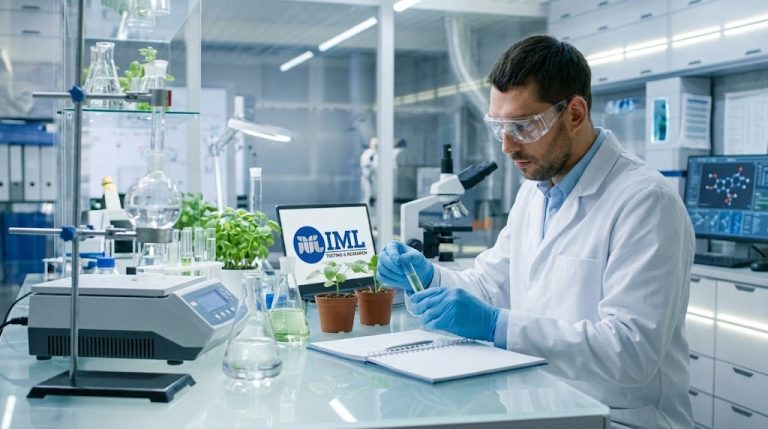
Do Not Arbitrarily Formulate AHA Body Serum: Understand the Safe Limits of Body Exfoliants According to Ministry of Health Standards

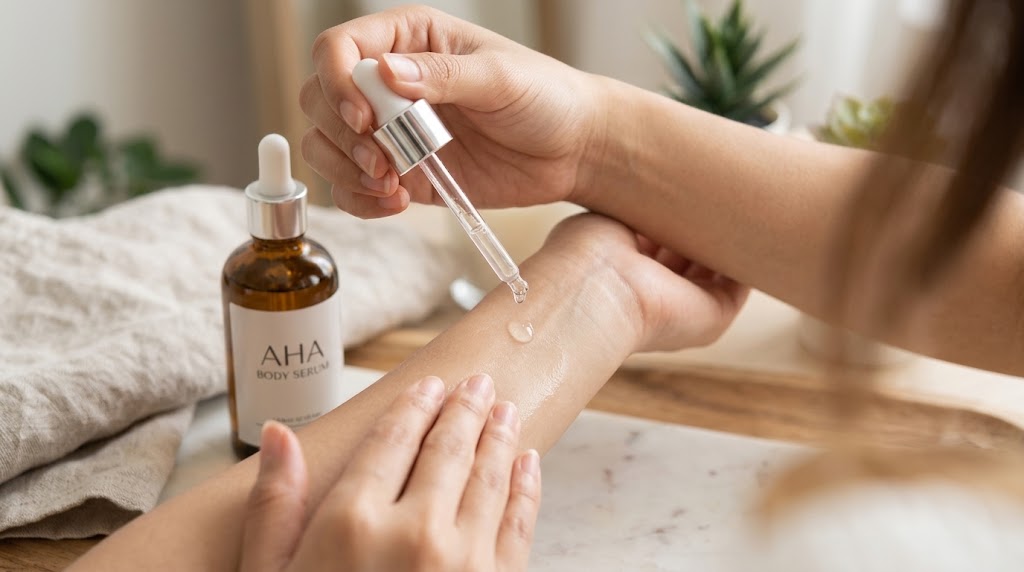
The body care trend in Indonesia is no longer limited to ordinary body washes and moisturizing lotions. Consumers demand faster and more significant results, particularly in brightening the skin and evening out uneven skin tones.
This has driven the skyrocketing popularity of AHA body serum as a flagship exfoliation product. Many brand owners and cosmetic formulators are racing to launch an AHA body serum with claims of “brightening in 7 days” or “instant peeling.”
Unfortunately, in the pursuit of rapid efficacy, quite a few toll manufacturers or independent brands formulate AHA (Alpha Hydroxy Acid, such as Glycolic Acid or Lactic Acid) levels without adhering to medical safety standards and applicable regulations.
Table of Content:
- The Risks of Over-Exfoliation and Skin Barrier Damage
- Safe Limits According to BPOM and Ministry of Health Regulations
- The Importance of Independent Laboratory Validation
The Risks of Over-Exfoliation and Skin Barrier Damage
Formulating an AHA body serum is not simply about mixing acidic ingredients into a serum base. AHAs work by shedding dead skin cells (keratolytic action) in the epidermal layer.
If the concentration is too high or the acidity level (pH) is too low, the product ceases to function as a care cosmetic and instead acts as a caustic chemical that can trigger chemical burns, post-inflammatory hyperpigmentation, and severe skin barrier damage.
Read Also:
Body Serum: Benefits, Ingredients, and the Importance of Product Testing
Safe Limits According to BPOM and Ministry of Health Regulations
In Indonesia, cosmetic safety standards refer to the regulations of the Food and Drug Authority (BPOM), which align with the ASEAN Cosmetic Directive and Ministry of Health guidelines. For over-the-counter cosmetic exfoliation products used independently by consumers at home, particularly AHA body serum, there are extremely strict limitations
1. Maximum Concentration
The total AHA content (such as glycolic acid and lactic acid) in self-care skin products, including AHA body serum, is generally limited to a maximum of 10%. Products with concentrations exceeding this figure are categorized as medical procedures (professional chemical peeling) whose application must be supervised by a dermatologist in a clinical setting
2. Acidity Level (pH)
When formulating an AHA body serum, AHA concentration alone is not a sufficient benchmark. BPOM requires that the pH of cosmetic products containing AHA must not be less than 3.5. A pH that is too low (too acidic) will cause the AHA to penetrate the skin too deeply and quickly, drastically increasing the risk of severe irritation.
The Importance of Independent Laboratory Validation
As a brand owner, you bear the legal responsibility for consumer safety. You cannot rely merely on a formulator's “estimates.” Every formulation batch of your AHA body serum must undergo precision analytical laboratory testing to validate:
- Active Ingredient Determination Testing (HPLC): Ensuring the AHA concentration in the serum perfectly matches the label claims and does not exceed the 10% limit.
- Critical pH Measurement: Ensuring the formulation's buffer remains stable above a pH of 3.5 until the product's expiration date.
- Stability and Irritation Testing: Measuring how safe the product is when exposed to heat during distribution and assessing its potential for skin irritation (Patch Test).
Is Your AHA Body Serum Formulation at Risk of BPOM Rejection or Damaging Consumer Skin?
Do not gamble your distribution permit and cosmetic brand's reputation on overclaims or hazardous exfoliant formulations. A minor error in acid and pH levels can lead to mass product recalls and consumer lawsuits.
Consult your cosmetic formulation today! Guarantee your products pass AHA concentration determination, pH testing, and safety assessments with precision at IML Testing and Research. Scientifically validate your product's safety and secure your BPOM notification right now!
Author & Editor: Lina
References
Tranggono, R. I., & Latifah, F. (2007). Buku Pegangan Ilmu Pengetahuan Kosmetik. Jakarta: PT Gramedia Pustaka Utama.
Wasitaatmadja, S. M. (1997). Penuntun Ilmu Kosmetik Medik. Jakarta: Universitas Indonesia (UI) Press.
Muliyawan, D., & Suriana, N. (2013). A-Z Tentang Kosmetik. Jakarta: PT Elex Media Komputindo.
Rahmawati, D., & Putri, A. N. (2019). Evaluasi Karakteristik Fisik dan Uji Keamanan Sediaan Serum Perawatan Kulit Mengandung Asam Glikolat (AHA). Jurnal Farmasi Klinis dan Kosmetika, 7(2), 45-52.
Susanti, R., & Hidayat, M. (2021). Analisis Tingkat Keasaman (pH) dan Konsentrasi Alpha Hydroxy Acid (AHA) pada Produk Kosmetik Eksfoliasi yang Beredar di Pasaran Berdasarkan Regulasi BPOM. Jurnal Ilmu Kefarmasian Indonesia, 19(1), 112-119.
Yuliani, S. H. (2018). Potensi Iritasi dan Gangguan Sawar Kulit Akibat Penggunaan Agen Eksfoliasi Kimiawi Konsentrasi Tinggi secara Mandiri. Majalah Kedokteran dan Estetika, 5(3), 88-95.