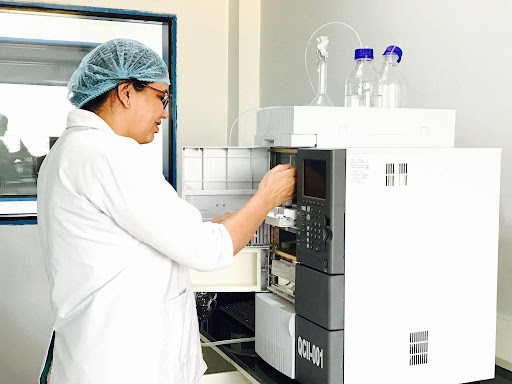
Strategies HPLC vs GC: What Are the Differences and When Should They Be Used?


In laboratory testing, not all samples can be analyzed using the same method. Every compound has unique physical and chemical properties, requiring the use of appropriate analytical techniques to ensure accurate and reliable results. Two of the most widely used methods for quantitative analysis and compound identification are High-Performance Liquid Chromatography (HPLC) and Gas Chromatography (GC).
Both are chromatographic techniques, meaning they separate the components of a mixture before they are analyzed. Although HPLC and GC share the same fundamental principle of separating compounds, they are designed to analyze different types of substances.
For example, the concentration of niacinamide in a serum is typically determined using HPLC, whereas the ethanol content in hand sanitizers or perfumes is more appropriately analyzed using GC. Therefore, the choice of analytical instrument is not based on which technology is more advanced, but rather on the properties of the compound being analyzed and the purpose of the analysis.
Table of Content:
- What Is HPLC?
- What Types of Samples Are Suitable for HPLC?
- What Is GC?
- What Types of Samples Are Suitable for GC?
What Is HPLC?
High-Performance Liquid Chromatography (HPLC) is an analytical technique used to separate, identify, and quantify the components of a mixture. Chromatography is a separation process that divides a mixture into its individual components.
HPLC is an advanced form of liquid chromatography that applies the same basic separation principle but with higher pressure and improved performance. The fundamental principle of HPLC is the separation of compounds based on their different interactions with the stationary phase (the chromatography column) and the mobile phase (the liquid solvent).
In other words, each compound travels through the column at a different rate, allowing the individual components to be separated. HPLC enables detailed characterization of complex samples, including information related to molecular size, shape, charge, structure, and other chemical properties.
Read Also:
Strategies Classical Testing vs. Instrumental Testing: What Is the Difference?
What Types of Samples Are Suitable for HPLC?
HPLC is particularly suitable for analyzing compounds that are soluble in liquid solvents, non-volatile, and relatively complex in chemical structure. In the pharmaceutical industry, HPLC is a standard analytical method for determining the concentration of active pharmaceutical ingredients in raw materials and finished dosage forms such as tablets, capsules, syrups, and injectable products.
It is also widely used to identify impurities, degradation products, and to support stability testing throughout a product's shelf life. In the cosmetics industry, HPLC is commonly used to determine the concentration of active ingredients in skincare and cosmetic products.
Examples include the analysis of niacinamide, salicylic acid, hydroquinone, vitamin C, retinol, and various UV filters used in sunscreen formulations. Beyond pharmaceuticals and cosmetics, HPLC is also extensively applied in the food and beverage industry to measure caffeine in coffee and energy drinks, vitamins in fortified foods, artificial sweeteners, preservatives, and many other food components.
What Is GC?
Gas Chromatography (GC) is another chromatographic technique used to separate the components of a mixture. Like HPLC, GC separates compounds before analysis. However, the primary difference between the two techniques lies in the mobile phase.
While HPLC uses a liquid solvent as the mobile phase, GC uses an inert carrier gas, such as helium, nitrogen, or hydrogen, to transport the sample through the chromatography column. The principle of GC is also based on the different interactions between each compound, the stationary phase inside the column, and the mobile phase (carrier gas).
Before analysis, the sample is vaporized in the injection port because GC can only analyze compounds in the gaseous phase. The carrier gas then transports the vaporized sample through the column.
Since each compound has a different degree of volatility and affinity for the stationary phase, they travel through the column at different rates and elute at different times, known as retention times. After leaving the column, the separated compounds are detected by a detector, generating a chromatogram for identification and quantitative analysis.
What Types of Samples Are Suitable for GC?
GC is ideal for analyzing volatile compounds or substances that can be vaporized without decomposing at the operating temperature. As a result, this technique is widely used for the analysis of organic solvents, alcohols, essential oils, aroma compounds, and other relatively low-molecular-weight organic compounds.
In contrast, larger molecules, non-volatile compounds, or substances that decompose at high temperatures are generally better suited for HPLC analysis. In the pharmaceutical industry, GC is commonly used to determine residual solvents remaining after the manufacturing process.
In the cosmetics industry, GC is frequently employed to measure the ethanol content in perfumes, hand sanitizers, and toners, as well as to analyze the composition of essential oils and fragrance compounds. It is also used to detect volatile substances that may affect product quality and safety.
In the food industry, GC is applied to analyze fatty acids, flavor and aroma compounds, specific pesticide residues, and other volatile components that contribute to the taste and aroma of food products.
Conclusion
HPLC and GC are two essential chromatographic techniques widely used in laboratory testing to separate, identify, and quantify chemical compounds. Although they share similar analytical principles, they differ in the type of mobile phase used and the characteristics of the samples they are designed to analyze.
HPLC is best suited for non-volatile and heat-sensitive compounds, whereas GC is the preferred method for volatile and thermally stable substances. Therefore, neither technique is inherently superior to the other.
The selection of HPLC or GC should be based on the nature of the sample, the objectives of the analysis, and the specific analytical parameters required.
Choose the Right Analytical Method with IML Testing and Research
Do not let an unsuitable method compromise the accuracy of your product analysis. Conduct HPLC or GC testing at IML Testing & Research to obtain precise, reliable data tailored to your sample characteristics. Consult your testing needs today.
Author: Jihan
Editor: Lina
REFERENCES
Ahmed, R. (2024). High-Performance Liquid Chromatography (HPLC): Principles, Applications, Versatality, Efficiency, Innovation and Comparative Analysis in Modern Analytical Chemistry and in Pharmaceutical Sciences. https://doi.org/10.20944/preprints202409.0057.v1
Khalifea, H., & Ali, N. (2025). Exploring the principles of GC-MS: Techniques and Applications. Physical Sciences, Life Science and Engineering, 2(3), 10. https://doi.org/10.47134/pslse.v2i3.388